This fact sheet was authored by Joe Lawrence, PRO-DAIRY forage systems specialist, Kirsten Workman, PRO-DAIRY nutrient management specialist, and Mike Hunter, IPM coordinator, and was shared in the July 2026 PRO-DAIRY e-Leader newsletter, distributed to an email list of nearly 7,000 dairy producers, agriservice, and legislators.
Annual ryegrass (Lolium multiflorum) is a versatile cool-season grass used both as a forage and as a winter cover crop in New York dairy cropping systems. It's valued for its high potential forage quality, fibrous root system, erosion control and nitrogen-scavenging ability. However, its adoption is complicated by unpredictable winter survival across the Northeast and by agronomic tradeoffs that must be weighed against farm goals for living spring cover versus spring forage harvest.
Successful establishment requires careful attention to planting timing (early spring or early August) and adequate soil moisture, which limits its fit as a cover crop after summer row crops such as corn and soybeans but makes it well-suited following winter wheat or spring cereal grains. Fertility management should account for the crop's efficient nitrogen scavenging, with supplemental nitrogen needed only on low-fertility fields intended for forage harvest.
A central challenge is termination ahead of subsequent row crops: Effective herbicide control requires active regrowth, and confirmed glyphosate-resistant annual ryegrass populations in New York make it essential to use certified seed and consult a certified crop adviser on herbicide selection. Soil moisture conditions at harvest and termination further affect no-till planting success and should guide flexible management decisions.
While dry matter yields are typically lower than other cover crop options such as cereal rye, annual ryegrass offers superior forage quality and digestibility, particularly when harvested at the boot stage, with harvest and drying practices critical to successful silage fermentation. The fact sheet concludes that success depends on fitting annual ryegrass into a niche within the broader cropping system, remaining flexible with expectations, maintaining backup plans for harvest and prioritizing effective termination and resistance scouting regardless of whether the crop is ultimately harvested for forage.
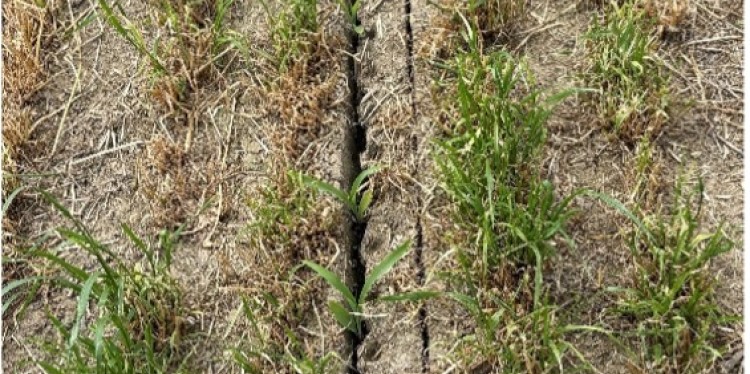
Photo caption: Corn no-till planted into ryegrass cover crop stubble following forage harvest where seed furrow did not properly close and termination effectiveness was variable.
Photo credit: E. Antrim