Back

Discover CALS

See how our current work and research is bringing new thinking and new solutions to some of today's biggest challenges.

Share
  • Animal Science
  • Dairy

Dairy youth gained hands-on experience in milk quality and milk production recently at the Dairy Discovery Workshop hosted by Cornell CALS PRO-DAIRY. Held March 27-28 on the Cornell University Ithaca campus, this year’s program was themed “Quality Milk and Milk Production.” 

Dairy Discovery Workshop couples real-world experience from industry professionals, insightful teaching sessions from campus staff and hands-on science-oriented learning experiences. Each year features a new theme that focuses on a different area of the dairy industry. 

“The purpose of Dairy Discovery is to provide opportunities that excite young folks about the dairy industry,” said Deborah Grusenmyer, PRO-DAIRY youth specialist and program organizer. “Youth who participate for five consecutive years can complete all program focuses, ensuring that the critical enterprises of the dairy industry are covered.”

The Dairy Discovery program began with a conversational “meet and greet” dinner alongside a presentation from Anna Cummings, assistant director of Cornell CALS Admissions, who explained the majors, minors and connected opportunities Cornell offers, while also breaking down the undergraduate admissions process. 

The next day, Grusenmeyer welcomed over 60 participants. She then introduced factors that affect milk quality and the key fundamentals of milk production, including biology and dissection of the mammary gland, managing pathogens, milking machine components, determining mastitis and somatic cell count in milk, and how cow comfort and stall environment affects mastitis levels.
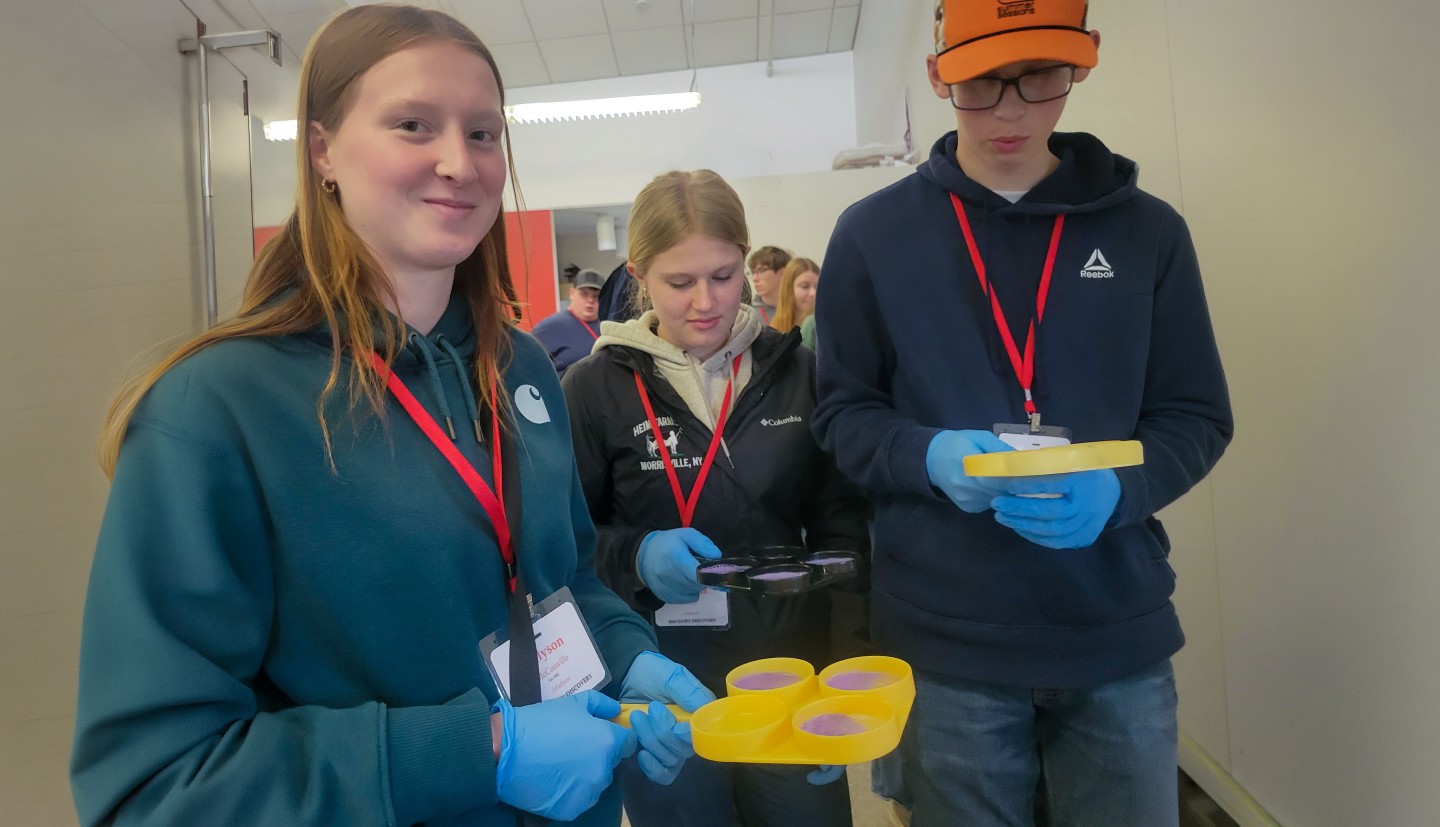

Youth participants used all of their senses during a sensory evaluation of dairy products, where they learned about sensory science, classic defects and the causes of off-flavors in milk. Later, they took part in dissections of udders donated from the local slaughterhouse to gain a better understanding of the anatomy and physiology of the udder and milk veins. A 90-100 day uterine calf also allowed the youth to study anatomy beyond textbook images. Among the hands-on events, they practiced administering antibiotics through the teats of the donated udders and using teat sealant equipment. 

“Seeing new, more efficient ways of doing things helps participants develop ideas they can bring back and apply to their own farms,” said Josiah Freier, a youth participant. He added that his most memorable experience of the weekend was when he ensured that the teat sealant was correctly administered by cutting off a teat to look inside the milk vein.

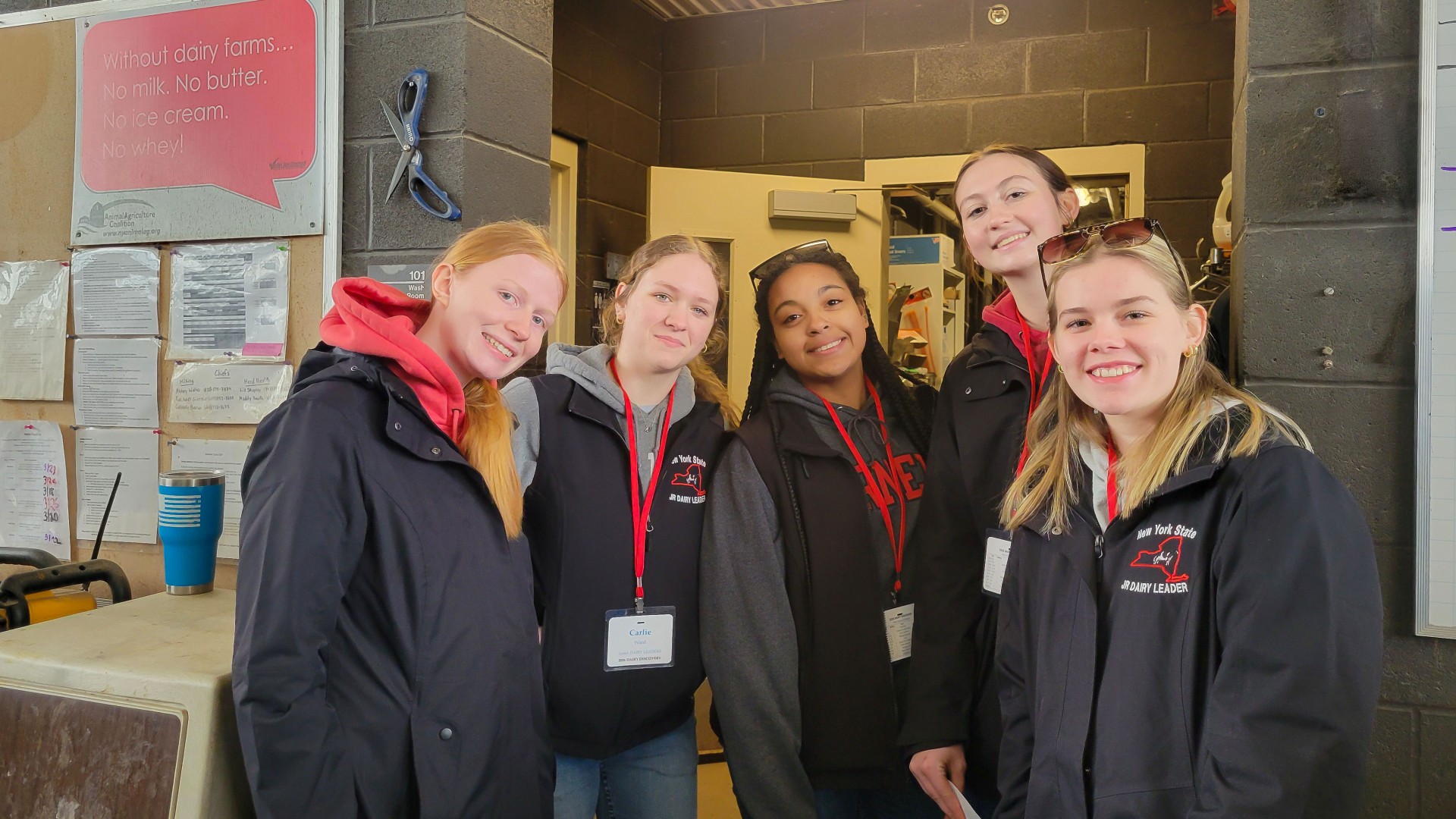
 Throughout the day, program participants were also transported to the Cornell Teaching Barn, to apply classroom lessons to real-life situations on the operating farm. Rick Watters, AgroChem USA senior animal health advisor, met students at the barn and taught them the details of preventing mastitis with milking, primarily through the proper use of milking machine equipment.

Participants learned that milking equipment accounts for 20% or less of mastitis cases. However, milking equipment can create induced mastitis, which is preventable through correct milking time periods and properly functioning equipment. Watters also explained that the teat canal generally remains open for 30-60 minutes after milking. But if the teat becomes congested from overmilking, it can remain open for one to six hours, significantly increasing the risk of mastitis and sickness in cows.

“Technology within the dairy industry is constantly evolving. So there’s always something new to learn.” — Deborah Grusenmyer

In addition, participants explored the science behind milk quality and the pathogens that affect herd health through identification and treatment workshops focused on mastitis. They learned that decision-making was a crucial skill, as not all mastitis cases require the same treatment approach. Severity, bacteria type, cow history and stage of lactation all factor into the level of treatment and intervention needed.

In the end, participants were exposed to dairy concepts in a new way and gained shared experiences while practicing hands-on learning. They had the opportunity to learn from experts in the field and on campus.  “Technology within the dairy industry is constantly evolving,” said Grusenmyer. “So there’s always something new to learn.” 

Applications for the Dairy Discovery Workshop will open in January every year and remain open until the program is capped or the March deadline occurs, whichever comes first. Learn more about the program. 

Keep Exploring

two people perform a manure safety test

News

Cornell CALS PRO‑DAIRY has released a comprehensive Manure Gas Safety Technical Guide designed to help farmers, farm employees and agricultural service providers better understand and manage the atmospheric hazards associated with manure...
  • Cornell Cooperative Extension
  • PRO-DAIRY
  • Animal Science
Installation of RCC Silage Pad at Tiashoke Farms

News

A newly released case study by Cornell CALS PRO-DAIRY Dairy Environmental Systems and project collaborators is showcasing the successful use of Roller Compacted Concrete (RCC) for a large-scale dairy silage pad installation at Tiashoke Farms in...
  • Cornell Cooperative Extension
  • Animal Science
  • Dairy