Major: Food science
Hometown: Glens Falls, New York
Why did you choose Cornell CALS?
Growing up in upstate New York, I was constantly surrounded by a thriving dairy industry. While I initially planned to pursue a traditional engineering degree, my perspective shifted after attending a CALS information session during my campus tour. Between the impressive curriculum and a well-timed visit to the Dairy Bar, I realized I could merge my technical interests with my appreciation for agriculture. That experience convinced me to pivot and pursue a degree in food science.
Looking back over your freshman year at CALS, which classes or experiences were most meaningful?
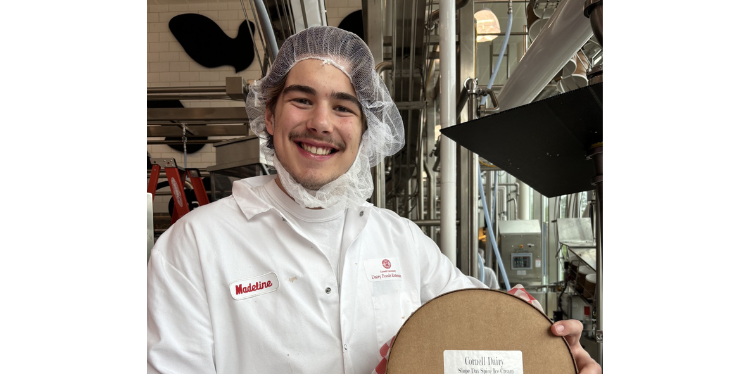
The most meaningful experience was easily FDSC 1101: the ice cream-making class. While balancing a rigorous schedule of chemistry, biology and calculus, it allowed me to step back once a week to solve problems with tangible and tasty results. One of my primary goals for freshman year was to join the team developing the official Slope Day ice cream flavor, and I am incredibly proud to have accomplished that.
What kind of research are you interested in?
I am particularly interested in food engineering, dairy science or fermentation research. Although I had the opportunity to begin research this semester, my commitments to the heavyweight rowing team required me to prioritize my schedule. I am eager to get involved in a lab next semester to apply what I’ve learned in the classroom.