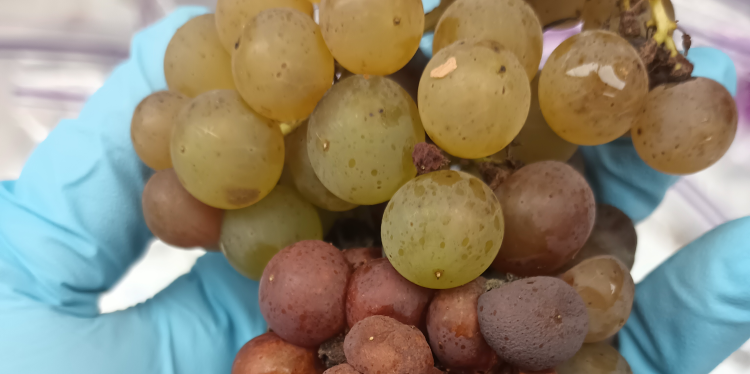
Sour rot is a potentially devastating, late-season bunch rot of particular concern on tight clustered grapevine varieties in warm, wet years. This causes the disease to have sporadic effects on grape harvests, with some years showing only small yield losses, and others with >50% of fruit unable to process. Vinegar flies, Drosophila melanogaster and D. suzukii, are important components of the sour rot disease complex, so antimicrobial pesticides are ineffective for control when applied alone. The recommended treatment schedule for sour rot involves spraying insecticides and antimicrobial pesticides weekly once grapes reach 12-15 Brix. This is not only costly for growers, especially in low risk years where the benefits are minimal, it also increases insecticide resistance in Drosophila. Populations of D. melanogaster already show high resistance levels to three out of the five insecticide classes labeled in New York state for controlling Drosophila in grapes: pyrethroids (Mustang Maxx,), organophosphates (malathion) and neonicotinoids (Assail) (Sun et al. 2019). Several populations of D. melanogaster in New York also showed moderate levels of resistance to Delegate, raising concerns that efficacy for this insecticide class may also start to decline if not used judiciously (Scott et al. 2023, 2024).
The combined threat of yield loss, weekly pesticide applications, and increased insecticide resistance, emphasize the need for alternative management strategies. Researchers at Cornell AgriTech investigated several non-pesticide management strategies for sour rot control in a Vignoles vineyard block across three seasons from 2022-2024. Treatments tested across all three years and compared to an untreated control included leaf pulling, UV light treatment, and combination of leaf pulling and UV light. Leaf pulling is performed at fruit set, decreasing humidity and increasing air flow around bunches and through the canopy. UV light damages disease-causing microbes and is applied later in the season, after 12 Brix. A commercial grower standard and combination treatments including peroxide (Oxidate) which damages disease-causing microbes, were also tested in a subset of years. The 2022 season had very high incidence and severity of sour rot while in the 2023 and 2024 seasons sour rot caused minimal damage. The incidence—the number of bunches that had sour rot—and the severity—the proportion of diseased berries within clusters—and the total damage of sour rot in the experimental vineyards were measured across all treatments.
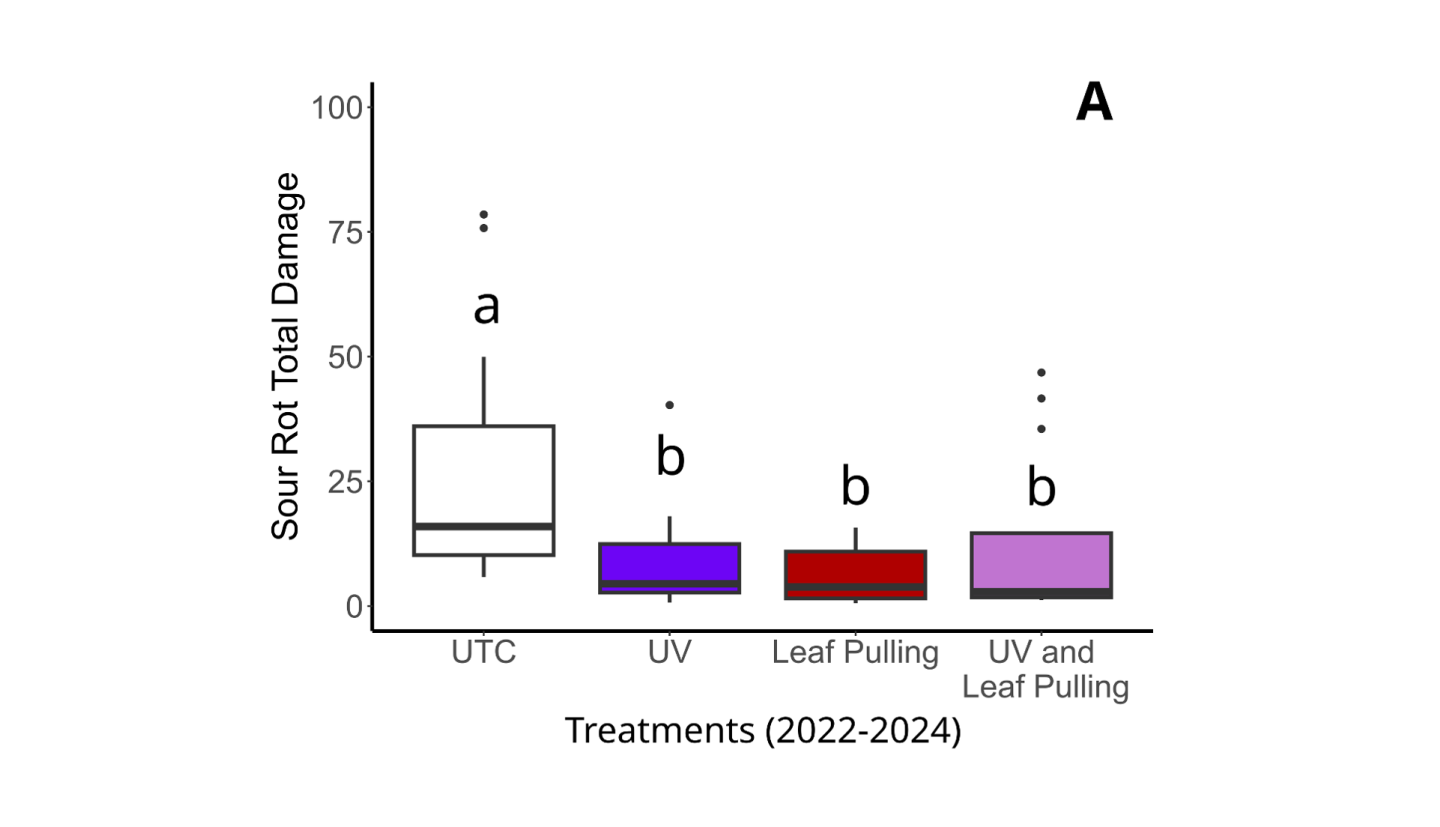
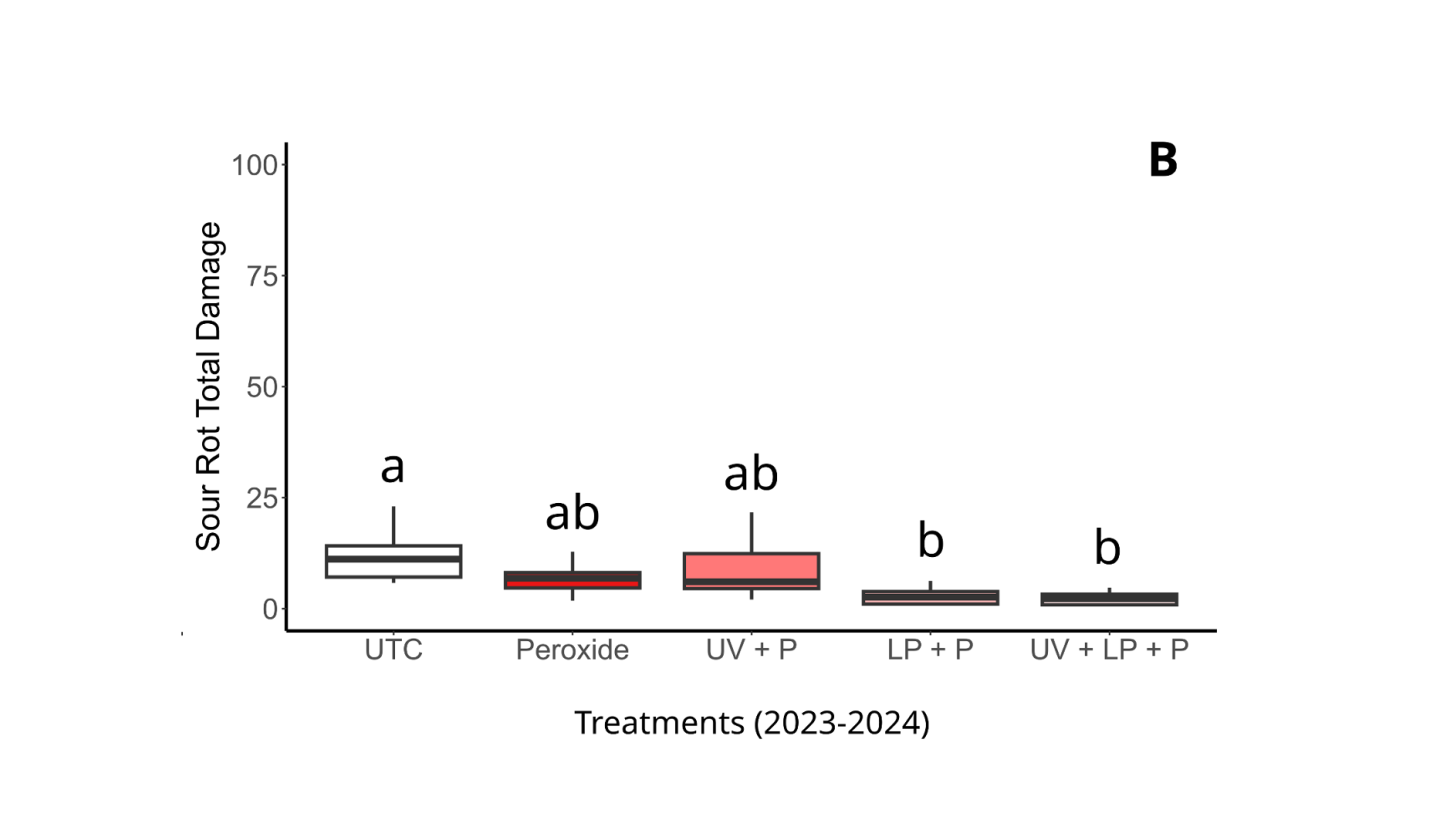
The results of these experiments in Vignoles indicate that these alternative management strategies can be successful at controlling sour rot but their impact is highly season dependent. Across all three years UV was as effective as leaf pulling for reducing total damage and both sour rot incidence and severity. There was no added benefit to combining leaf-pulling and UV. In the warm, wet year in which trials were conducted with high sour rot damage (2022), the commercial standard did not appear to reduce sour rot more than the untreated control, however it also did not perform significantly worse than the UV and leaf-pulling treatments. In mild sour rot years, with cooler, dryer weather, UV and leaf pulling, alone or in combination, reduced total damage significantly compared to untreated controls. Peroxide treatment in isolation or with UV was not successful at reducing total damage, and did not seem to increase the efficacy of leaf pulling treatments. However, severity was very low even in the untreated control groups during these years (2023-2024), affecting less than 25% of berries in infected clusters.