Back

Discover CALS

See how our current work and research is bringing new thinking and new solutions to some of today's biggest challenges.

Share
  • Cornell Integrated Pest Management
  • Plant Pathology and Plant-Microbe Biology Section
  • Viticulture and Enology
  • Crops
Each spring, I share what we learned in the pathology vineyards as we head into the new season. If you’re reading this, you’re probably already thinking about spray programs, labor, timing, and how much risk you can realistically tolerate in 2026. Here’s the headline: I’m increasingly convinced biofungicides are moving from “nice idea” to “standard tool,” not because they replace everything conventional, but because they can meaningfully contribute when used correctly, in rotation, and inside a broader integrated program.
What we learned in 2025:

Biofungicides can be effective rotation partners with conventional fungicides; in our multi-year program, mixed bio/conventional rotations can perform as well as conventional-only programs when used correctly. In our timing trial, where biofungicides show up in the rotation mattered less than many people assume, at least in that dataset. Tank mixing biofungicides with conventional fungicides is still a “proceed with caution” zone until compatibility is clearer and label directions support the mix. Cultural control is not optional, it’s the foundation that lowers disease pressure and makes every spray dollar work harder. 

Welcome to the Arena: the Pathology Vineyards (and why our results can look “harsher” than yours)

I manage the Cornell pathology vineyards in Geneva, NY, one of the toughest testing grounds for disease control. We deliberately manage these vineyards to promote disease, creating high-pressure environments ideal for rigorous fungicide testing.

Across nearly 10 acres and multiple concurrent trials, we routinely evaluate 100+ unique combinations of conventional fungicides, biofungicides, and mixed rotation programs. These trials feed into the NY/PA Grape Pest Management Guidelines, and we share results through articles, grower meetings, and peer-reviewed publication.

In the pathology vineyards, our vines face immense pressure from what we call the “Big Three”: powdery mildew, downy mildew, and black rot. Untreated controls can experience severe losses when conditions favor disease. We also operate in a context where fungicide resistance is a real concern, so stewardship is not optional, especially in the “critical window” when fruit is most vulnerable.

Fungicides: what the trials are telling us

A five-year dataset (2020–2024) from our efficacy program shows that biofungicide–conventional rotation programs can perform as well as conventional-only programs for season-long management of powdery and downy mildew when used correctly as part of an integrated program.

That does not mean biofungicides are a silver bullet. It means they are real tools, particularly valuable when conventional options are constrained by resistance pressure or by regulatory change.

No such thing as bad timing (at least in our 2024–2025 test)

In 2024–2025, we designed a timing trial to answer a practical question: if you’re rotating anyway, does it matter when the biofungicides show up?

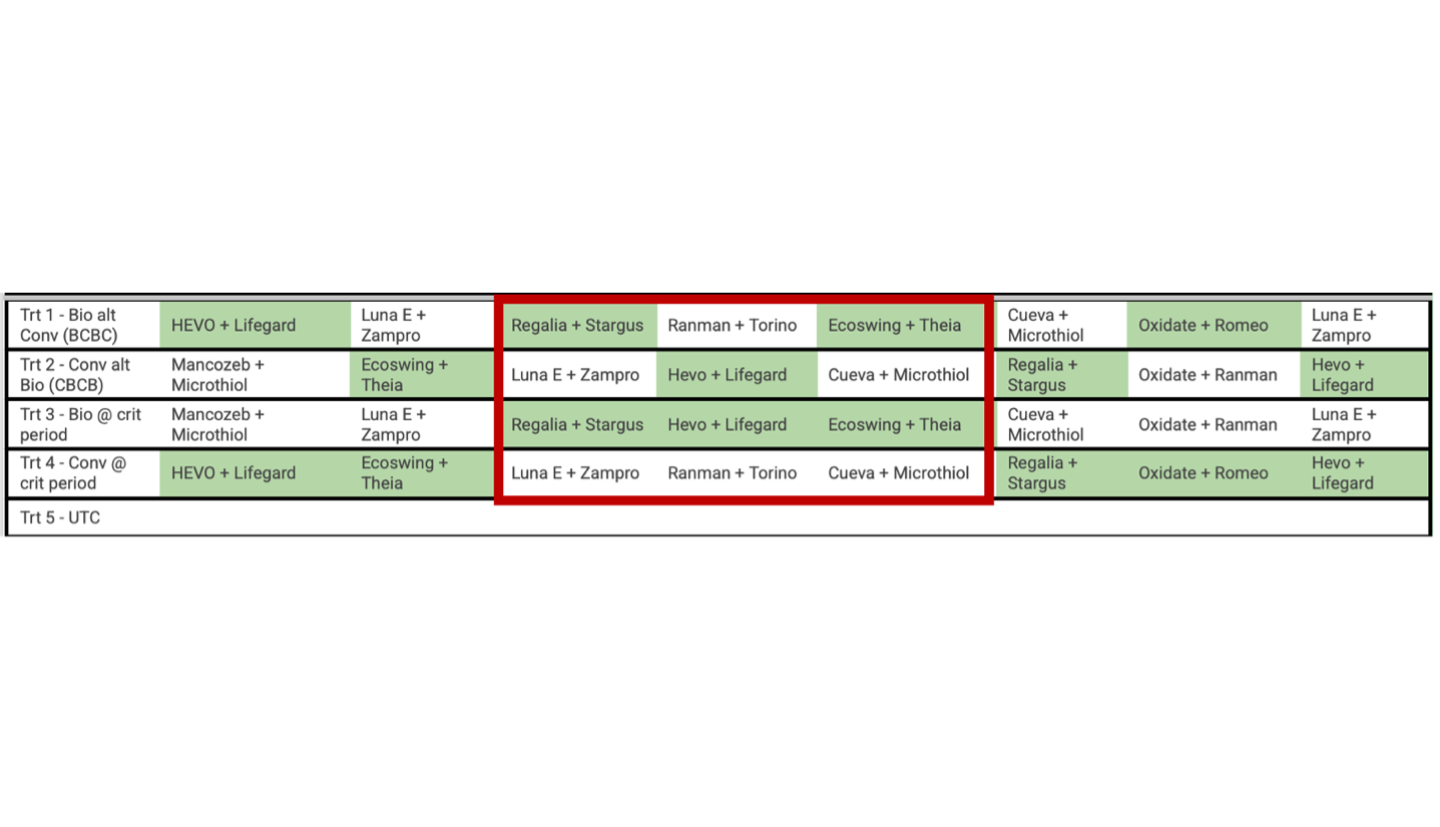
We compared: - rotation programs where biofungicides came first vs. conventional products came first, and - programs that “loaded” either biofungicides or conventional products into the “critical control” period (immediate pre-bloom through bunch closure), with the other class used before and after.

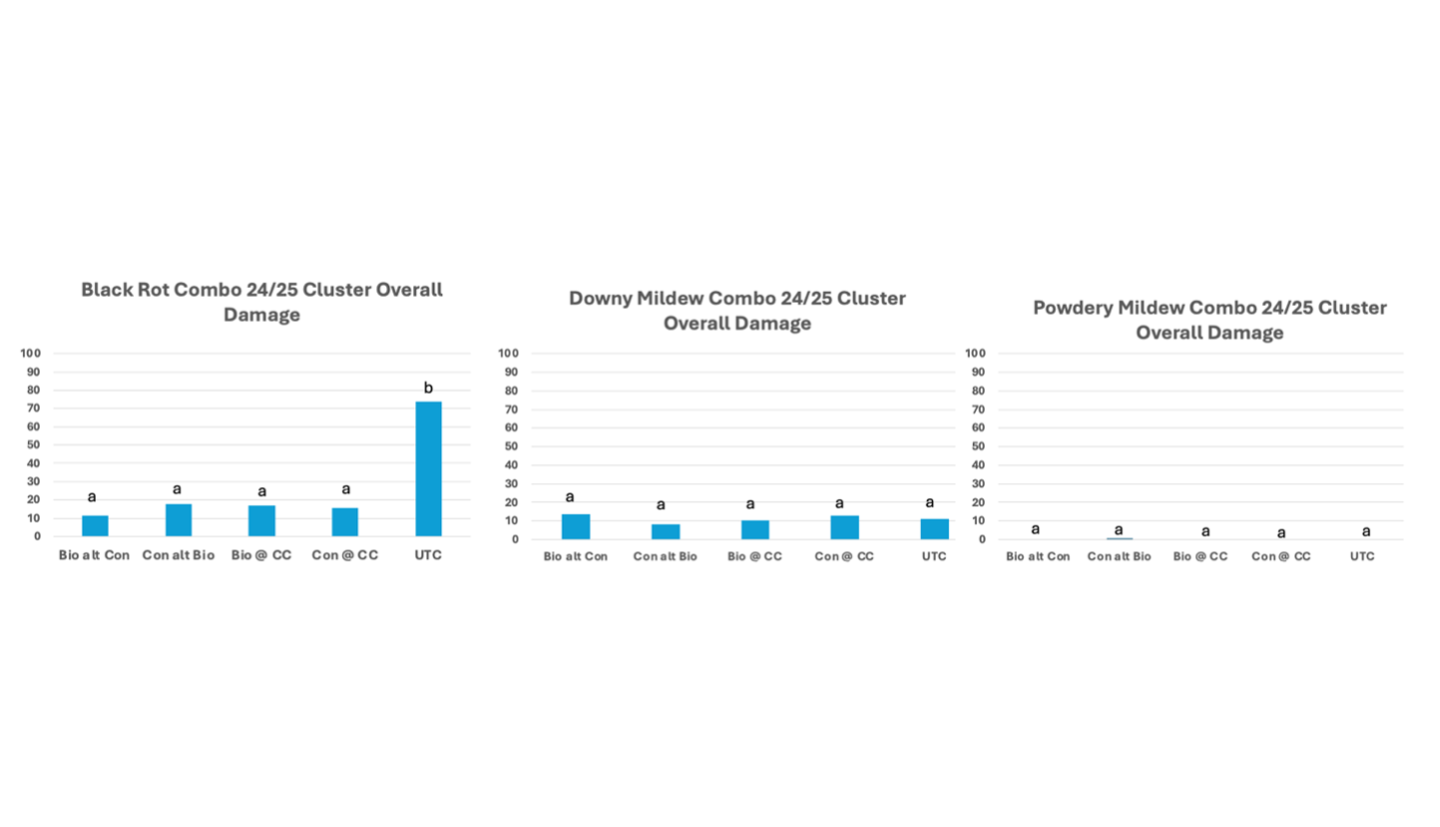
Disease pressure varied between years. But within each year, the different timing strategies performed similarly: none delivered perfect control, yet none clearly outperformed the others across the disease complex in our trial.

What's next for 2026:

If you are using biofungicides as part of a rotation, you may have more flexibility than you think about where they sit in the schedule, so you can position them to support resistance stewardship, labor logistics, or product availability, without automatically assuming you’re “giving up” control.

Figure 1: Treatments used in the timing study directly comparing biologicals to conventionals; critical-control window highlighted.

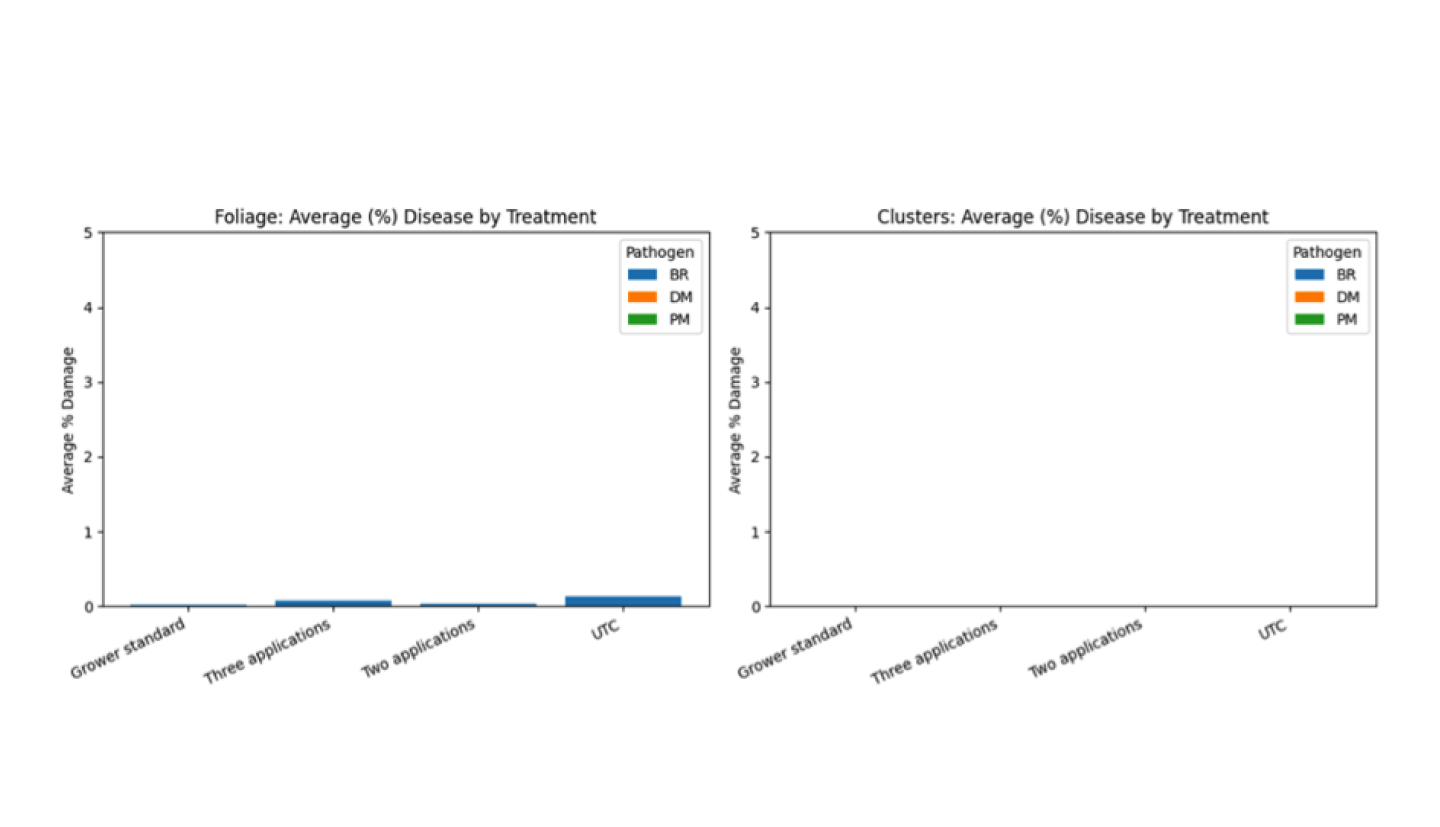
Figure 2: Damage ratings showing application timing was not a meaningful driver of differences among programs in this dataset.

One last note on fungicides: tank mixing is still a “proceed with caution” zone

In 2025, we also ran an early-stage tank-mix compatibility study pairing selected biological products with selected conventional fungicides. The results were not what we expected, which is exactly why we treat this as ongoing work.

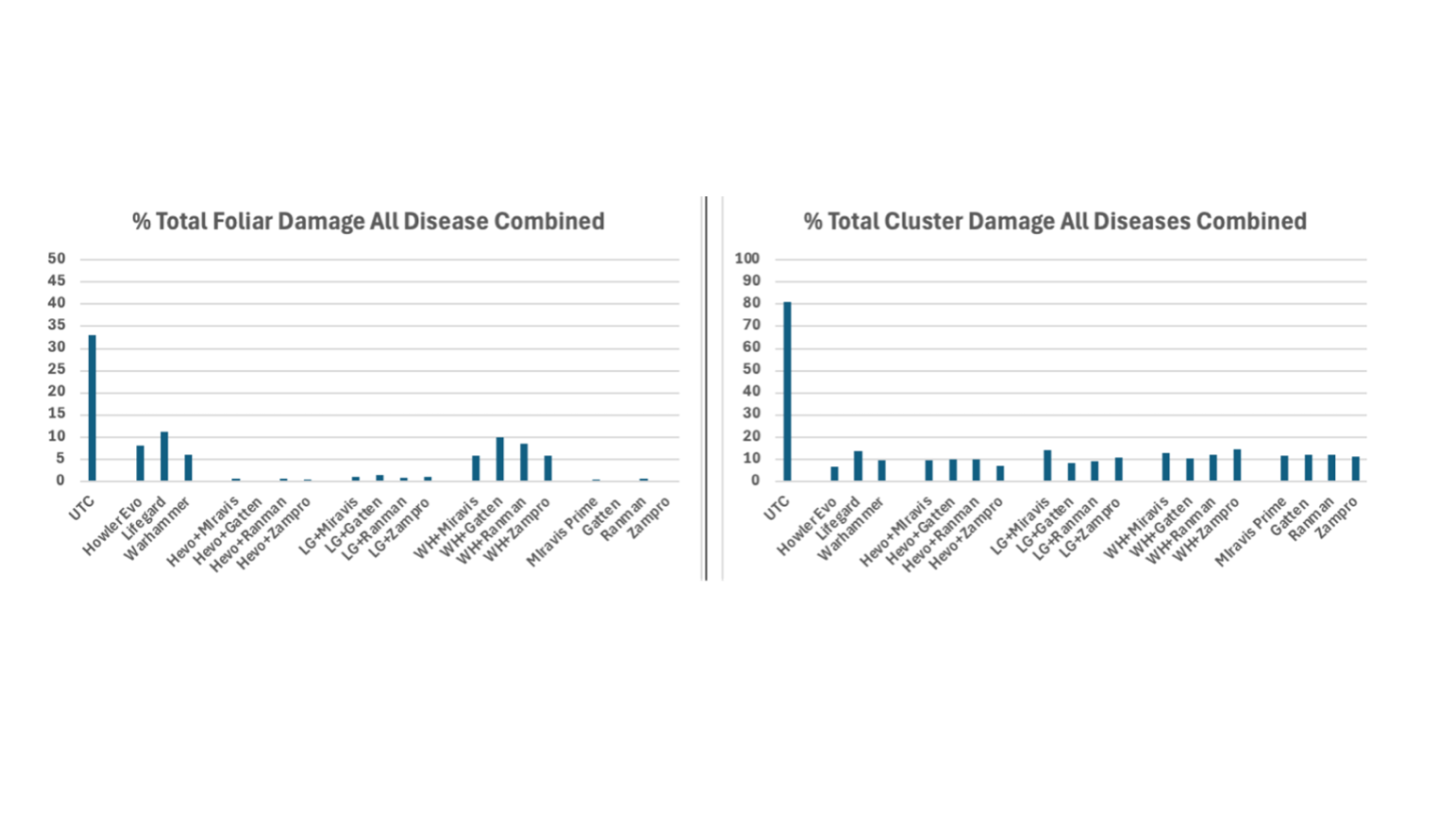
Our takeaway after one season: we continue to recommend not tank mixing biologicals and conventional fungicides unless the label explicitly supports the mix and you have a clear reason to do it. In some combinations, we observed no added efficacy, and in a few cases, performance appeared worse than the conventional alone. We will continue this trial as we build a stronger evidence base.

Figure 3: Foliar and cluster damage showing that adding biologicals to selected bio+conventional tank mixes did not improve control in year one.

Other management tools: classics & up-and-coming

Cultural control matters 

Cultural control methods are some of the most practical disease tools we have in the Finger Lakes, and they make every spray dollar work harder. I’ll admit up front: the pathology vineyards are designed to harbor disease, so much of this is “do as I say, not as I do.” Still, these are cultural tactics I’ve seen repeatedly pay off in commercial blocks.

Inoculum removal is probably the most overlooked practice that can yield great dividends, especially for black rot, where mummified berries can re-seed disease. I’ve seen a single cluster left on a vine produce a swath of infection underneath it, creating point sources that multiply as the season progresses.

Powdery mildew and Phomopsis can overwinter on grape tissues (including canes and wood), so removal of pruning debris can also matter depending on your block history and labor realities.

Downy mildew overwinters primarily as oospores associated with infected leaf tissue on the vineyard floor. That means practices that reduce, shred, or bury infected leaf litter can reduce spring inoculum in some systems, though they won’t replace a good program when weather turns favorable.

Canopy management matters for multiple reasons: - Leaf removal and hedging can increase airflow and light penetration, reducing time the canopy stays wet. - Too much exposure can create berry sunburn risk, timing, row orientation, cultivar, and region matter. - An opened canopy improves spray penetration, which can reduce “wasted” sprays and help your best materials actually hit their target.

This is also a great time to break out water-sensitive paper and check sprayer coverage in the fruit zone and interior canopy. And yes, calibrate your equipment annually.

Variety is the spice of life… and sometimes the strongest fungicide is genetics

Variety selection is an underused disease-management lever. I understand you plant what makes financial sense. But in humid regions and high-pressure sites, disease resistance is an economic trait: fewer sprays, fewer tractor passes, less labor, and more room to adapt when a product loses efficacy or label flexibility.

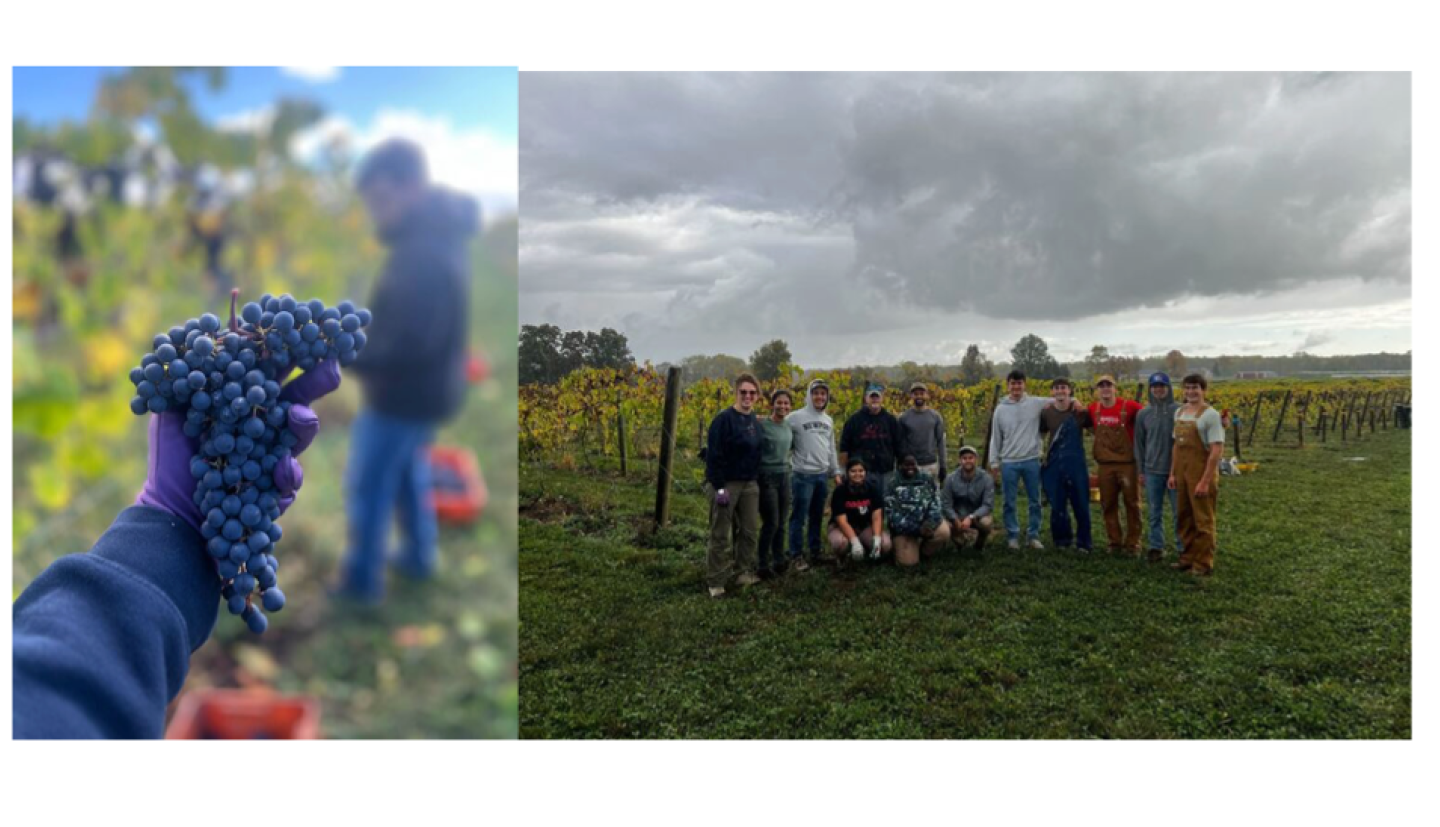
In what looks to be an upcoming release from the Cornell grape breeding program, currently referred to as “NY06”, we observed extremely low disease in 2025 across multiple spray programs in our research block. It’s an exciting example of how resistance breeding can change the “inputs required” side of the disease equation.

So, how’s the wine? We’ve partnered with several regional winemakers to evaluate best-fit styles and production approaches for this grape. More to come, some of us are learning by doing.

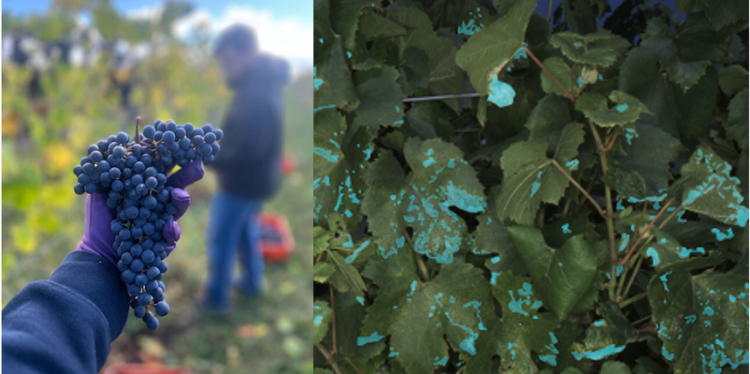
Figure 4: NY06 foliage and clusters showing minimal disease at harvest.

Figure 5: NY06 cluster and harvest team photo from the winemaking collaboration.

Let’s talk about tech, baby… scouting, sensing, and making sprays smarter

If you caught the Salt-N-Pepa reference, you’re either smiling right now, or rolling your eyes. Either way, here’s the point: technological tools are moving from “interesting prototypes” to practical decision support.

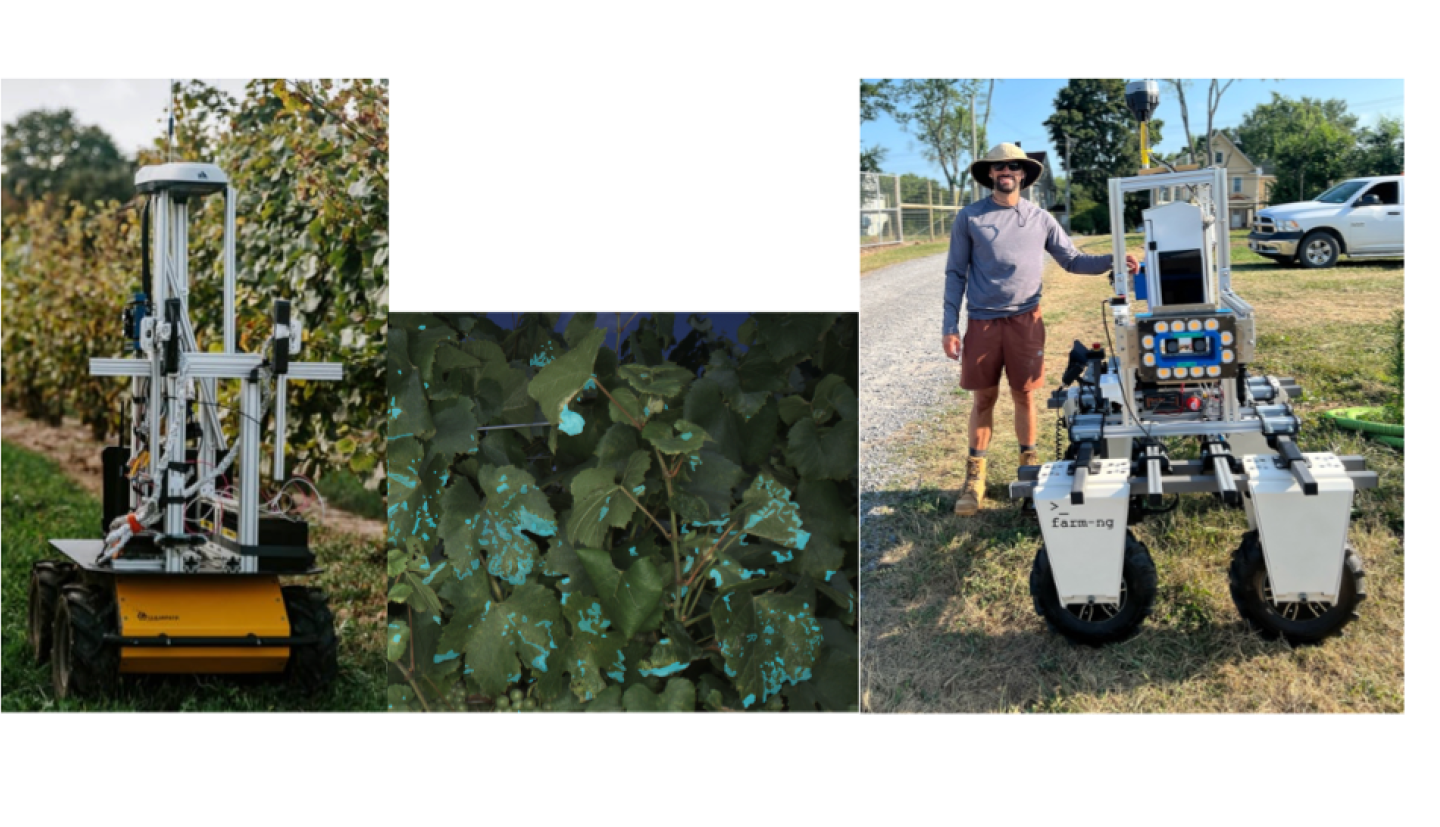
PhytoPatholoBot (PPB). This GPS-guided autonomous scouting platform collects canopy images and runs analysis so disease maps can be generated in near real-time. Published testing has reported accuracy comparable to well-trained human scouts, with far lower labor requirements. For growers, the long-term promise is targeted intervention: treat where risk is emerging, rather than blanket-spraying by habit.

Figure 6 : PPB early prototype vs. current system; example of how the model “sees” symptomatic tissue.

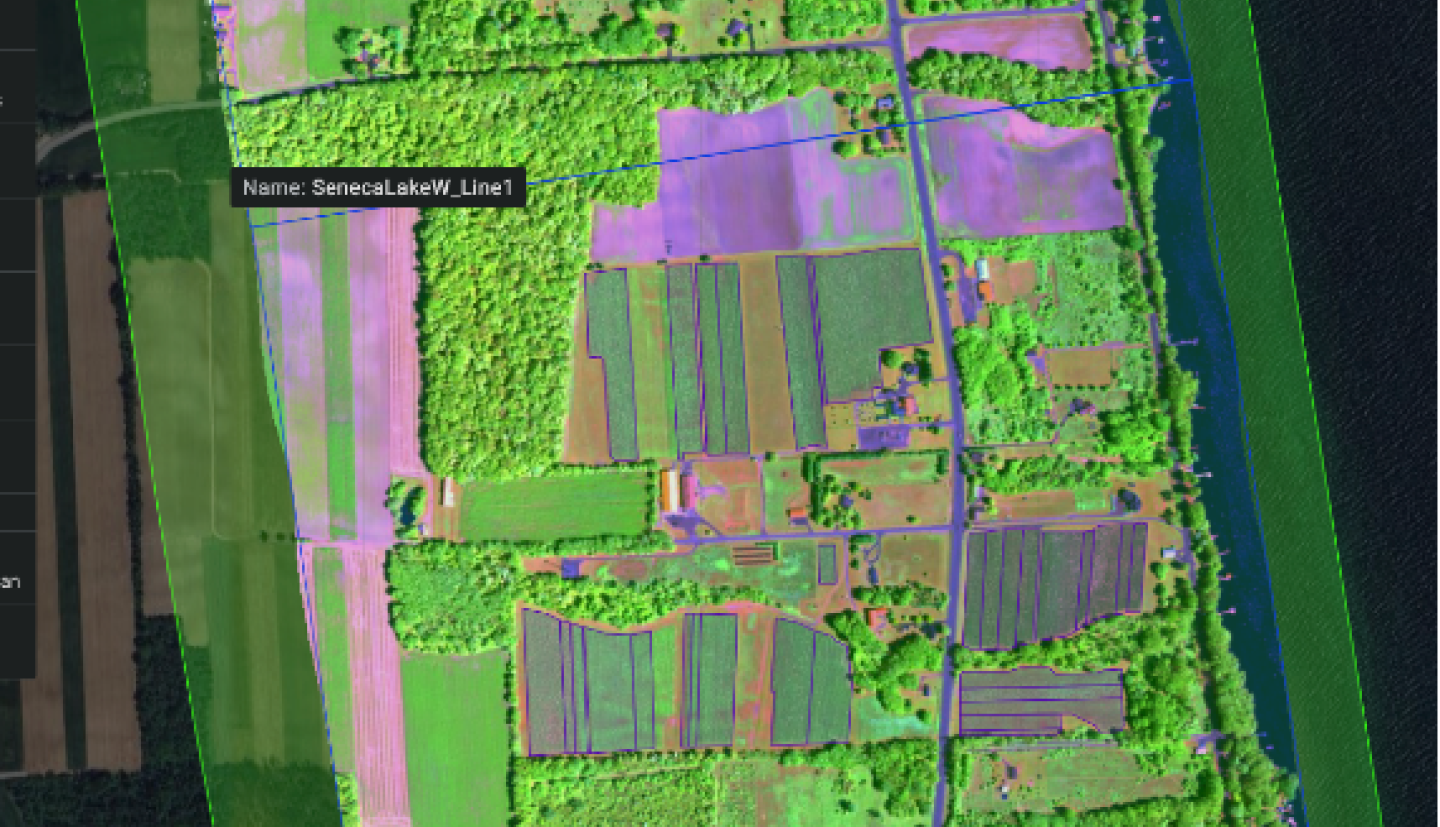
NASA ACRES + AVIRIS-3 hyperspectral flights. In 2025, NASA’s AVIRIS-3 collected hyperspectral imagery over New York research farms and surrounding agricultural regions. Hyperspectral data can detect physiological changes that may show up before clear symptoms do. That opens the door to earlier detection and better decision support, especially when paired with good ground truth data.

Figure 7: Example AVIRIS-3 hyperspectral imagery over New York (2025).

FungiSense: sensing fungicide protection status. One direction we’ve pursued is “plant protection sensing”: using spectroscopy to see how long fungicide activity persists on plant surfaces. The goal is simple: reduce unnecessary sprays by matching reapplication to protection status, not just the calendar. This work is still developing, but it’s an example of where tech could improve both economics and stewardship.

Figure 8: Dr. Katie Gold taking handheld spectrometer data collection in the field.

Closing Thoughts

If you’re not already using some of these approaches, consider adopting one or two this season, especially the ones that lower disease pressure before you rely on chemistry.

Technology tools may still be on a longer runway for widespread commercial adoption, but scouting, sanitation, canopy management, and well-designed rotations are available now.

The Gold grape pathology program is committed to providing updated, field-tested information, and we will continue both the applied research highlighted here and the broader efficacy work that supports grower decision-making.

About the authors: Dave Combs is a Research & Extension Support Specialist II in Dr. Katie Gold’s Grape Pathology Laboratory at Cornell AgriTech in Geneva, New York, with 20+ years of experience in chemical and cultural grape disease management. He runs Cornell Grape Pathology’s annual fungicide efficacy evaluation program. These trials challenge conventional, biological and mixed fungicide programs against five common grapevine diseases in the 9+ acre Cornell pathology vineyards. 

Dr. Katie Gold is an Assistant Professor of Grape Pathology, and Susan Eckert Lynch Faculty Fellow, in the Plant Pathology and Plant-Microbe Biology Section of the School of Integrative Plant Science at Cornell University where she holds primary research and extension responsibilities for grape disease management in New York State. Dr. Gold’s Grape Sensing, Pathology, and Extension Lab at Cornell (GrapeSPEC) studies grape disease detection and management. 

Keep Exploring

Panel discussion at 2026 Herd Health and Nutrition Conference

News

Nearly 150 dairy industry professionals gathered in East Syracuse, NY last week to hear from industry experts about the latest trends and research related to dairy herd health and nutrition at the 2026 Herd Health and Nutrition Conference. For...
  • Cornell Cooperative Extension
  • PRO-DAIRY
  • Animal Science
Jason A. Hunt speaks at 2026 Northeast Dairy Management Conference

News

Nearly 350 dairy producers and industry professionals from across the Northeast gathered in East Syracuse, NY last week for two days of collaboration, learning and forward-looking discussions. Hosted by Cornell CALS PRO-DAIRY and the Northeast...
  • Cornell Cooperative Extension
  • PRO-DAIRY
  • Animal Science