Back

Discover CALS

See how our current work and research is bringing new thinking and new solutions to some of today's biggest challenges.

Share
  • Cornell Cooperative Extension
  • PRO-LIVESTOCK
  • Animal Science
  • Animals

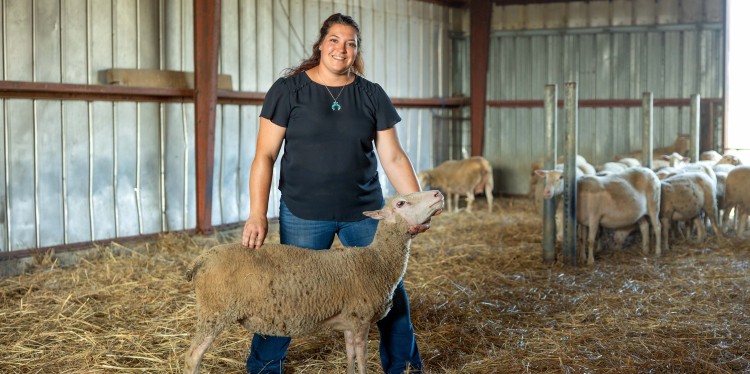
Jessica Waltemyer, New York State small ruminant extension specialist with Cornell PRO-LIVESTOCK, likes to joke that animals rule her life. “Personally and professionally, it’s animals all the time,” she said. “There’s no part of my life that doesn’t involve them.” 

Outreach and extension work with farmers who raise and maintain small ruminants (sheep, goats and camelids) make up 80% of Waltemyer’s position, with an additional 10% of her time devoted to small ruminant research and 10% teaching within the Animal Science Department. Add to that caring for the 70 dairy cattle and 20 sheep her family owns, and her life does, indeed, appear to revolve around animals 24/7.

But Waltemyer wouldn’t have it any other way. Although she always wanted to build a career around livestock, her love of sheep, and of outreach and learning, make her ideally suited for her position. She credits it to the mentorship of the late Michael Thonney, Cornell professor of animal science and sheep expert. She met him when she came to the university for a master’s degree in professional studies. “He ignited a passion for further knowledge in me,” she said. “Working alongside him really sparked my small ruminant interest, particularly in sheep.”
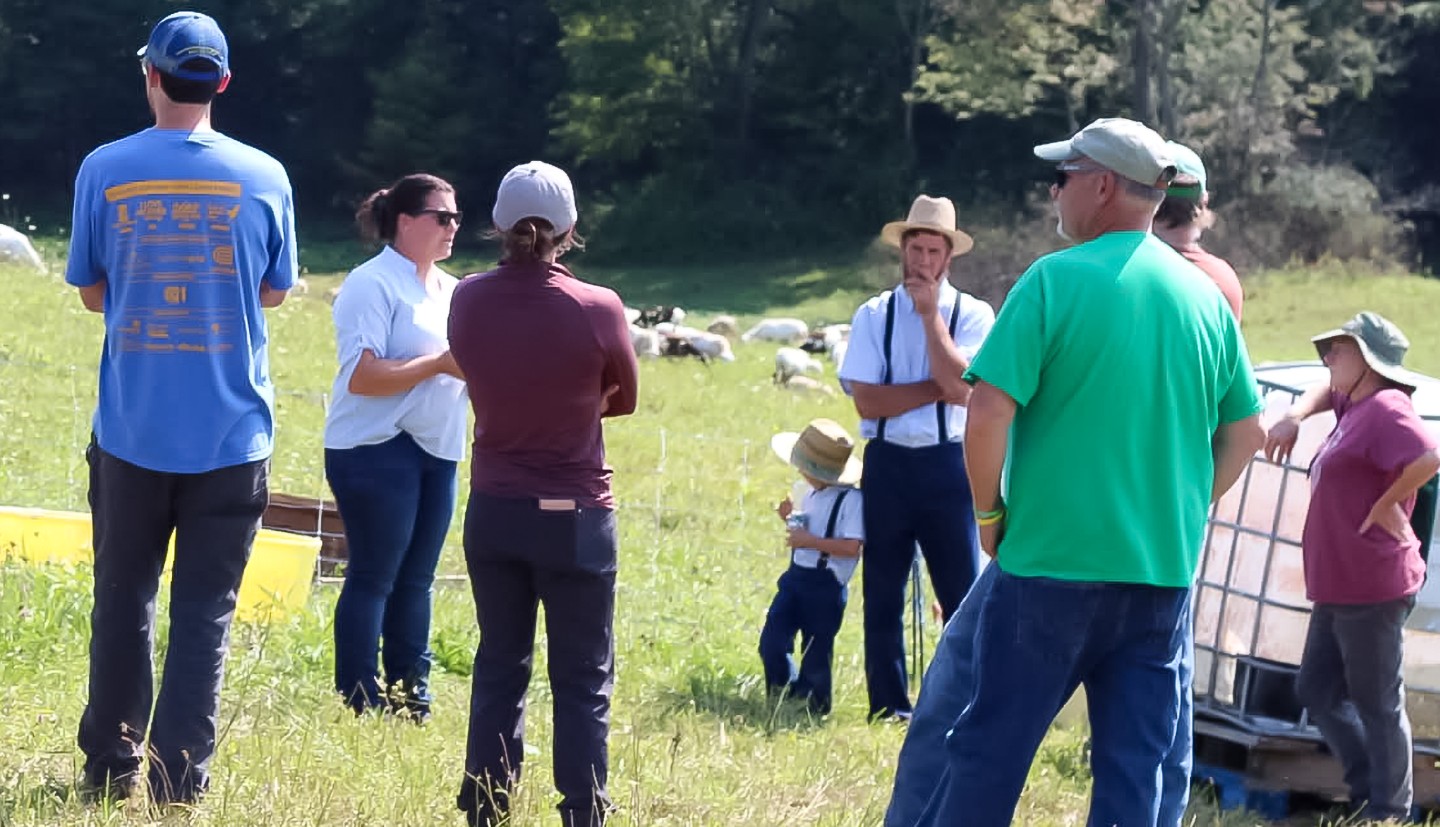
New York State currently supports around 83,000 sheep and 12,000 dairy goats. Sheep numbers have been growing in response to increased consumer demand for sheep-milk products and the developing practice of grazing sheep under large solar installations, Waltemyer explained. Small ruminant producers in New York, whose numbers are on the rise, also repeatedly requested extension assistance from the state. 

Partly in response to this, PRO-LIVESTOCK was created in 2024 to support both small ruminant and beef cattle producers. Along with Waltemyer, the program also includes Adam Murray, beef cattle extension specialist.

“The needs of New York’s small livestock producers are complex,” Waltemyer said. “Sheep production, for instance, ranges from farms with six sheep to those with 5,000 sheep. My job is to constantly navigate each producer’s goals and needs, and provide supportive research that is relevant to small ruminant production in New York.”

From the beginning, Waltemyer’s focus has been on good management practices. She often gets to the heart of the matter by working backwards from the producer’s goals and dreams. “I ask them things like ‘What are your big dream goals?’ or ‘Where would you like to be ten or 15 years from now?’” she explained. “We discuss the challenges that are keeping them from getting to those goals, and then I address those first.”

When Waltemyer isn’t tackling the needs of small ruminant producers, she is busy teaching a class or carrying out her own research. In fall 2025, she taught ANSC 3800: Sheep Production and Management to 44 students, with a waiting list of others eager to get in. 

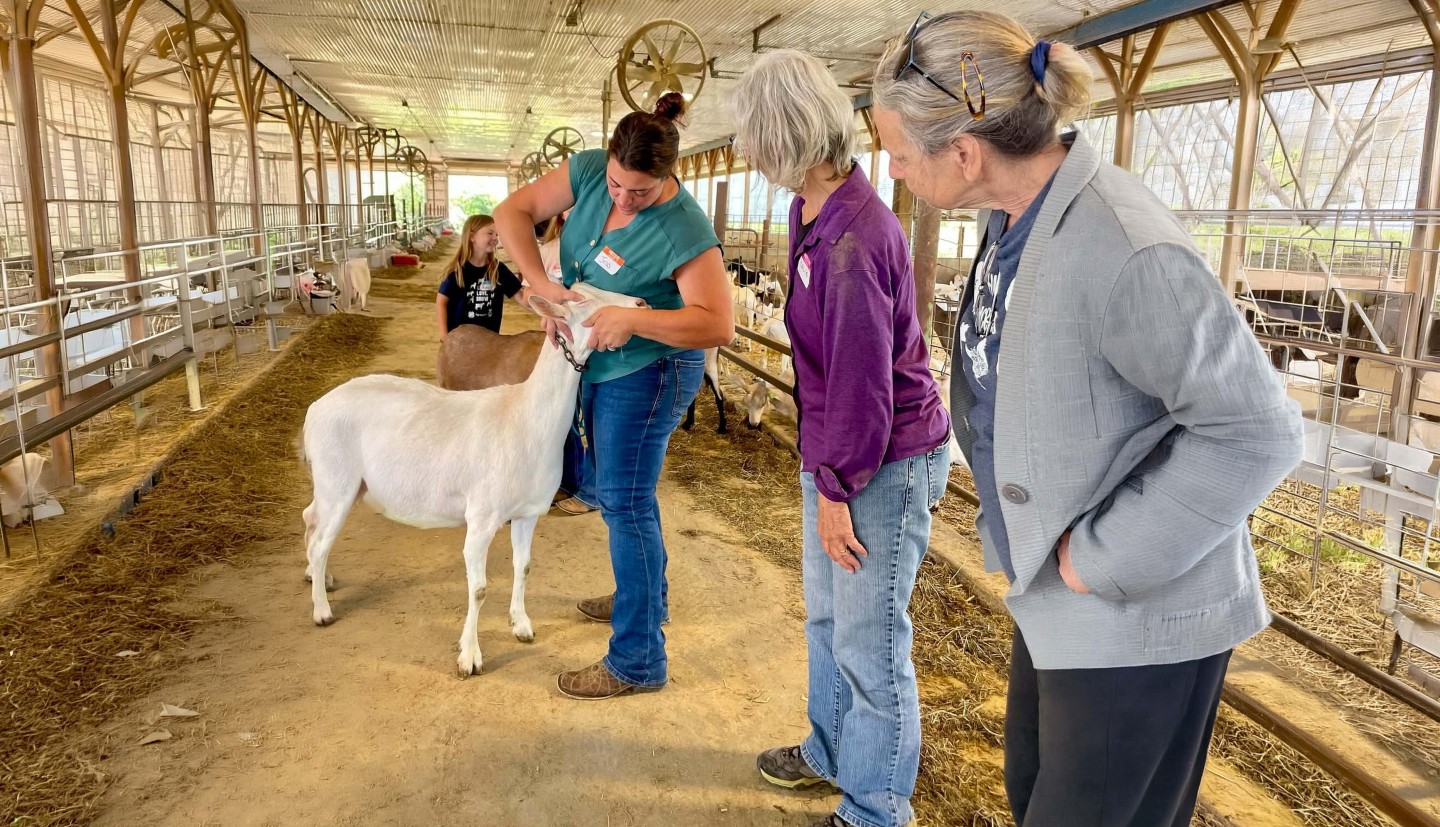
“It’s a very hands-on class,” Waltemyer said. “Students are involved in everything from taking care of animals with assigned chores to lamb checks. They get that real-life, on-farm experience that many of them don’t have the opportunity to have at home or sometimes even in an internship.”

“I want to give [students] insight into small ruminant production that they can apply in the future. Maybe, after this class, they’ll see things differently going forward.”

Waltemyer’s goal is for students in the class to carry their excitement about small ruminant production with them when they graduate. “Our students are going out into the industry, whether that be veterinary science or research, or as nutritionists or even as farm managers going back to the home farm,” she said. “I want to give them insight into small ruminant production that they can apply in the future. Maybe, after this class, they’ll see things differently going forward. They are our future.”

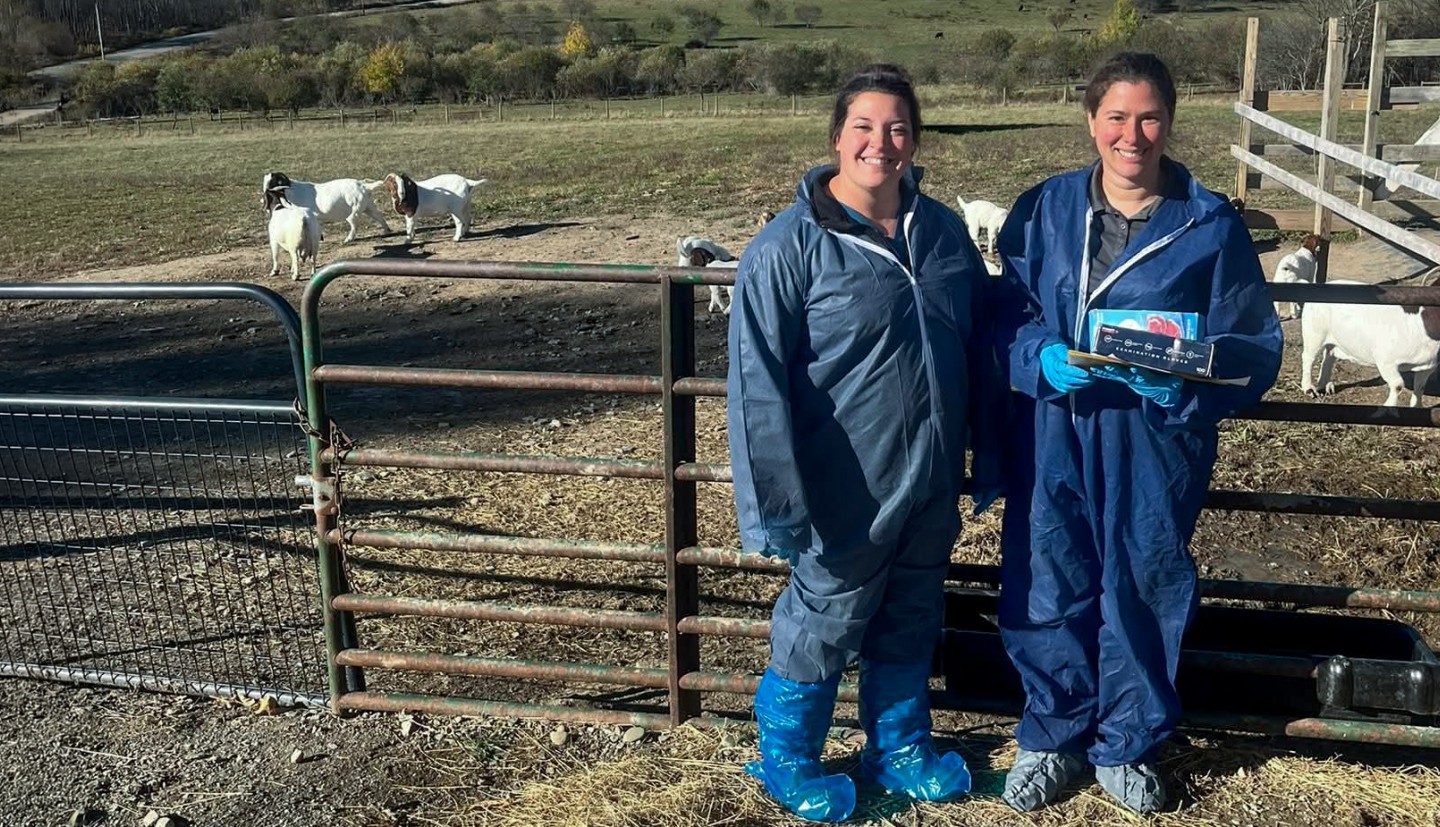
When it comes to her own research, Waltemyer wants to address current issues important to New York small ruminant producers. Last summer she teamed up with Amy Barkley, Cornell Cooperative Extension livestock and beginning farm specialist, to research parasite and dewormer resistance in small ruminants in southwestern New York.

“Internal parasites are a huge problem for small ruminant production worldwide,” Waltemyer said. “New York is no exception due to our fairly temperate climate and our abundance of grazing land. Sheep and goats do a lot of grazing, and those parasites that are highly concerning live on pastures and in the soil. They use small ruminants to finish their lifecycle and reproduce. This is especially hard on the ruminant if not given the right tools to thrive.”

Waltemyer and Barkley visited farms in the region and surveyed their internal parasite management practices. Then they came up with suggestions for improvement, such as switching dewormer classes if parasite resistance to the current wormer was evident after data analysis, or interrupting the life cycle of the parasite by changing the length of time small ruminants grazed individual pastures.

This kind of translational research can help keep New York agriculture strong, Waltemyer explained. “We don’t want to lose farmland,” she said. “So how can we keep it in production? Sheep are particularly suited for farms that want less initial input and faster profit turnaround. They produce offspring more quickly and are marketable sooner than larger livestock. Sheep — and goats, too — can continue to keep New York agriculture alive.” 

Jackie Swift is the communications specialist for the Cornell CALS Department of Animal Science.

Keep Exploring

two women hold a manequin of a newborn calf

Field Note

by Angelina Tang ’28 The journey into large animal medicine can be daunting for some, especially if they come from a city background or haven’t had a chance to interact much with large animals. That’s why Katie Krotz ’27 and Sydney Zarb ’27 co...
  • Animal Science
  • Animals
Christophe Duplais landscape

Spotlight

Academic focus: Chemical ecology, chemical evolution, agricultural chemistry Research summary: My research program investigates the functional roles of metabolites in plant–insect–microbe interactions. Integrating metabolomics, molecular biology...
  • Agriculture
  • Entomology