Back

Discover CALS

See how our current work and research is bringing new thinking and new solutions to some of today's biggest challenges.

Share
  • PRO-DAIRY
  • Animal Science
  • Digital Agriculture
  • Dairy

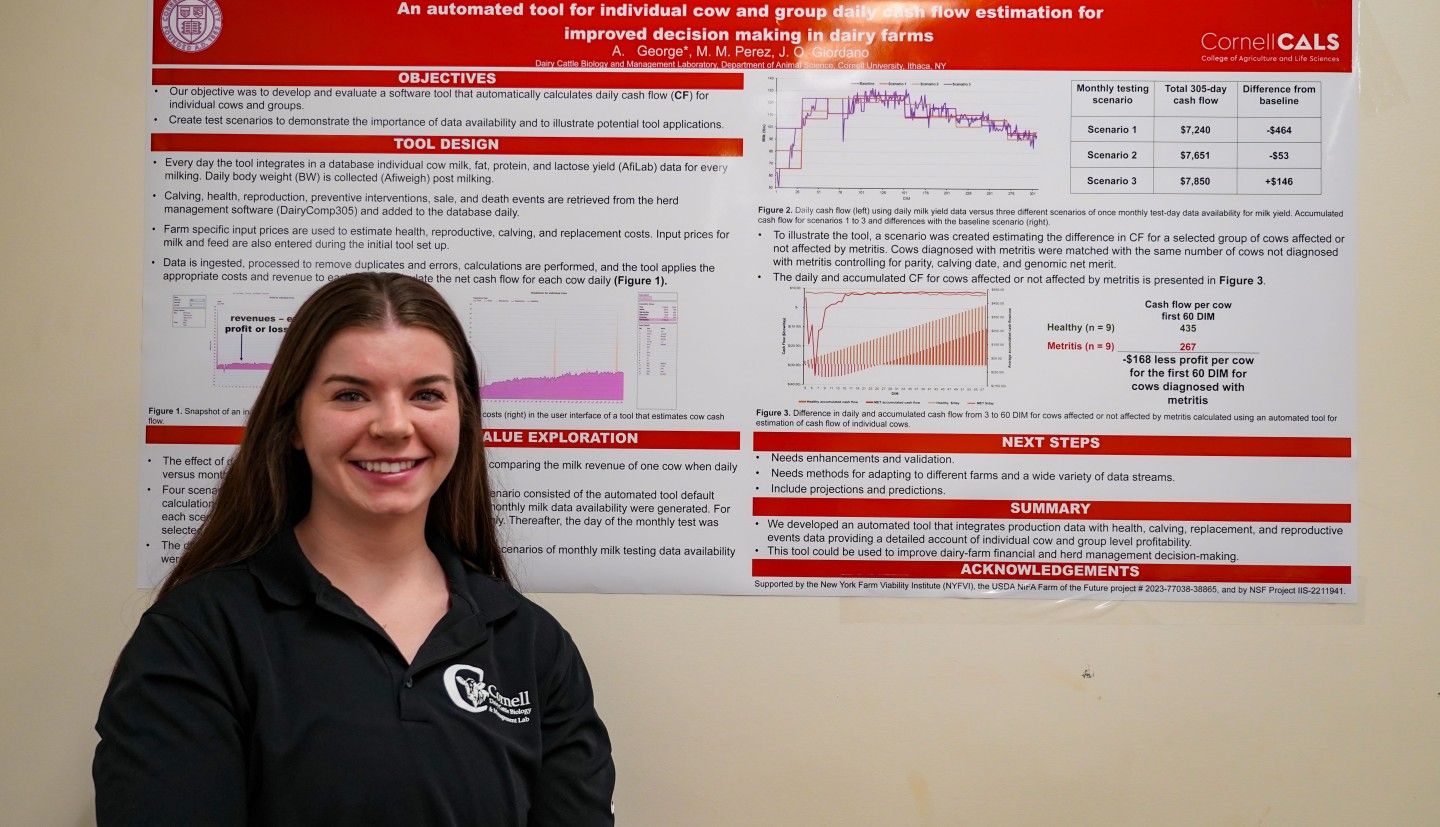
Angela George ’26 is a masters student in the Animal Science Department and a researcher in the Dairy Cattle Biology and Management laboratory led by Julio Giordano, professor of dairy cattle biology and management. Giordano is also director of the Cornell Agricultural Systems Testbed and Demonstration Site (CAST) for the Farm of the Future. Working with Giordano and CAST, Angela is developing MyCow$, an automated management support tool designed to help dairy farmers make informed management decisions by calculating real-time cash flow for individual cows and groups of cows. 

We spoke with Angela about her work with MyCow$ (pronounced “my cow dollars”).

Why do we need MyCow$? Why can’t dairy farmers just do what they’ve always done to figure out a cow’s profitability?  

Currently, there’s no effective or efficient way for farms to know the cash flow of each cow, unless they sit down with all the records for that cow and calculate the cash flow by hand. That’s almost impossible given the large amount of data involved. Most farmers are using industry estimates, herd or group averages, or best guesses to determine if a cow is profitable or not. And most of the time, these estimates do not include several of the key drives of cow cash flow.  

By using the MyCow$ tool, farmers will have access to real-time cash flow for all cows at any time. It provides an efficient way for farmers to track and understand the contribution of any individual cow to the farm’s bottom line. Once they know that, they can make well-informed decisions.

How does the MyCow$ tool work?

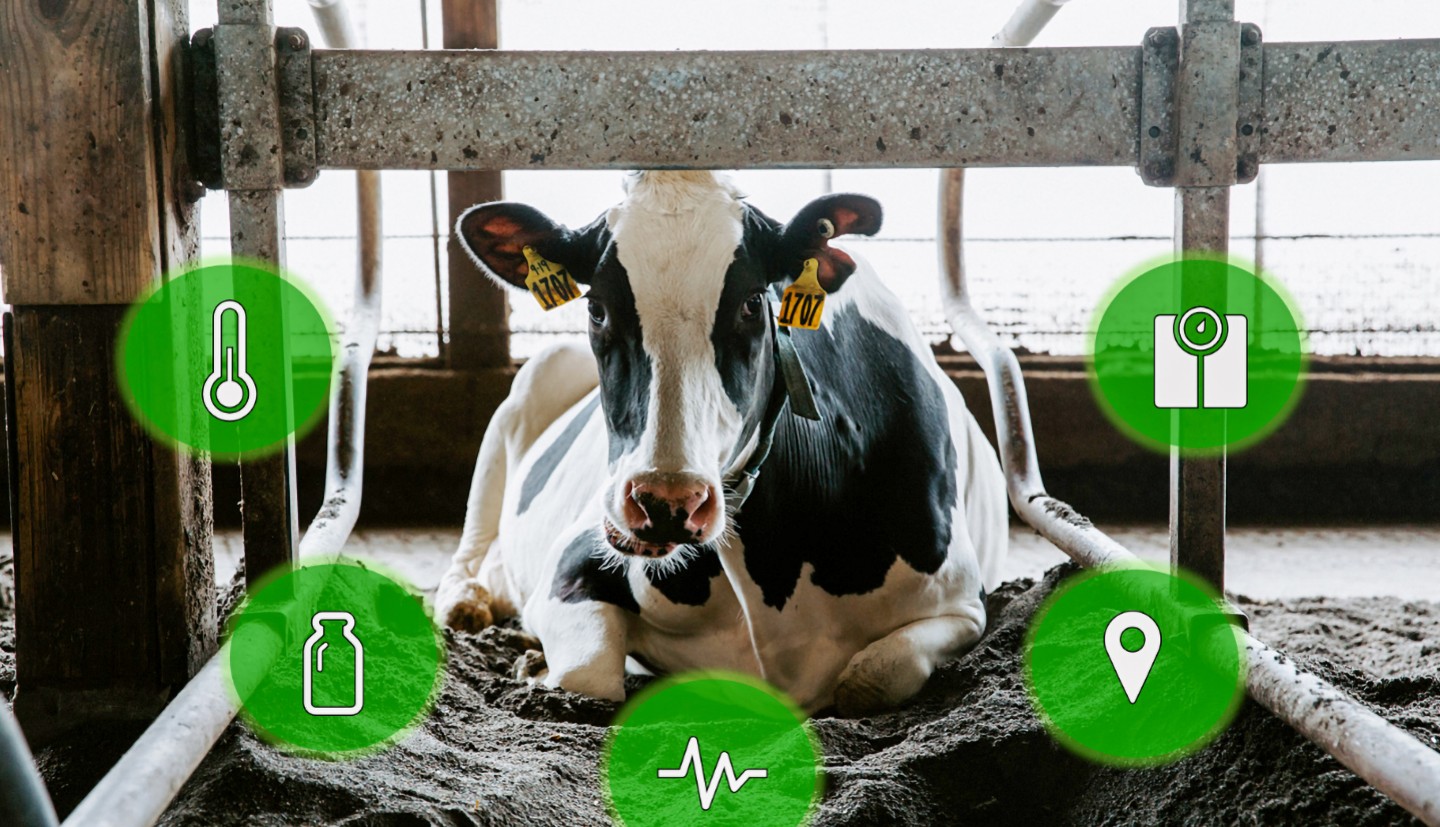
Every day, MyCow$ integrates individual cow milk yield and component data, as well as live body weight from on-farm parlor monitors and walk-over scales. The tool also retrieves management data, such as calvings, health and reproduction events, preventative interventions, sales and deaths, from farm management software and adds it to the database daily. 

During the initial tool set up, the user assigns farm-specific values to every source of revenue or expense. Then, when the tool ingests data on a particular cow, it reads through the data and applies the appropriate values to any sources of income and the appropriate costs to any expenses for the cow. 
Explain in more detail how MyCow$ would help a farmer decide if a particular cow is profitable or not.

By providing the cash flow of individual cows, MyCow$ allows users to compare cows with each other. MyCow$ also makes it easy to group cows based on variables such as lactation number, genetics, health and reproductive history. The tool tracks herd and environmental management data, too. Farmers can compare the associations between cash flow and cow characteristics. Or they can look at a certain event in the cow’s life, such as a breeding event, and compare that outcome to cash flow for that cow. They can also take into consideration the impact on cash flow of a cow’s reaction to certain management conditions or factors, such as feeding changes or use of different health treatments.

Your masters project is to develop the MyCow$ tool. Can you explain how you are doing that?

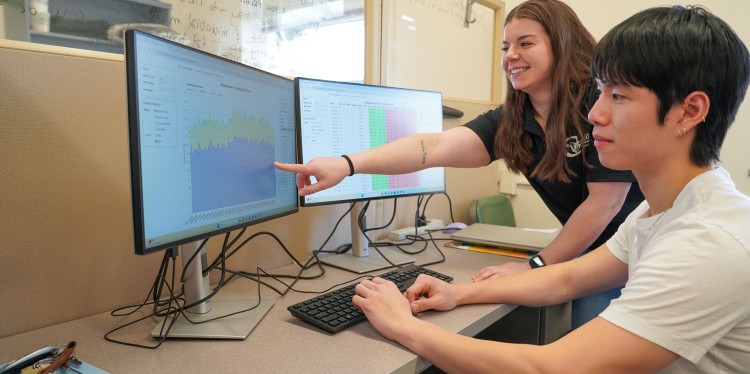
Professor Giordano and I conceptualize the tool and decide what it needs to do, what data it needs to ingest and what information it needs to provide. We work closely with a computer programmer from the Cornell Center for Advanced Computing who brings our ideas to life in the tool web page. The data generated by the tool provides detailed and comprehensive economic and management data for each cow, so I’ve begun using this data for economic analysis, as an additional component to my research. 

What role does CAST for the Farm of the Future play in the development of MyCow$? 

CAST is developing an ecosystem of networked technologies and techniques to meet the needs of modern farms. CAST researchers are working with many different types of data streams from on-farm technology, like health data from wearable sensors on cows or milk quality data from milking parlor analyzers. 

Since CAST can provide all the data needed for MyCow$ to operate and be refined, we are using that data to continue to develop the tool until it can be deployed to commercial dairy farms. Some of the unique data we can generate at CAST through novel technologies like computer vision systems, wearable sensors and genomics will allow us to add more novel data streams. It also enables other relevant comparisons of the effect on cash flow of certain cow features, management practices and environmental conditions.  

By using MyCow$ at CAST, we are testing the tool’s ability to handle these different technologies and data streams, and we are validating its ability to accurately estimate cash flow from this data. MyCow$ needs to work with as many of these data streams as possible because there is already an abundance of data available in the dairy industry, and that will only increase in the future.

Looking forward, what are the next steps? 

I want to finish building the web page and producer interface where the farm user will enter their farm-specific data. I am also conducting an economic case study using the data generated by MyCow$ that will eventually be available as a paper. 

Jackie Swift is the communications specialist for the Cornell CALS Department of Animal Science and the communications manager for CAST.

Keep Exploring

Jason A. Hunt speaks at 2026 Northeast Dairy Management Conference

News

Nearly 350 dairy producers and industry professionals from across the Northeast gathered in East Syracuse, NY last week for two days of collaboration, learning and forward-looking discussions. Hosted by Cornell CALS PRO-DAIRY and the Northeast...
  • Cornell Cooperative Extension
  • PRO-DAIRY
  • Animal Science
Popp Scholarship Award winners

News

Cornell CALS undergraduates Danielle Herrick, Lainey Koval, Lucas Walley and Sophia Woodis received the Richard Popp Scholarship award.
  • PRO-DAIRY
  • Animal Science
  • Dairy