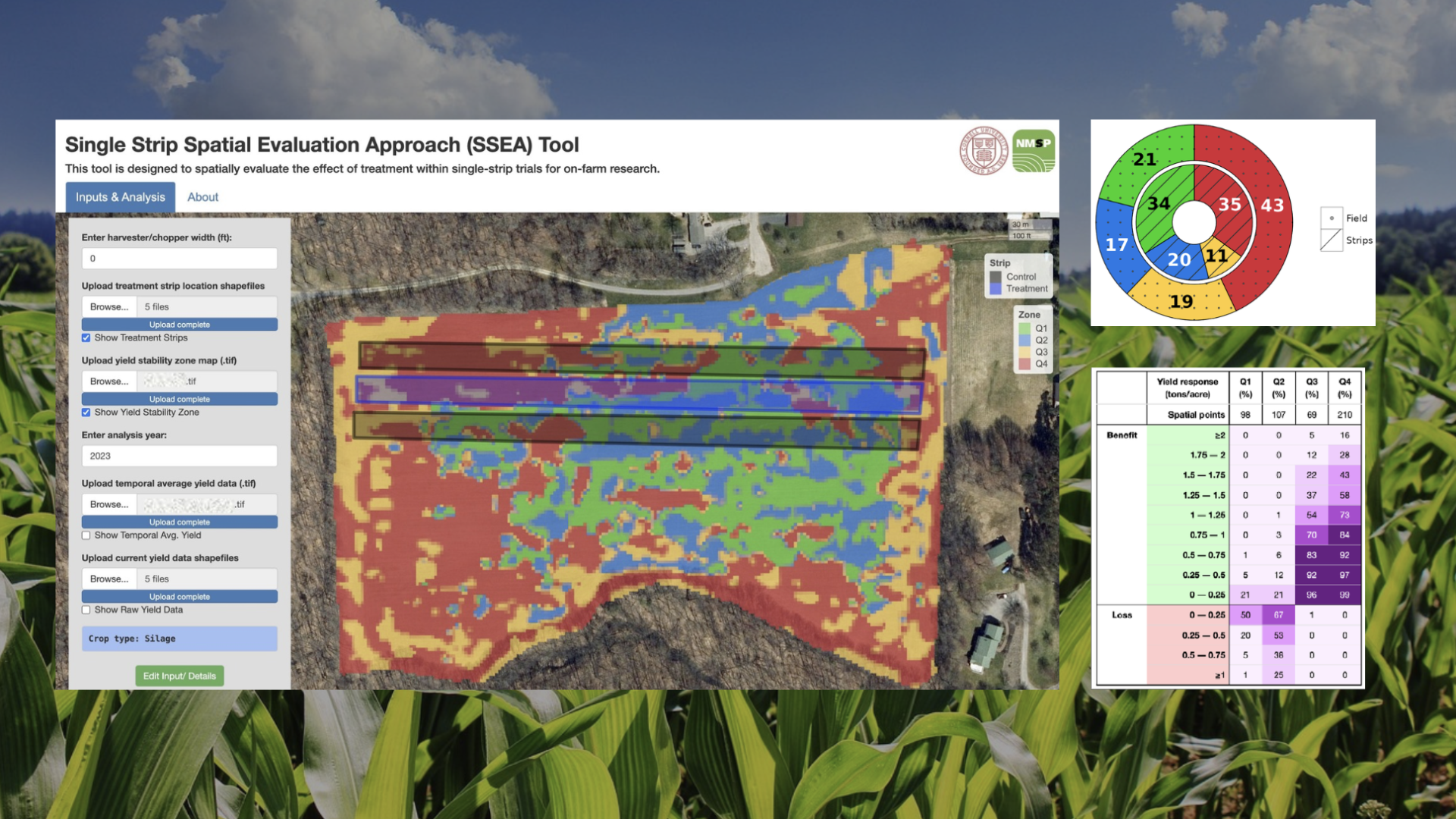
One of the best ways to connect science to practice is through on-farm research. On-farm research can help farmers make informed decisions about how to efficiently use their resources (like fertilizer and seed) to grow high-yielding, high-quality crops. However, traditional research designs like replicated strip trials can be difficult to implement because of the time, equipment and labor required during the busy growing season. Consequently, farmers can now use the Single-strip Spatial Evaluation Approach (SSEA) for on-farm research because of its simple, straightforward approach that fits within normal farm operations.
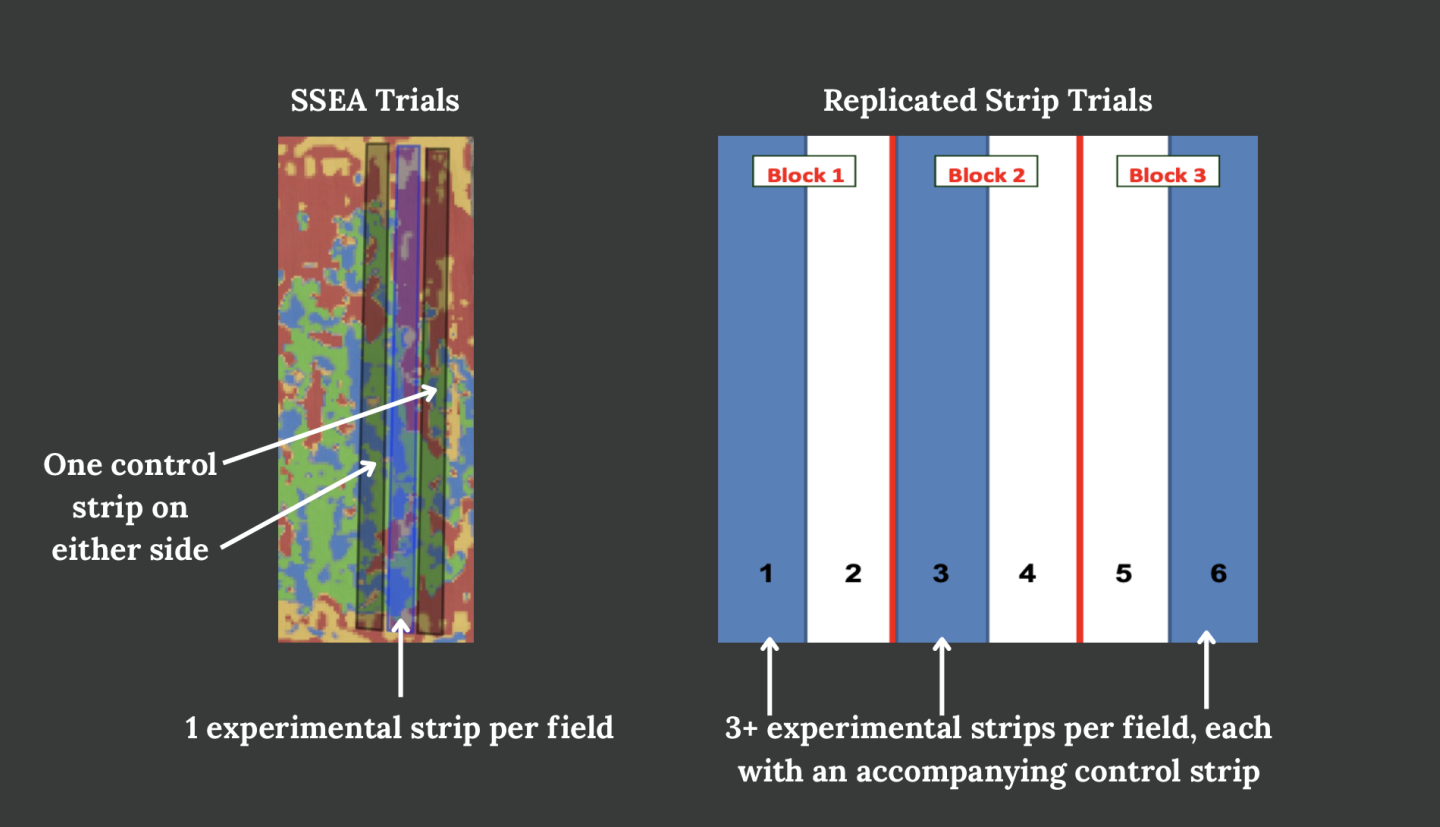
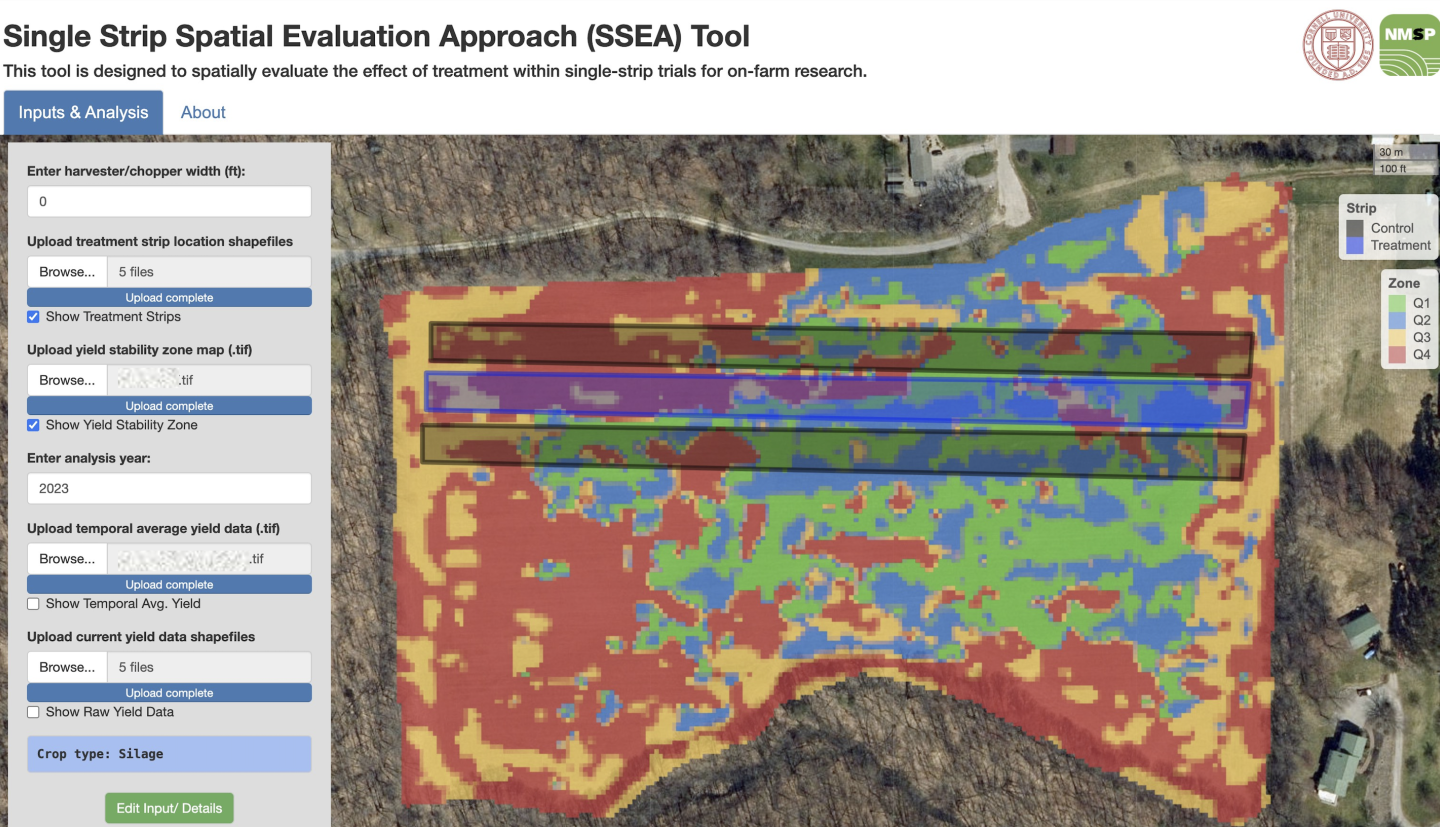
The widespread use of yield monitors during corn grain and silage harvest has made SSEA trials possible for New York corn growers. These trials are used to analyze the impact of treatment on a single strip of a field (above, left), rather than several strips (above, right). Compared to replicated strip trials, the treatment tested during a SSEA trial gets implemented in a much smaller area of a field, minimizing disruption to everyday farm operations.
Previously, it was necessary for Cornell CALS’ Nutrient Management Spear Program (NMSP) staff to support SSEA analyses by performing the data analysis after receiving all the necessary information from the farmers or farm advisors.
Wouldn’t it be great if farmers and crop advisors had access to a tool that could help streamline on-farm SSEA research trials even further? Now, they do.
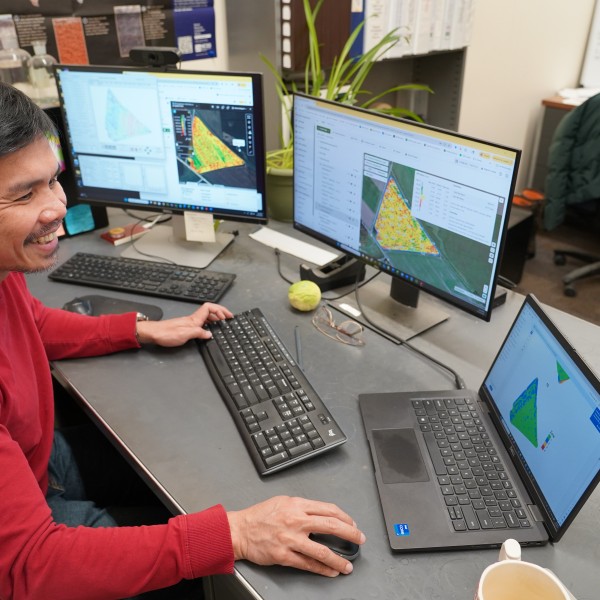
Recently, a publication in the Agronomy Journal on December 16 launched a web-based tool developed by NMSP: the SSEA tool. The SSEA tool automates SSEA trial analyses, providing visual results and downloadable reports—bringing the science to the fingertips of New York farmers and crop advisors, and breaking barriers when it comes to accessing these resources.
To use the tool, farmers or crop advisors can input the required information, such as location of the treatment strips, a yield stability zone map, temporal average yield layers and current-year yield data.
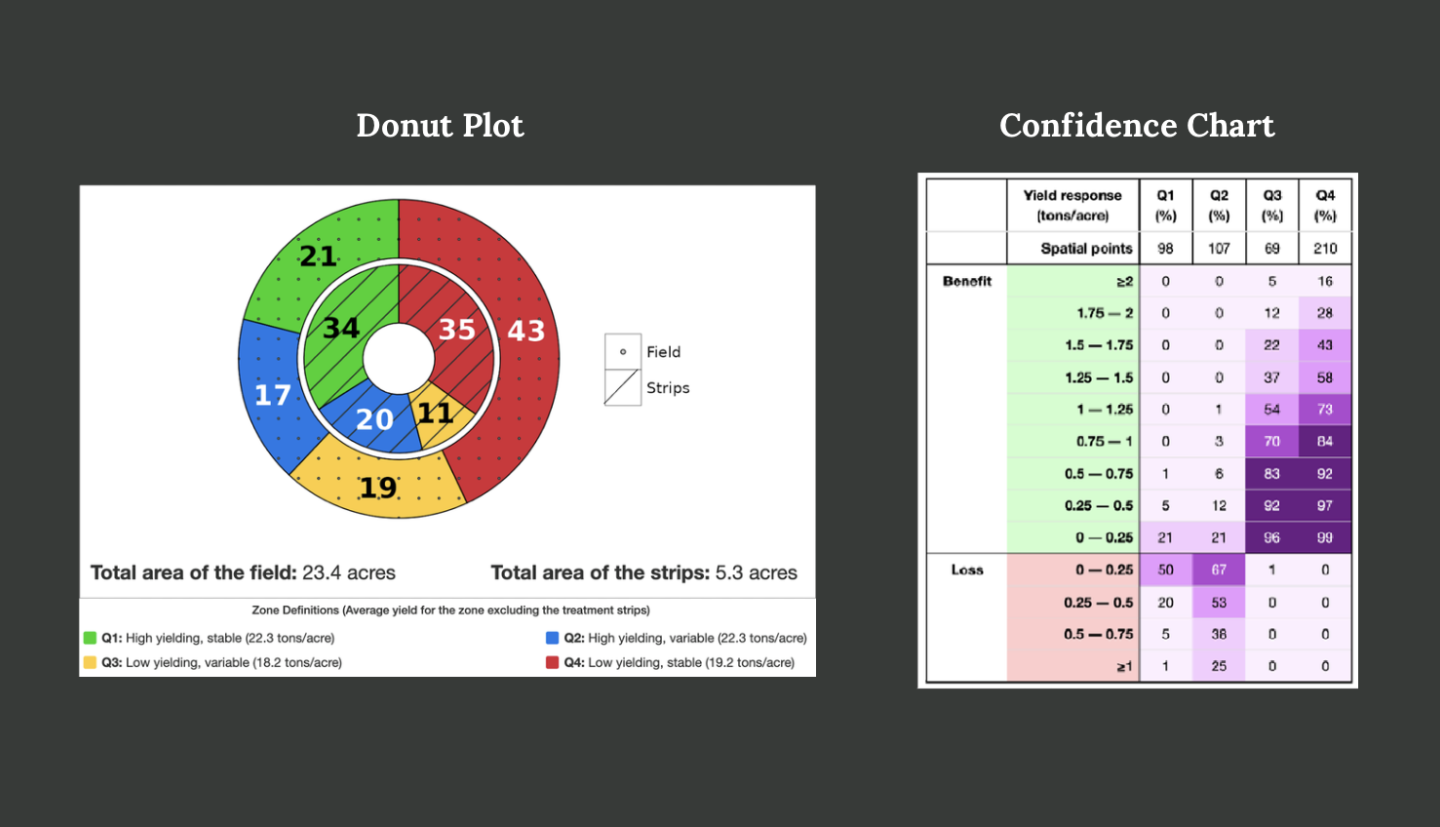
Once the necessary information is entered into the SSEA tool, it will create two visuals: a donut plot and a confidence chart (below). The donut plot shows the distribution of the yield stability zones in the strips compared to the whole field. The confidence chart shows the confidence level in a yield impact (positive or negative) of a certain size (bushels or tons per acre difference) due to the treatment that was implemented.
Beyond the visual output, the evaluation tool also interprets the results and provides a downloadable report with key numbers and figures included. Altogether, this tool will enable farmers to push their on-farm trials to the next level, making on-farm research more practical, approachable, accurate and translatable to other fields on the farm.
The farms that work with NMSP under the New York On-Farm Research Partnership and share their yield data for cleaning and reporting already have most of the necessary information generated and shared with them (yield stability zone maps, yield data layers and current year’s yield data). The only piece of information these farms need to add is the location of the treatment strip.
NMSP also invites crop advisors and farmers with yield data which has not yet been cleaned or used to develop yield stability zones– to share their yield monitor data for processing and subsequent use with this new evaluation tool. Shared data become part of the statewide New York research dataset but will not be shared with anyone other than the farmer. Farm identities are kept confidential.
To learn more about the SSEA tool, check out the recent What’s Cropping Up? Article. The tool was launched with a publication in the Agronomy Journal: Enhancing on‐farm research with a web‐based single‐strip spatial evaluation tool: Design, features, and applications | Agronomy Journal.
Madeline Hanscom ’22 is a communications assistant for Cornell CALS’ Nutrient Management Spear Program (NMSP).
Keep Exploring
Field Note
- Dairy Fellows Program
- Animal Science
- Agriculture
News
The new, high-resolution maps calculate global emissions from croplands by region, crop and source – enabling hyper-local mitigation.
- Ashley School of Global Development and the Environment
- Global Development Section
- Agriculture
We openly share valuable knowledge.
Sign up for more insights, discoveries and solutions.