Back

Discover CALS

See how our current work and research is bringing new thinking and new solutions to some of today's biggest challenges.

Share
  • Animal Science
  • Animals
  • Bacteria
  • Dairy

by Sydney Zarb ’27

As an undergraduate in Cornell Animal Science, with the goal of becoming a veterinarian, I want to more deeply understand solutions that benefit cows, the environment and the people that depend on them. I am particularly interested in exploring the intersection of animal welfare and veterinary medicine. 

To help me do that, during my sophomore year, I joined the Precision Livestock Health Lab of Dr. Francisco Leal Yepes, assistant professor of population medicine and diagnostic sciences in the College of Veterinary Medicine. I serve as a student-lead for diverse projects, rooted in discovering the balance between improving farm efficiency, preventing disease and minimizing agriculture’s carbon footprint within the dairy production industry.

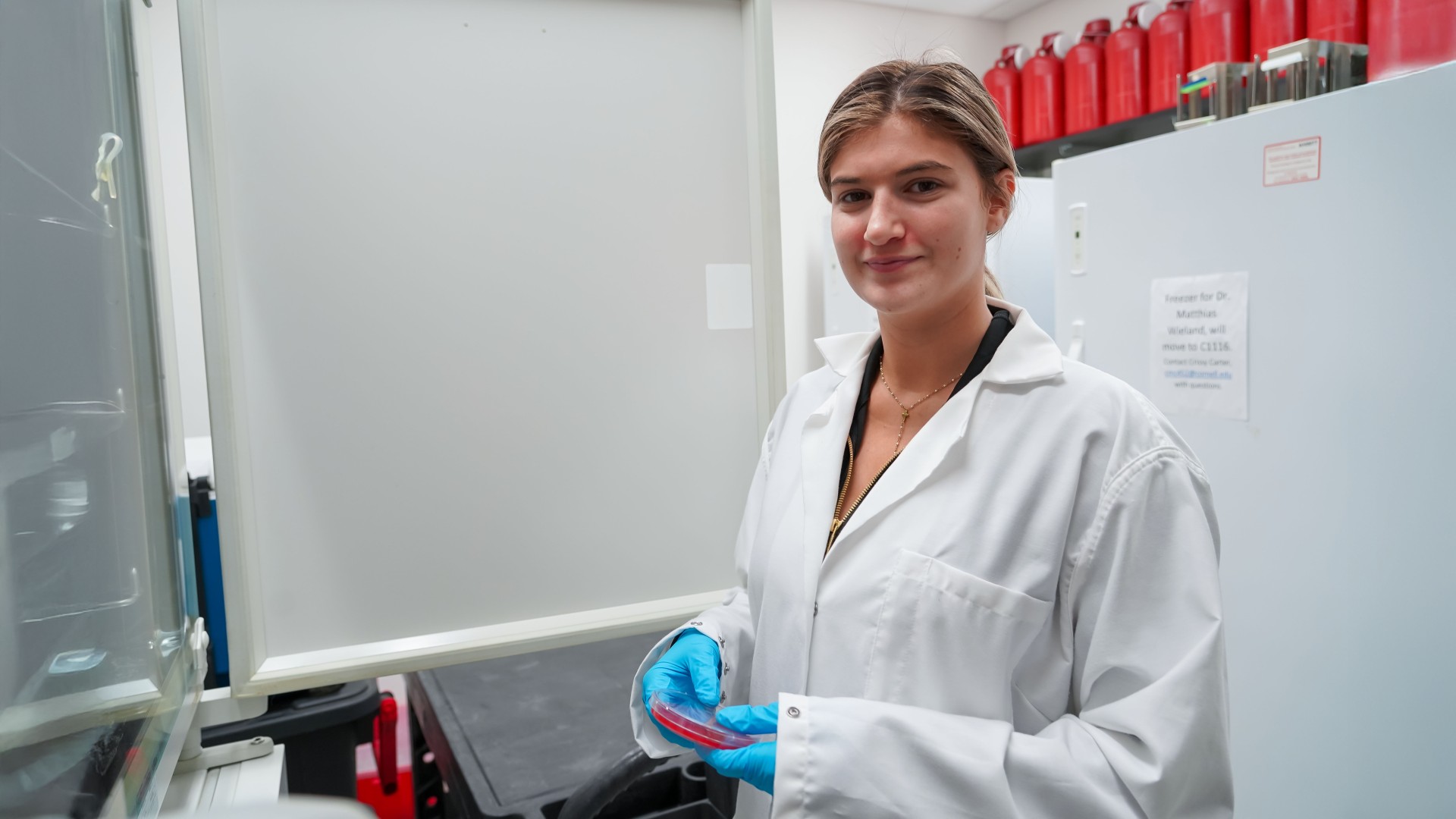
My duties balance fieldwork and lab work. In the field, I collect milk and blood samples, and conduct health screenings of all of our cows for various projects. Additionally, I have worked with ultrasound technologies and cameras, assessing behavioral outcomes and conducting both lung and liver imaging. In the lab, I work most often with bloodwork and the bacterial quantification of milk samples.

I really enjoy being involved in every stage of the scientific investigative process. I help shape the questions we ask, collect samples in the field, run the lab analyses, discover how the data pieces together into tangible results and translate this into real-world solutions.
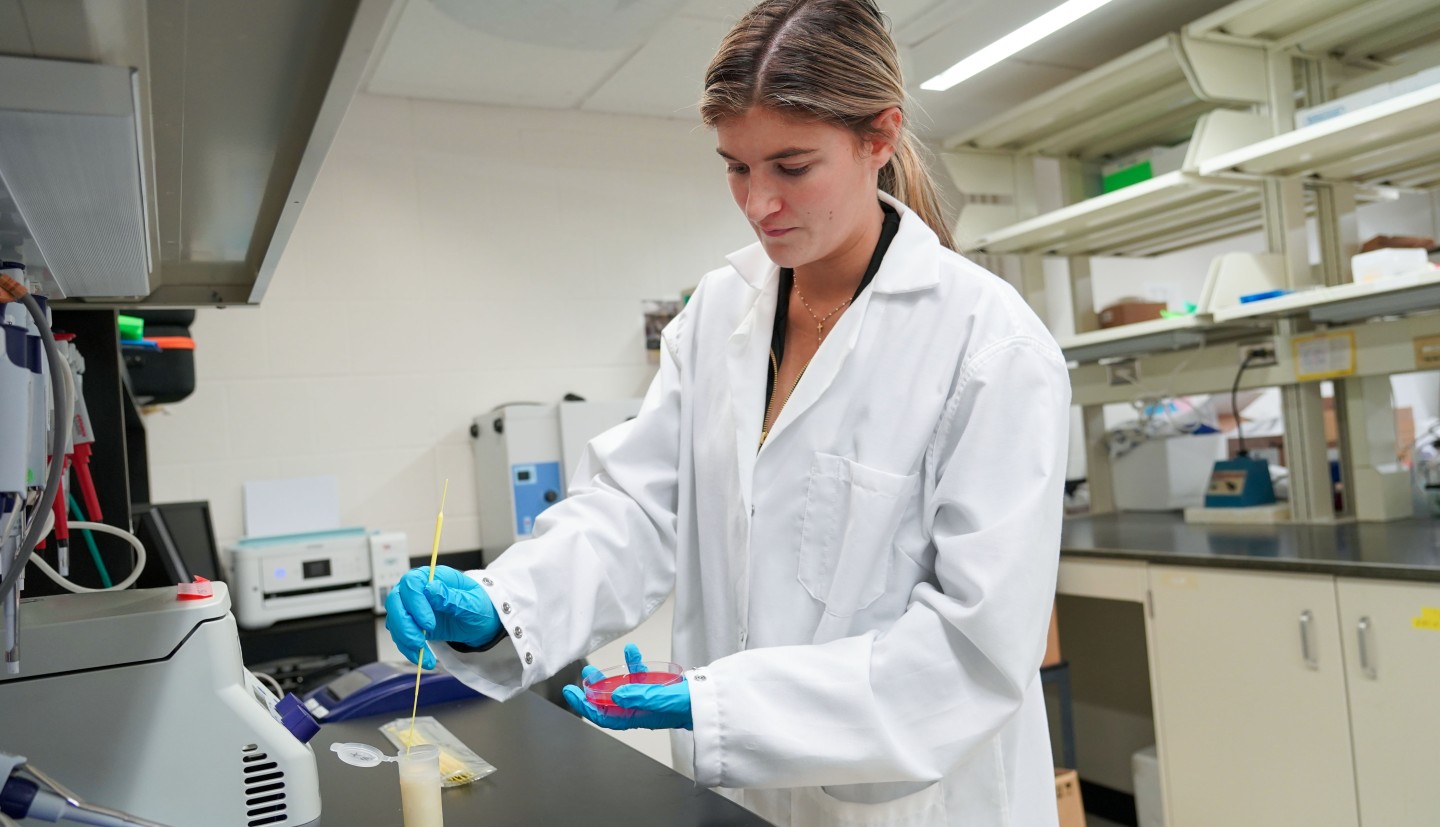
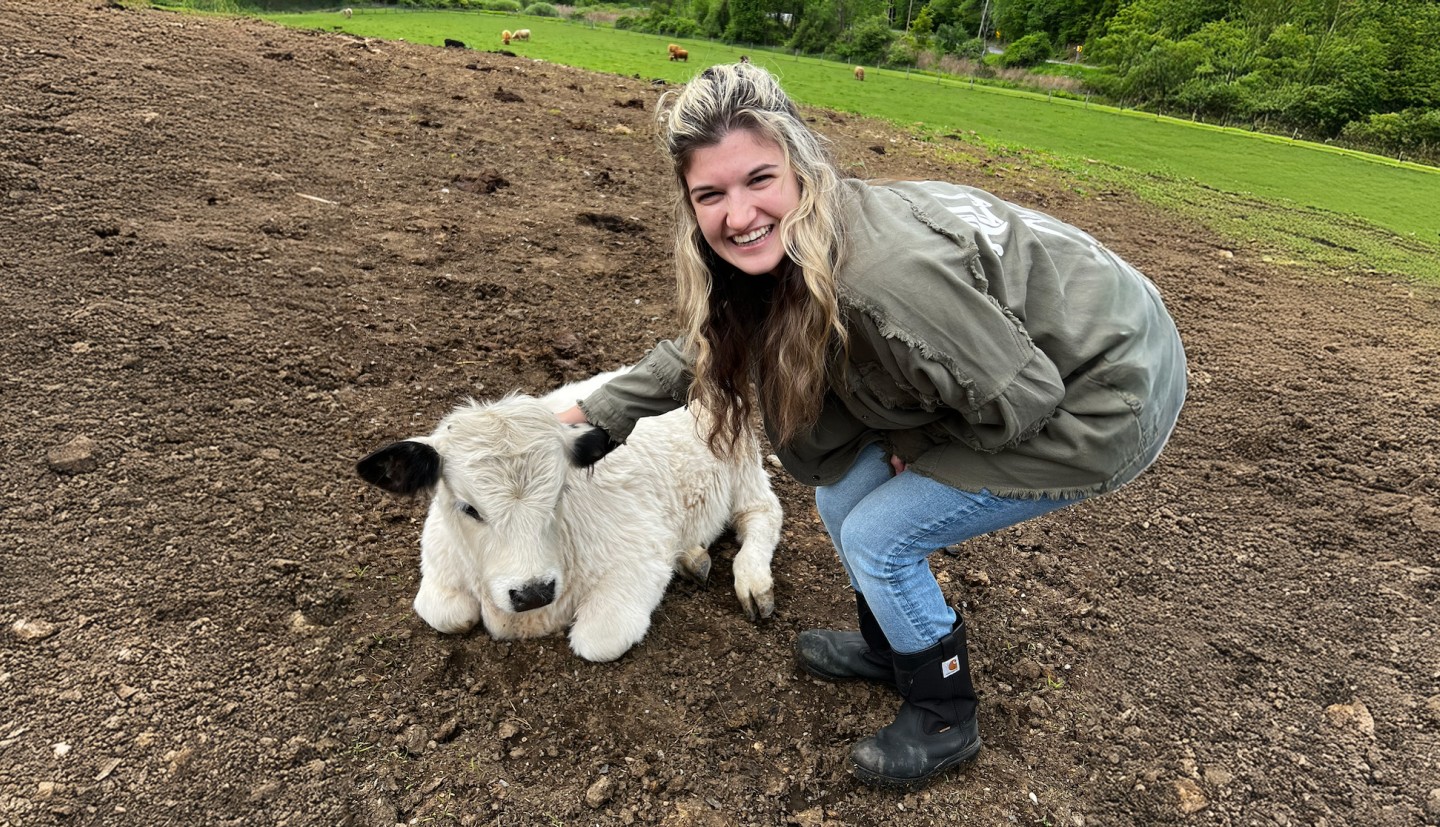
Last year, our lab conducted a large project, studying the impact of dairy cattle mastitis on greenhouse gas emissions using the animal respiration chambers. I served as an undergraduate study lead in the project. I was responsible for leading the milking and sample collection sessions, ensuring all samples were sterically collected while conducting health screenings of all the dairy cattle and caring for their welfare. In the lab, I analyzed plasma and serum samples, measuring beta-hydroxybutyrate (bovine ketone body) levels and quantifying bacterial counts in milk samples. 

This project has been very rewarding because I have watched all the scientific pieces connect: the clinical signs in the cows, the shifts in milk quality, and the changes in methane and carbon emissions. Seeing how a disease process shows up both biologically and environmentally is what keeps me invested and inspires me to start generating my own ideas for how farms can reduce the environmental impact of mastitis through better management and earlier detection.

Seeing how a disease process shows up both biologically and environmentally is what keeps me invested.

Through investigative research, I have learned how tightly a single disease, such as mastitis or bovine respiratory disease, can ripple through an entire production system and have long-term influences on economic-loss and the livelihoods of many production professionals. Seeing how one inflammatory process can translate into milk losses, higher treatment costs, increased labor and elevated greenhouse gas emissions has challenged me to research new ideas to optimize production systems. It has also reinforced the need for empathy and humane practices for the animals.

Most importantly, my research group always asks “why,” rather than stopping at “what.” Working with Dr. Leal-Yepes and his lab has taught me that veterinarians and researchers do not focus on a single symptom or outcome; we have to understand the entire profile of the farm to innovate solutions while caring for the welfare of the animal. Real-world experience is shaping me into the clinician I want to become.

This experience has taught me to not just chase a familiar project or topic, but to deliberately explore a different model organism or research area. Before joining the Precision Livestock Health Lab, I had worked with a large animal veterinarian but was unfamiliar with dairy production systems. The lab’s support has made it possible for me to broaden my knowledge and learn quickly. 

Stepping into an unfamiliar area ended up being the most valuable part of the experience. It has made me a more well-rounded animal scientist, and I now feel far more confident tackling complex problems across animal systems.

Sydney Zarb ’27 is an undergraduate student majoring in Animal Science.

Keep Exploring

three woman stand together eating orange slices

Field Note

by Harley Wolfanger '28 Where does our food really come from? That question followed our group throughout our agricultural expedition to California this past January. I decided to embark on this trip because I wanted to understand how the...
  • Dairy Fellows Program
  • Animal Science
  • Agriculture
a group of young people stand together in front of a building

News

The New York State 4-H Livestock Ambassador Program recently offered an immersive, multi-day educational experience for youth participants, providing hands-on exposure to New York’s diverse livestock industries. The program began with a visit to...
  • Animal Science
  • Animals