Response
The major activities contribute to achieving the goal of developing a portable model of research training for youth by focusing on program implementation, revision, evaluation, and partnership building:
Curriculum Development and Revision: The team developed the Youth Investigators curriculum, which is a social science program designed to engage youth in research activities. They revised the curriculum based on feedback and lessons learned from program implementations to ensure it effectively engages participants.
Training and Support Materials: The team created training materials for educators to facilitate Youth Investigators lessons, ensuring consistency and effectiveness across different implementations. They also provided ongoing support to facilitators to enhance program delivery.
Program Implementation and Evaluation: The curriculum was implemented in various settings, including high schools, middle schools, and after-school programs, reaching a diverse group of youth across New York State. Pre- and post- program surveys, focus groups, and process evaluations were conducted to assess the program's impact and effectiveness.
Partnership Development: The team established partnerships with educational institutions and organizations to expand the reach of the program. These partnerships allowed for the adaptation of the curriculum to meet the needs of different age groups and educational settings. Educator partners in 4-H and school districts were instrumental in delivering the curriculum to youth.
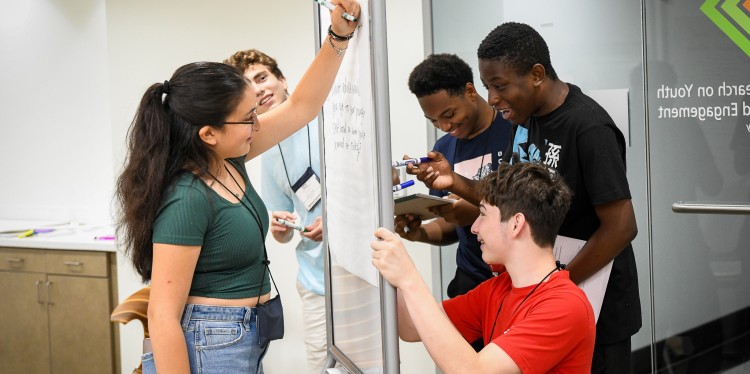
Youth Summit and Research Project: A complementary program was developed to provide graduates of Youth Investigators with opportunities to apply their research skills. This included a Youth Summit where teens conducted their own research project, designed to foster a sense of empowerment and engagement. These activities demonstrate a comprehensive approach to developing and implementing a participatory research program for youth, with a focus on inclusivity, effectiveness, and sustainability.
Results
The target audience, which includes 4-H communities and youth, benefits from the activities described below in several ways:
Engagement in Research: By involving 4-H communities in basic and applied research, youth are provided with opportunities to actively engage in research activities. This hands-on experience fosters a deeper understanding of scientific concepts and methodologies, empowering them to contribute to knowledge creation.
Positive Youth Development: Participation in research projects is intended to promote positive youth development by enhancing critical thinking, problem-solving, and communication skills. By working together and in partnership with adults, youth develop skills that can apply to the classroom or professional contexts.
Community Connection: The collaboration between PRYDE and 4-H communities strengthens ties between academic institutions and local communities. The Youth Investigators Program is a bridge between campus researchers, youth development educators, and youth researchers, empowering each group with a shared language around social science research.
The activities described align with PRYDE's goal of promoting positive youth development by engaging 4-H communities in research, fostering a sense of empowerment, and promoting innovation and service among youth who develop the skills to ask and answer questions about their communities.
Public Value
The Program for Research on Youth Development and Engagement (PRYDE) benefits the public by promoting positive youth development through engaging 4-H communities in research, fostering a sense of empowerment, and promoting innovation and service among youth who develop the skills to ask and answer questions about their communities.