Response
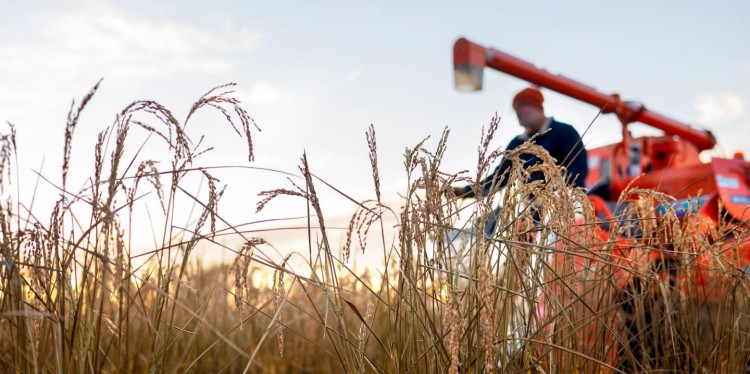
CCE Tioga and Cornell University collaborated to cultivate rice at Hilltop Community Farm. Cornell grew the rice plants to transplant size, and then CCE Tioga staff planted them in designated areas within the deer-proof crop field at the farm. Throughout the growing season, CCE Tioga staff tended to the rice. Additionally, Cornell University is installing specialized rice processing equipment at CCE Tioga's storage facility, which, once operational, will be used to process the rice varieties and evaluate their potential for dry land rice production.
Results
2023 was the initial research year, but the rice grew well so the proof of concept appears to be substantiated. CCE Tioga hopes that the partnership with Cornell University will continue for several years so that, eventually, farmers will be able to add rice to their list of crops produced on the farm.
The connection between Cornell campus faculty and staff, CCE Tioga staff, and local farmers and the community allow for the research to translate to stakeholders and for the process to be transparent and part of the local dialogue.
Public Value
Growing rice in New York State offers several public benefits. Rice production contributes to diversifying the state's agricultural landscape, potentially opening new economic opportunities for farmers. Secondly, it enhances food security by promoting the production of a staple crop locally, reducing reliance on imports. Thirdly, it supports sustainable agriculture practices by utilizing local resources and reducing the environmental footprint associated with long-distance transportation. Additionally, it can provide educational opportunities for farmers and researchers, fostering innovation and knowledge exchange within the agricultural community. Overall, growing rice in New York State offers the potential for economic, environmental, and social benefits for both farmers and consumers.