Back

Discover CALS

See how our current work and research is bringing new thinking and new solutions to some of today's biggest challenges.

Transforming agri-food systems for the 21st century

Share
Edward Mabaya grew up as one of 10 children on a smallholder farm in Zimbabwe. As his family adopted better seeds, explored new technologies and tested improved management strategies, the farm produced enough to feed everyone, and then enough to send the children to school. Mabaya, M.S. ’98, Ph.D. ’03, ran with the opportunities he was given but has never forgotten where he came from.

Now a research professor in the Department of Global Development, Mabaya’s work centers on increasing food production in Africa, where 70% of the people are under 30 and the continent’s population is expected to double by 2050. 

“Africa’s population is growing faster than any other continent, but food production has not been increasing,” Mabaya said. “This spells catastrophe for the future.”

Countries and people around the globe face the same stark dilemma: how to feed their growing populations while climate change ravages the agri-food systems needed to nourish us all.

See how CALS’ researchers are leading global efforts to reimagine 21st-century agri-food systems

There is hope, and it can be done. We’ve done it before: A grim hunger forecast was predicted for Asia 50 years ago, before scientists, many of them Cornellians, developed new rice varieties and growing techniques that prevented mass starvation; wheat scientists have developed varieties and strategies to resist devastating pathogens, preventing hunger crises and the civil unrest they create; innovations in technology, science, economics, policy and more over the past 150 years have reduced the U.S. workforce necessary to feed the country from 50% to 1.3%.

As an institution, CALS has embraced its responsibility to nourish both people and the planet by working with plants and animals, with revolutionary technology, and with the many people and organizations who grow, process and distribute our food.

“This college has always embraced our Land-Grant mission, to drive innovations to market and to push big thinking that solves the world’s grand challenges,” said Benjamin Houlton, the Ronald P. Lynch Dean of the College of Agriculture and Life Sciences. “Because of the unprecedented challenges we now face – limited space, limited resources, a growing population and the worsening impacts of climate change – we need a quantum leap forward. We see the need for our brand of transdisciplinary, action-oriented scholarship, now more than ever.”

Erin Rodger is senior manager of marketing and communications for CALS. Brynn Wilkins is assistant director. Krisy Gashler is a writer.

Keep Exploring

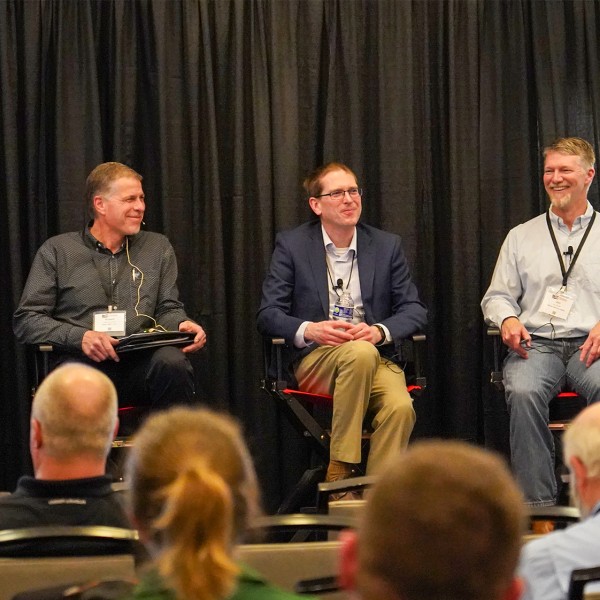
Panel discussion at 2026 Herd Health and Nutrition Conference

News

Nearly 150 dairy industry professionals gathered in East Syracuse, NY last week to hear from industry experts about the latest trends and research related to dairy herd health and nutrition at the 2026 Herd Health and Nutrition Conference. For...
  • Cornell Cooperative Extension
  • PRO-DAIRY
  • Animal Science
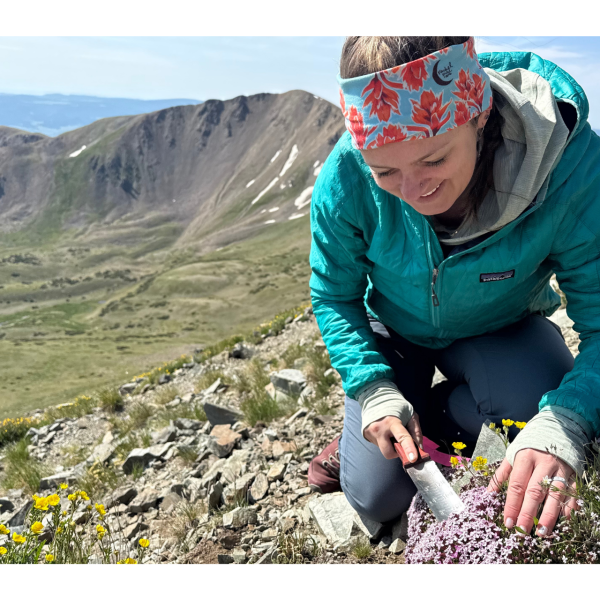
Hannah Marx collecting alpine plants in the field. Photo provided.

Field Note

Cornell’s Liberty Hyde Bailey Hortorium Herbarium is a curated collection of preserved plant specimens used as a library for studying plant biodiversity, identifying potential pharmaceuticals and tracing species evolution. It is the fourth...
  • Liberty Hyde Bailey Hortorium
  • School of Integrative Plant Science
  • Plant Biology Section