How old are the specimens in the herbarium?
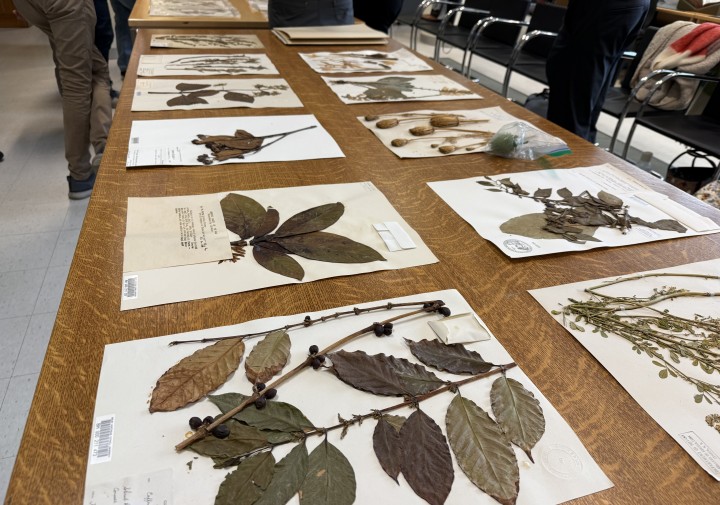
Our earliest collections come from the 1800s, when Andrew D. White, Cornell’s first President, purchased the private herbarium of Horace Mann, Jr.. Many of our earliest collections are from other countries, a result of colonial legacies. There was always a push by European colonists to record and document new plant species. Liberty Hyde Bailey began the hortorium collection in 1935 with 125,000 personal specimens. And some of our specimens are brand new – we’re still adding specimens to the herbarium today.
What do you think are some of the most important discoveries that have been enabled by the plant materials available at herbaria?
There are countless examples of pharmaceuticals that were discovered through herbaria. Still today we’re making major discoveries about new treatments or therapies from herbaria: Compounds from a native Californian shrub have been identified as a potential Alzheimer’s therapy, and Cameroonian plants are being studied for antimalarial properties, as just a couple recent examples.
Herbaria are also crucial in understanding how plants and ecosystems have evolved over time, and how they may respond to climate change. We have seen that plants are responding to warming temperatures and increased carbon dioxide in the atmosphere by shifting their flowering cycles and altering the density of their stomata [the pores that enable gas exchange in plants]. This is concerning because there could be a mismatch with pollinators, and then that has trickle-down effects for ecosystem functioning.
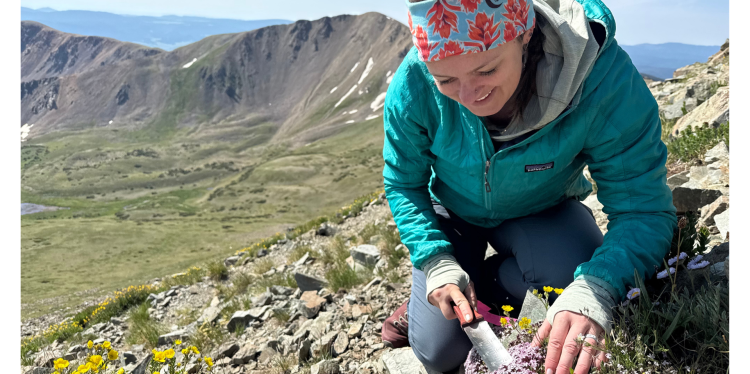
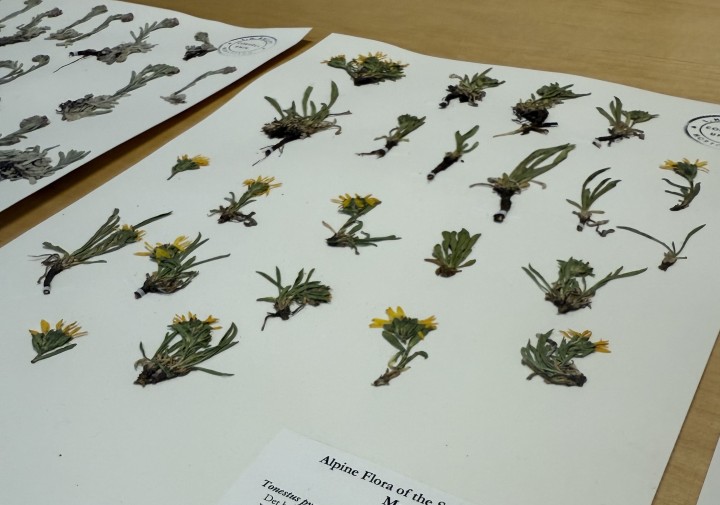
In addition, herbaria are really a foundation for biodiversity research. Every specimen we have is a unique piece of evidence, like a dot on a graph showing where an organism was growing at a certain place at a certain time. My own research looks at how plant ecosystems have changed over time, particularly in alpine areas – the really extreme environments at the tops of mountains. These unique ecosystems are home to really rich, diverse plant communities.
Having been director of Cornell’s hortorium herbarium for a year now, what are your top priorities?
My first priority is to finish digitizing the collection so that it can be as accessible as possible to researchers and the public throughout the world.
Another key priority is to promote access to the hortorium herbarium for undergraduate students. We are offering a paid summer internship for eight undergraduates this summer – the Tara Atluri Biodiversity Collections Internship – named in honor of an herbarium student. It’s a unique opportunity for students to be trained in curation and management practices and plant biodiversity. The deadline for applications is April 10, and interested students can learn more by emailing us at: herbarium [at] cornell.edu.
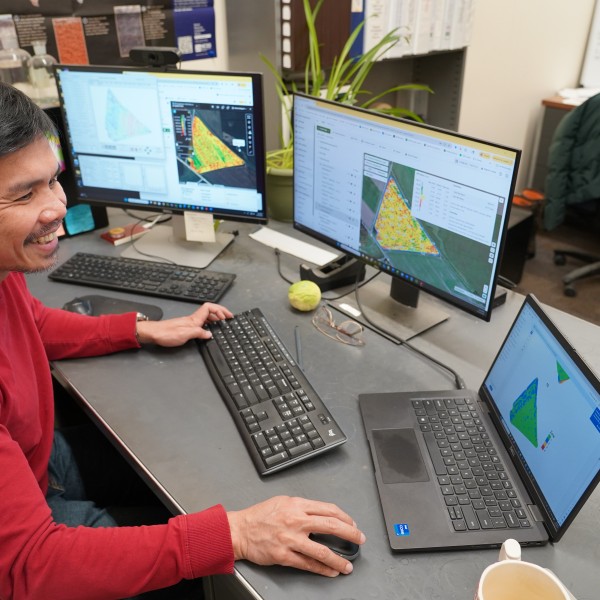
I also want to raise awareness about the breadth of research opportunities available through the hortorium. There are so many new technologies and advances in sequencing and imaging and AI that I think are poised to really open up our cabinets to a broader research audience. Specifically, I would love for our cultivated collections here to be used more by researchers who are working to improve crop varieties.
Krisy Gashler is a writer for the College of Agriculture and Life Sciences.