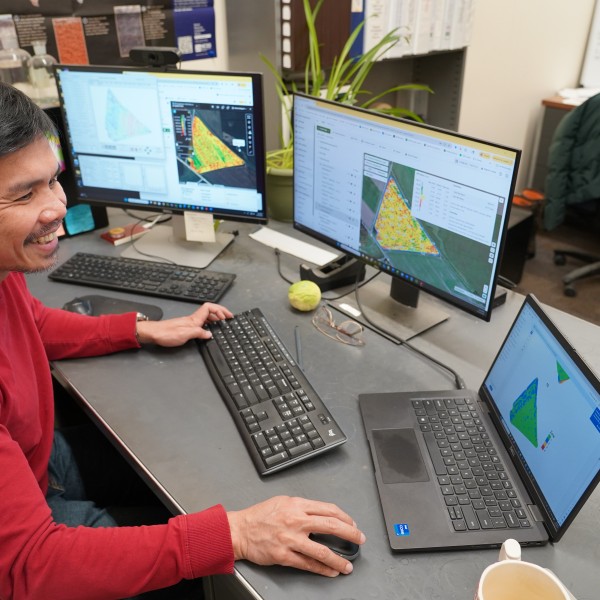
This is one of five vignettes showcasing faculty research related to redesigning 21st century agri-food systems.
Dairy is a huge component of human nutrition right here in New York and across the globe. While the efficiency of dairy production has grown leaps and bounds in the U.S., sustainability presents opportunities for animal agriculture.
Dairy cows are agricultural contributors to both climate change and water pollution, but dairy products provide critical nutrients like calcium, magnesium and potassium that humans struggle to meet with other foods. Kristan Reed, assistant professor of animal science, develops decision support tools to help dairy farmers profitably manage their operations with fewer greenhouse gas emissions, cleaner water and healthier soils. While the industry has made great strides to reduce its environmental impact, Reed hopes to reduce those impacts even further with models that estimate milk production, greenhouse gas emissions and soil health changes based on various farm management systems.
“It’s kind of like a computer game for dairy farmers: You can say, ‘I have this many cows and this much land, this is what my barn looks like, and this is what I’m growing in my fields, and then press run,” Reed said. “We want to help farmers make informed decisions to support their livelihoods and the long-term environmental health of their lands.”