Back

Discover CALS

See how our current work and research is bringing new thinking and new solutions to some of today's biggest challenges.

Share
  • Global Development Section
  • Agriculture
  • Global Development

The United Nations General Assembly declared every October 15, as the International Day of Rural Women. This day is dedicated to celebrating the achievements and contributions of millions of women living in remote, rural places towards rural development and agriculture as well as to appreciate the hurdles that they experience in their everyday lives.

Within the agricultural sector of developing countries, it is well known that the labour burden of rural women exceeds that of men, with women accounting for approximately 60-80% of agricultural labour force. In doing so, they often manage complex households and other livelihood activities such as working for wages in agricultural or other rural enterprises, collecting fuel and water, engaging in trade and marketing, caring for family members and maintaining their homes. Indeed, within agricultural production, it’s been argued that seed is the key entry point for empowering women smallholder farmers through commercial seed production enterprises given they play a central role in seed exchanges, selection, production, and storage, contributing to enhancing nutrition and maintaining crop diversity while strengthening their role in formal seed system.

At Muhogo Bora, we seek to develop gender-responsive cassava seed systems in Tanzania with targeted outreach in the Western Zone. Specifically, our project aims to ensure that women, youth, and marginalized rural farmers from geographically underserved regions participate and benefit as cassava seed entrepreneurs (CSEs).
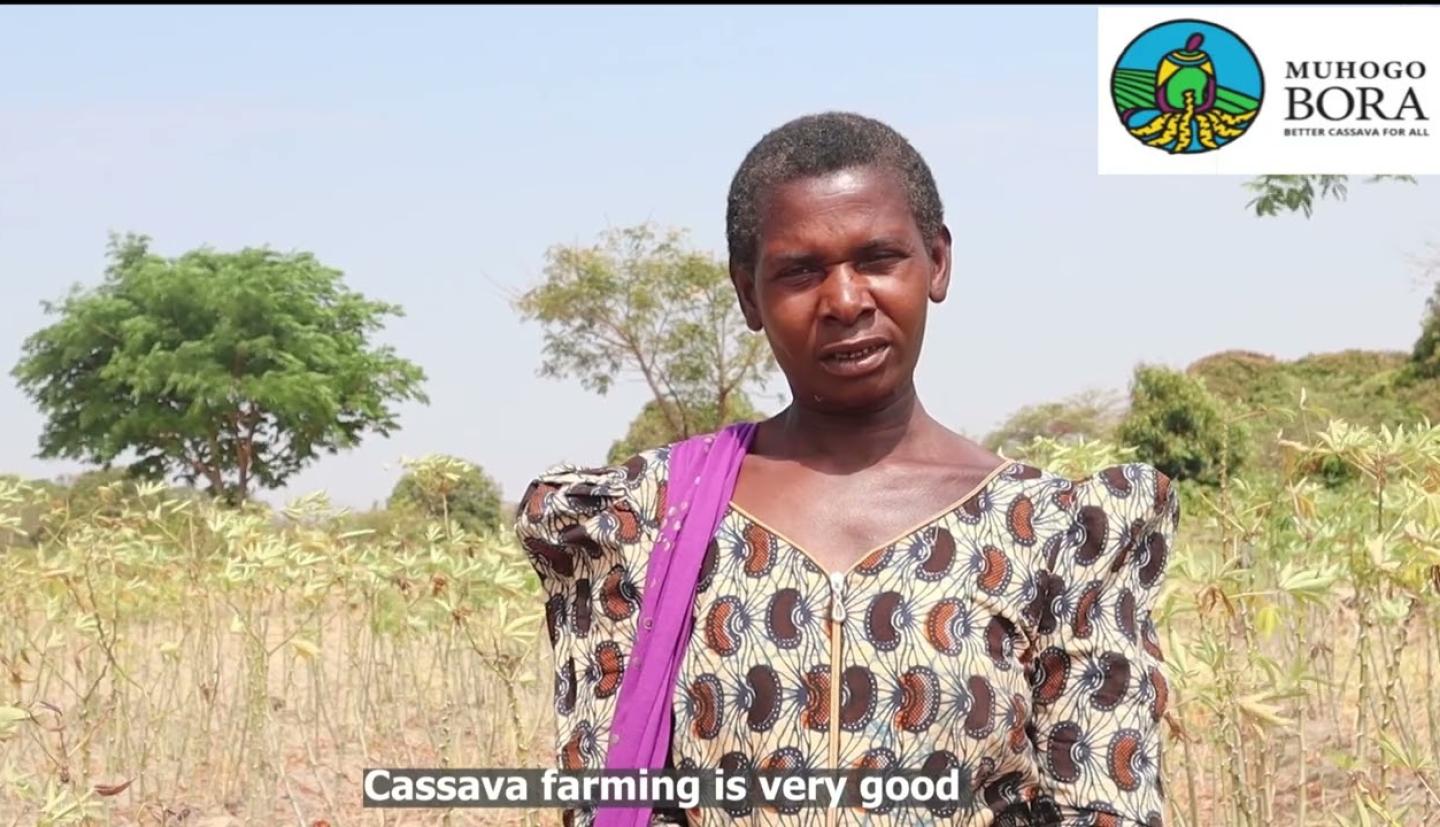
As a project team, it is our honour to celebrate the rural women farmers, whom we work closely with, and who are renown as active agents of economic and social development and who in numerous ways are held back from successfully participating as CSEs as a result of: lack of access to land, limited startup capital, gendered social norms, and unpaid familial care duties. We believe in a world free of limits placed on women for which we design and implement interventions to reach more women and marginalized groups with targeted outreach in the Western and Central Zones of Tanzania leading to a socially inclusive cassava seed system.

Muhogo Bora has worked to strengthen the linkages between the agricultural extension system - which is predominantly comprised of male officers who often fail to recognize the unique and specific normative constraints facing women farmers  - and community development officers to better support all cassava farmers.

We therefore appreciate the resilience, hardwork, and immense contribution of supporting the rural women cassava farmers’ who ensure we all put food on our tables. A series of videos amplifies the voices of rural women cassava farmers by sharing their key messages and highlights their immediate local support system of local government authorities working in agriculture and community development.

Follow Muhogo Bora on Twitter: @MuhogoB

This work was led by Millicent Liani, a Post-Doctoral Gender Research Fellow at the International Institute of Tropical Agriculture (IITA) working on the Muhogo Bora project in Tanzania; with contribution from Canaan Boyer, Program Manager of the Muhogo Bora project based at Cornell University; and Emmanuel Mrema, Centre Director of Tanzania Agricultural Research Institute (TARI) Tumbi. The videos were prepared by Hadi Rashid, Communication Assistant working at the International Institute of Tropical Agriculture (IITA) in Tanzania.

Keep Exploring

group of people standing outside Atkinson building

News

Cornell Atkinson hosted its first executive education program – the Resilient Futures Leadership Program: Financing Sustainable Agriculture – with partner Field to Market. The successful program will be offered twice more over the next two years...

  • Cornell Atkinson
  • Agriculture
  • Food
A team of Cornell students work on a prototype of their weed-killing robot

News

A team of Cornell students bested the competition with their invention: an autonomous robot that kills weeds with electricity.

  • Agriculture Sciences Major
  • Biological and Environmental Engineering
  • Agriculture