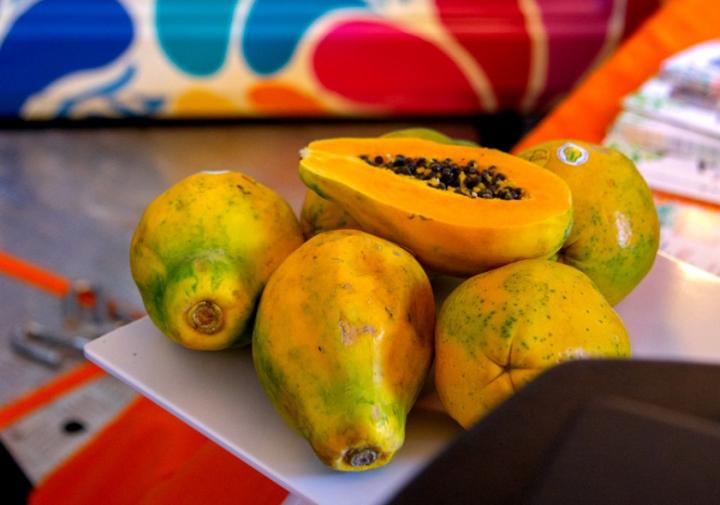
“Modified,” the food truck from the Cornell Alliance for Science, rolled into the foyer of the Plant and Animal Genome conference in San Diego on Jan. 13 to serve 3,000 genetically modified papaya, fresh from Hawaii. Decorated with vibrant colors and a retro vibe, the food truck is an eye-catching way for scientists to engage with the public about genetic modification and food security.
Sarah Evanega, Ph.D. ’09, director of the Cornell Alliance for Science, unveiled the food truck during her plenary talk as she addressed thousands of scientists about the critical need for science communication.
“I work in science to make a difference,” Evanega said in her address. She encouraged scientists to engage directly in conversations about science and advocate for the role their research can play in solving some of the planet’s biggest challenges.
“We each need to take our own daily actions – be they large or small – to advocate for science,” she said, “and communicate about the changes we know are possible in the world.”
As Gaurav Thapa sampled a papaya parfait, he lamented the troubles he and fellow scientists face in communicating with the general public.
“Most people don’t know what we do,” said the researcher, who studies plant disease resistance in rice at the University of Arkansas. “There’s disparity between what we are trying to achieve and what the public is hearing.”
He said Evanega’s talk inspired him to engage more with the public about questions of science that are important to him and his work.
The Modified food truck was created to spur dialogue. Staffed by scientists such as Modesta Abugu, a tomato geneticist at the University of Florida and 2015 Cornell Alliance for Science global fellow, and Nyasha Mudukuti, a plant biotechnologist and 2019 global fellow, the “Mod Squad” team handed out smoothies, salsa and parfaits made from papaya while engaging with fellow scientists about biotechnology’s role in global food security.
“As scientists, we must take our work to the people,” said Mudukuti, a science communications and networking associate with the alliance. “It is now more critical than ever that we communicate effectively and bridge the gap between science and the public.”