It’s undeniably November, and everyone’s talking turkey – including the “Extension Out Loud” podcast from Cornell Cooperative Extension.
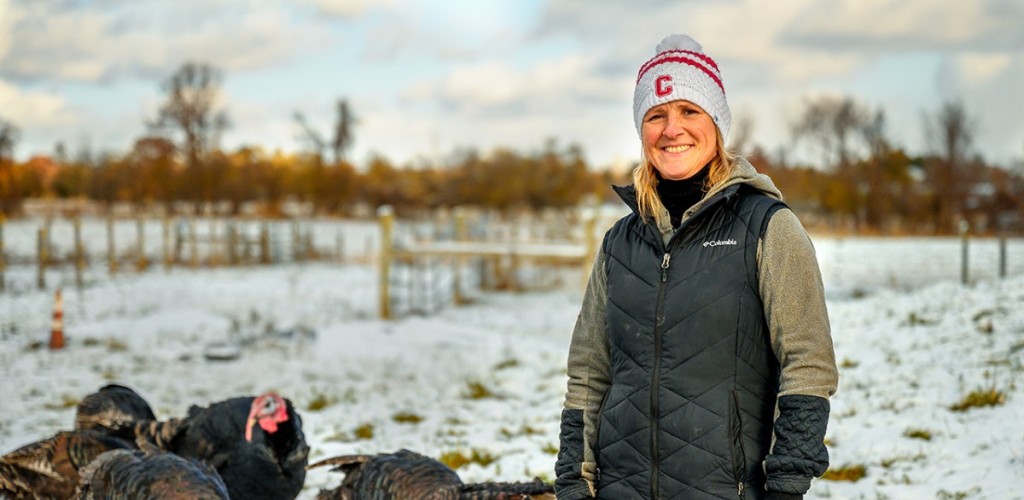
Offering a bird’s-eye view of the turkey scene in New York state, hosts Katie Baildon and Paul Treadwell are joined by Mo Tidball, a nutrition educator at Cornell Cooperative Extension Seneca County and the creator of the Wild Harvest Table website. An expert on all things turkey, Tidball raises and sells heritage breed, free-range turkeys on her Seneca Falls farm.
According to the National Turkey Federation, 240 million turkeys were raised in the U.S. in 2019; 88% of Americans consume turkeys on Thanksgiving. Tidball said most farm-raised turkeys in the U.S. are one of two breeds: large whites and broad breasted bronzes.
For Tidball, though, the preferred birds for her Thanksgiving feast are the Eastern wild turkey – the native turkey in the northeastern U.S. – and heritage breeds, which are “breeds of turkey that were developed over the last century and a half,” including Bourbon reds, black turkeys and others.
Regardless of the kind of bird at the feast, Tidball advocates relying on local foods to fill the table. “It really should be a celebration of all local foods that you can find … which all were part of the original Thanksgiving,” she said.
Full episodes of “Extension Out Loud,” can be streamed on: