For three days in early August at Stocking Hall, a handful of judges saw, sniffed and sampled 234 cheeses in 24 categories – all of it made in New York.
The judges whittled the field down to a small group of contenders, then determined the top cheeses. Winners will be announced Aug. 29 – Dairy Day at the Great New York State Fair.
“For cheesemakers, it’s all about bragging rights,” said judge Rob Ralyea, a senior extension associate in food science. “When you go to a cheese shop and you see a regular cheese next to a blue-ribbon winner, which one are you going to buy? You’re intrigued, so you might try it and you might find that it is good, really good. It’s an eye-catcher for cheesemakers.”
The judges – dairy professionals from industry, academia and the New York State Department of Agriculture and Markets – encountered piquant and pleasant samples of hard sharp cheeses; smooth yogurts; luscious cottage cheese; and soft, velvety bites of brie wrapped in aromatic rinds. They enjoyed tangy flavors and swatches of smelly cheese that turned out to taste good.
After trying a European hard-style cheese, for example, Greg Wheeler – the cheese shop manager for Wegmans in Ithaca – noted that it had “a nice nuttiness to it.” But Heather Spraker, chief dairy inspector for Ag and Markets, found it slightly sour … although it smelled good.
Spraker spoke of flavor suitability and the mouth feel of the cheeses, in general. “Flavor and body are the biggest things,” she said. “You know right off, as soon as you taste the cheese, whether it is going to score well or not.”
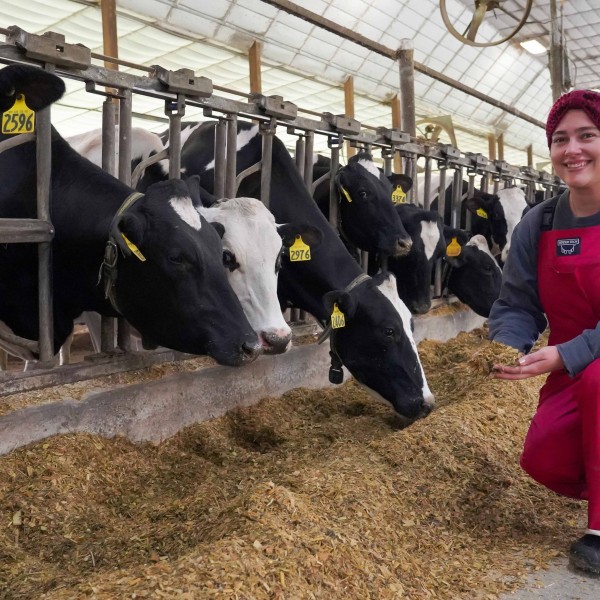
For New York, cheese is big business. The state’s dairy industry in 2016 was valued at $2.5 billion, making it the state’s largest agriculture sector, according to the New York Farm Bureau. There are more than 4,000 dairy farms that produce 15 billion pounds of milk, making New York the fourth-largest dairy production state, according to Ag and Markets.
In 2018, dairy producers in 62 processing plants made more than 802 million pounds of cheese, placing New York fifth in national cheese production, according to Ag and Markets.
Beyond serving up dairy, making cheese safe for public consumption is hard work, serious business and a top priority. Cornell provides guardrails for cheesemakers in the form of workshops, short courses and visits to dairy plants. The food science department offers workshops in dairy sanitation, pasteurization and creating dairy food safety plans, as well as basic and artisan cheese making.
“My work is multifaceted,” said Ralyea, who visits dairies in his extension role and talks to producers to ensure they have the best information available. While consumers ultimately render judgments through their purchases, Ralyea said: “We’re doing the stuff that consumers never see.”
This year’s judges also included Chip Lindberg, retired chief dairy inspector for Ag and Markets; dairy products specialists Valerie Catlin and Chad Martin, for Ag and Markets; David Bandler, professor emeritus of food science; Steven Murphy, senior extension associate; and Dave Buteyn, Vivolac Cultures Corporation.