

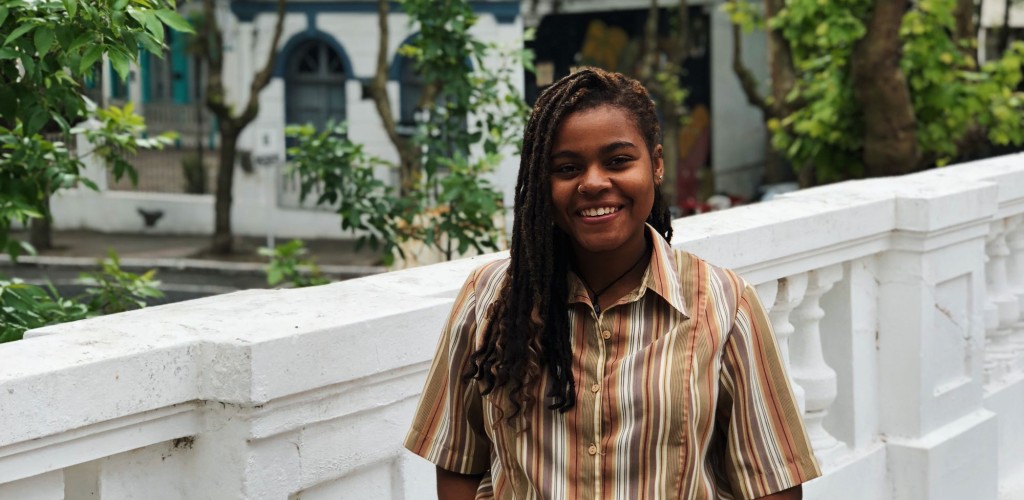
I believe in creating a better world that uplifts more people and respects the rights of all. I came to Cornell CALS to study development sociology so that I could apply theories of societal and economic development to understand the context of the global events around me.
In fall 2018, I participated in an intensive research-centered semester abroad studying Human Rights and Social Movements in Argentina. It was there that I developed my investigative skills, volunteering as a research assistant in the criminal political and violence team of the Centro de Estudios Legales y Sociales (CELS) in Buenos Aires; a non-governmental organization focused on proposing concrete policy recommendations for the betterment of social policy in Argentina. I then applied those skills to the completion of my own project aimed to understand the disparities in access to health services for the women incarcerated in the federal prison system of Argentina.
Over my time at Cornell and abroad, I've had the opportunity to study how policy can affect the lives of individuals and communities, and research has given me the avenue to explore that relationship. I've seen how research can prove the functionality or expose the detrimental effects of policy, and I am excited to continue my studies and add to the wealth of knowledge to enable individuals all over the world to live free and safe lives.
Rebekah Jones '20 majors in development sociology. The Department of Global Development explores topics on diverse aspects of development, including governance, population dynamics, environmental change and food systems.


