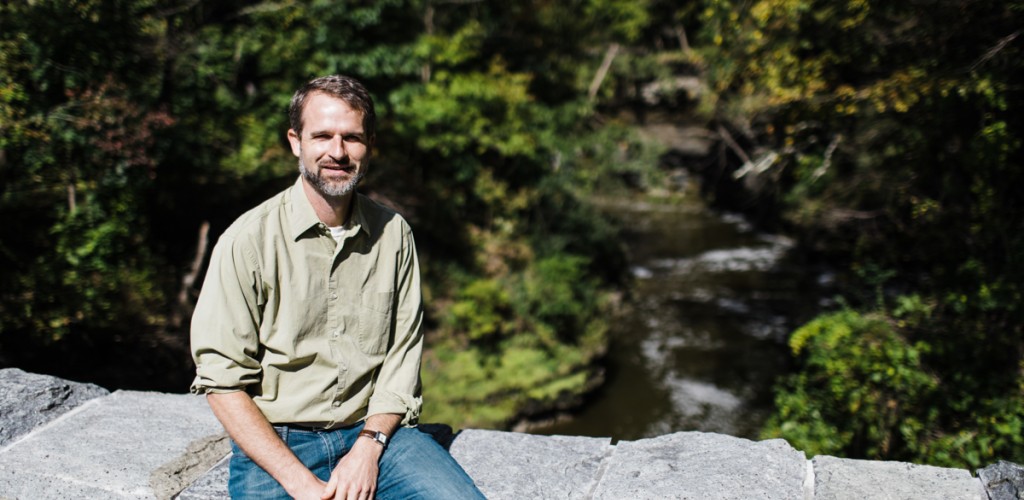
Pete McIntyre, assistant professor, Dwight Webster Sesquicentennial Faculty Fellow, Department of Natural Resources and Department of Ecology and Evolutionary Biology
Academic focus: Fisheries, aquatic conservation, climate change, global biodiversity
Previous position: associate professor of integrative biology, University of Wisconsin-Madison
Academic background: B.A, biology, Harvard University, 1998; Ph.D., ecology and evolutionary biology, Cornell University, 2006
Last book read: Little Fires Everywhere
What do you do when not working? Outdoor time with our two young kids, working on house, hunting for funky antiques, nature photography
What gets you out of bed in the morning? Collaborations: working with teams of academic and non-academic partners to increase public appreciation of the natural world.
Current research projects? Global contamination of freshwater fisheries with mercury; responses of cold-water fish to lake warming in the Adirondacks
Current outreach/extension projects? The Adirondack Fishery Research Program lies at the interface between research and extension. I also work closely with Shedd Aquarium in Chicago on citizen science monitoring of the timing of spring fish migrations in the western Great Lakes
What are three adjectives people might use to describe you? Persistent, excitable, creative
Course you’re most looking forward to teaching? Global Water Sustainability
If you had unlimited grant funding, what major problem in your field would you want to solve? The global magnitude and geography of human dependence on freshwater fisheries for nutrition.
What most excites you about Cornell CALS? The combination of land-grant mission and high-performing students.