Back

Discover CALS

See how our current work and research is bringing new thinking and new solutions to some of today's biggest challenges.

Share


periodiCALS, Vol. 8, Issue 1, 2018

On the heels of a particularly buggy flu season, we’re welcoming spring with health on our minds. Investigating the wide array of research being conducted on campus has inspired us to take a broad view of the subject, exploring it not only as human physical well-being but also the health of our environment, our food, our economy and ecosystems.

The stories that captured our attention highlight a range of issues that have been propelling our researchers and dig into some novel approaches to improving health. From using virtual reality for addressing chronic pain to examining what tree swallows can teach us about stress, our scientists are often driven to look for answers in unlikely places. But whatever their methods, they all share one overarching goal: to boost the well-being of people and communities near and far. 

We hope these stories will spark thoughtful conversations about what it means to be healthy, as well as to live in a healthy society. Maybe this spring you’ll even be inspired, as we are, to visit a local farm, try a new food or beverage, and take time out to watch the birds.
woman virtual reality
A new lens

Relieving real pain in a virtual world.

Bird flying into birdhouse
The social network

How birds are revealing links between connectedness, stress and health.

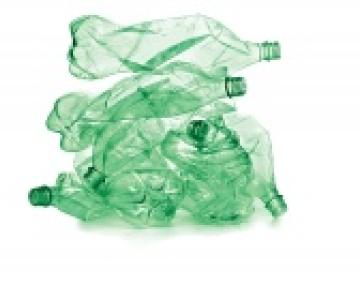
plastic in the ocean
Ocean plastic puts coral reefs in peril

Trash in the marine environment increases the likelihood of coral disease 20-fold.

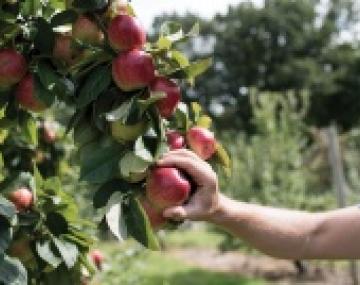
picking apples from tree
Shaking the tree

How our research is growing the hard cider industry in New York.

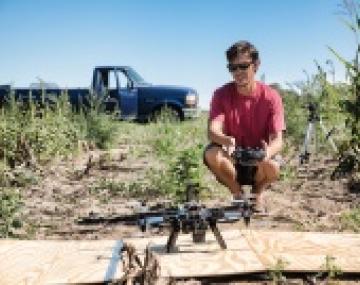
taking the lab to the field
Taking the lab to the field

High-throughput phenotyping provides powerful new tool for plant breeders.

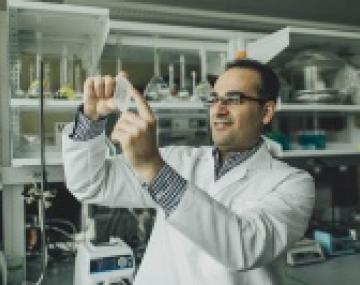
food scientist in lab
Gut check

Food scientist works to improve nutrition, understand gastrointestinal disease.

people working on a farm
Betting on the farm

Cornell Small Farms Program supports diversity in agriculture.

Keep Exploring

Several red 'Crimson Beauty" raspberries hang from green leaves and stems.

Report

Relevance Raspberry and strawberry production in the United States is concentrated in California and Florida, where climate variability and rising costs challenge long-term sustainability. Demand for locally grown fruit is increasing, creating...
  • Cornell Cooperative Extension
Charles Midega (left) and Roy Odawa display the Kontiki kiln they modified to make biochar from human feces. Credit: Rebecca Nelson

News

Cornell researchers and Kenyan partners have developed a fertilizer made from human excreta. The product improves soil health and food production, while preventing pollution in informal settlements and the aquatic environment.

  • Ashley School of Global Development and the Environment
  • Global Development Section
  • Agriculture