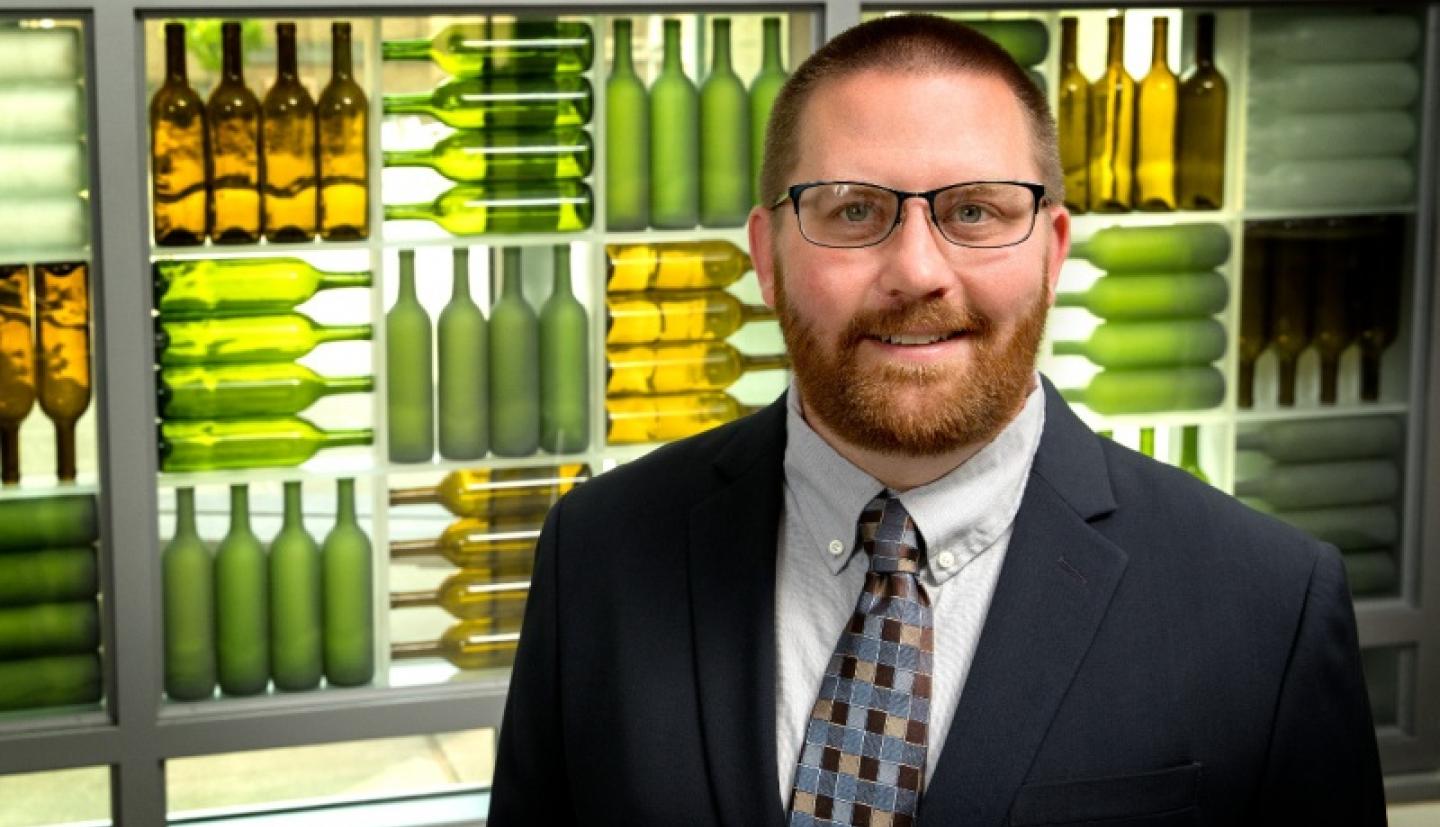
Patrick Gibney, assistant professor, E&J Gallo Sesquicentennial Faculty Fellowship, food science
Academic focus: Wine microbiology, yeast biology, molecular biology, cell biology and genetics
Previous positions: associate scientist, Calico Life Sciences LLC, 2014-17; Postdoctoral research scholar, Princeton University, 2009-14
Academic background: B.S., biology, B.A., chemistry, University of Northern Iowa, 1999-2003; Ph.D. in biomedical sciences (emphasis in Microbiology and Molecular Genetics), University of Texas Graduate School of Biomedical Sciences at Houston, 2009
Last book read: “The Art of Learning,” by Josh Waitzkin
What do you do when not working? I enjoy reading books, watching movies, hiking and I do a lot of list-making.
What gets you out of bed in the morning? I really enjoy all the aspects associated with this job: working with other scientists, teaching classes, mentoring future scientists and doing research projects on interesting topics.
Current research project(s)? I am trying to understand how a number of metabolic pathways are involved in regulating whether or not a cell decides to actively grow versus becoming stress resistant. One of these pathways is the electron transport chain, most well-known as the main pathway that produces ATP (cellular energy) in cells. Another is a pathway that synthesizes a disaccharide called trehalose, which is highly correlated to stress tolerance, but also has an uncharacterized role in regulating whether yeast cells grow by fermentation or respiration.
Courses you’re most looking forward to teaching? I am excited to teach “Introduction to Wine Microbiology,” as well as developing a new graduate-level course that will likely focus on understanding the connections between microbial growth control and stress resistance.
What most excites you about Cornell CALS? Interacting with the people here. Everybody I have met seems like a genuinely nice person and they are all talented experts in their fields. I am looking forward to working with the people here, learning a lot more about the wine industry and food science and being able to translate my basic research skills and knowledge to develop research projects that will directly benefit the New York (and global) wine industry.