Martin Alexander
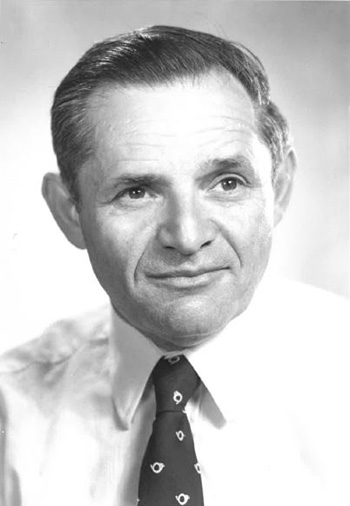
Martin Alexander, emeritus professor in Cornell’s School of Integrative Plant Science, Soil and Crop Sciences Section, died June 25 in Ithaca at age 87.
Born in Newark, New Jersey, Alexander obtained degrees from Rutgers University and the University Wisconsin and joined the Cornell faculty in 1955. He was awarded a Liberty Hyde Baily distinguished professorship in 1977 and retired from Cornell in 2000. Late-career appointments included the E.P.A. and U.S. Army science advisory boards. He continued consulting for several years following his retirement.
Alexander was known for his contributions to environmental science, soil microbiology and toxicology. He wrote or co-wrote more than 500 technical papers and scientific articles.
“Dr. Alexander was a world leader in the study of the microbial decomposition of a wide range of xenobiotic chemicals in soils, and the effects of aging on bioavailability of toxins in the soil environment,” said his colleague, professor Murray McBride.
Alexander was committed to undergraduate teaching and mentored graduate students from around the world. He was also internationally known for his standard textbook in the field. “Martin’s ‘Introduction to Soil Microbiology’ is an impressive piece of scholarship which has impacted generations of scientists, having been cited more than 5,000 times. His work has stood the test of time,” said professor Daniel Buckley.
Alexander is survived by his widow, Renee; two children; five grandchildren; and two great-grandchildren. Services were held in June. Donations in memory of Alexander may be made to the Cornell University College of Agriculture and Life Sciences Annual Fund or to Temple Beth El.