Text by David Nutt and Amanda Garris, Ph.D. ‘04
periodiCALS, Vol. 6, Issue 2, 2016
When CALS scientists take a close look at the natural world, the resulting images are more than tools of research: They can be artful, elegant, even surprising. From the story in a shark’s tooth to the seedy secrets of an invasive weed, researchers share a glimpse into biology’s small-scale spectacles.
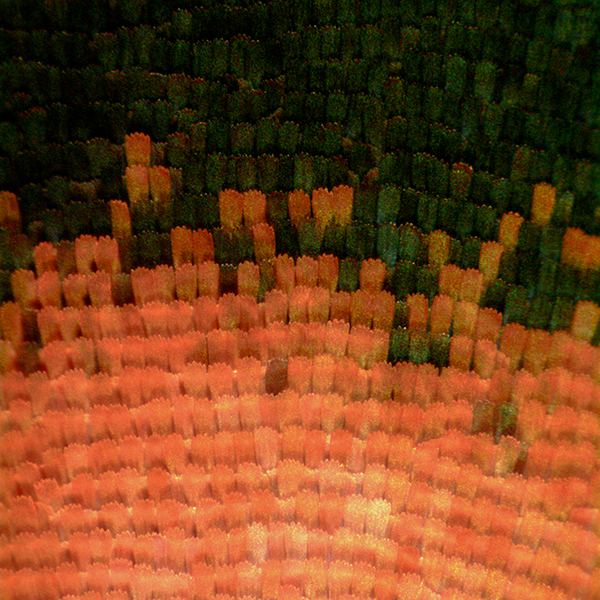
Thousands of tiny scales layered like shingles comprise a painted lady butterfly wing in what Robert Reed, associate professor of ecology and evolutionary biology, described as a microscopic mosaic. The patterns we see today—eyespots, stripes and camouflage—are the result of natural selection acting on genetic variation in hundreds of genes for pigment and placement. Reed’s investigations integrate ecology, developmental biology and genomics to discover just how novelty arises and diversifies. Photos by Robert Reed (above) and Getty Images (right).
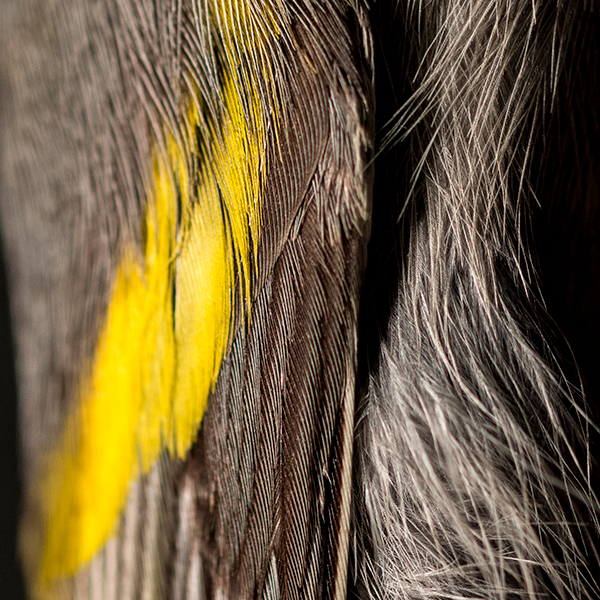
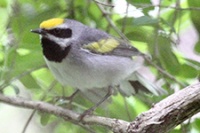
Golden wing bars, shown here on a specimen from the Cornell University Museum of Vertebrates, are only one of many plumage traits that have long been used to distinguish the golden-winged warbler from the blue-winged warbler. David Toews, a postdoctoral fellow in the Cornell Lab of Ornithology’s Fuller Evolutionary Biology Program, and colleagues found that the genomes of the two species are practically identical—99.97 percent alike—with the exception of six regions, suggesting that the differences between some birds may prove to be only feather-deep. Photos by Robyn Wishna (above) and Dominic Sherony (right).
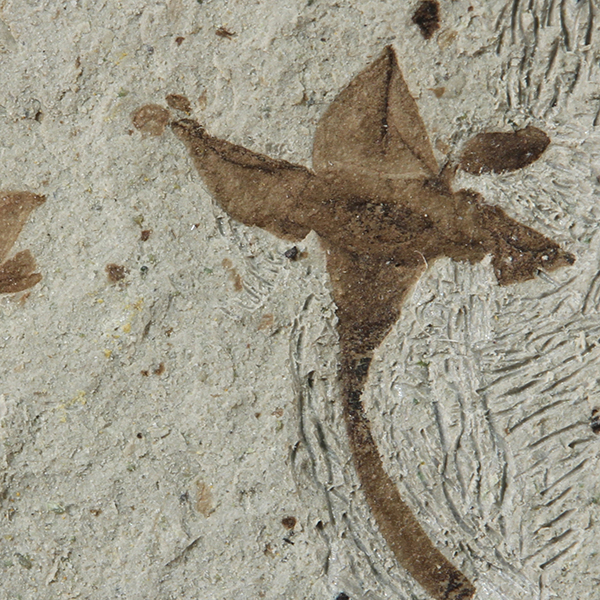
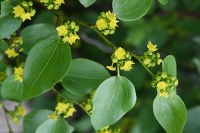
This fossilized flower bloomed in the Paleocene era, about 65 million years ago, in Patagonia, Argentina, and it is the oldest trace of the buckthorn (Rhamnaceae) family in the southern hemisphere. Housed at the Museo Paleontologico Egidio Feruglio in Trelew, Argentina, the image is an evolutionary benchmark for School of Integrative Plant Science senior research associate Maria A. Gandolfo-Nixon and her postdoctoral associate Nathan Jud as they search for clues to the diversification and biogeography of this plant family. Photos by Dennis Stevens/PlantSystemics.org (above) and Franz Xaver (right).

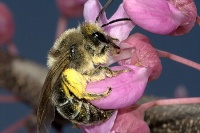
The fur of this Colletes bee, also known as a cellophane bee, is pristine as she emerges from her below-ground nest in early spring. Venturing out to gather pollen and nectar for a brood of only six to ten offspring, she helps produce food for us as well. Bryan Danforth, professor of entomology, has found that cellophane bees are among the 120 wild bee species that contribute to apple pollination in New York. The surprisingly high biodiversity of wild bees in orchards has entomologists—and apple growers—buzzing. Photos by Alberto Lopez (above) and Michael Veit/discoverlife.org (right).
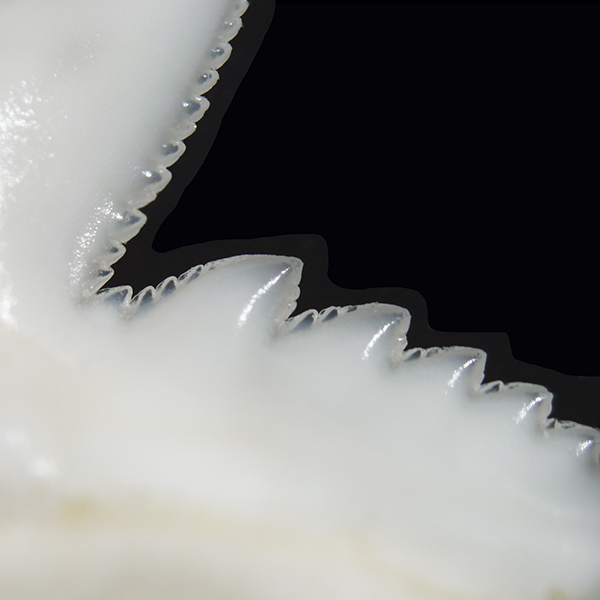

Eyes may be the window to the soul, but for Willy Bemis, professor of ecology and evolutionary biology, teeth say a great deal about an animal’s diet. The tiny steak knife–like serrations of the blue shark are suited for eating small fish; the larger serrations of the white shark, for marine mammals. The tiger shark tooth (above) has a distinct can opener shape as well as secondary serrations composed of an enamel-like material tailored for the bony plates of turtle shells. Photos by Joshua K. Moyer (above) and Albert Kok (right).
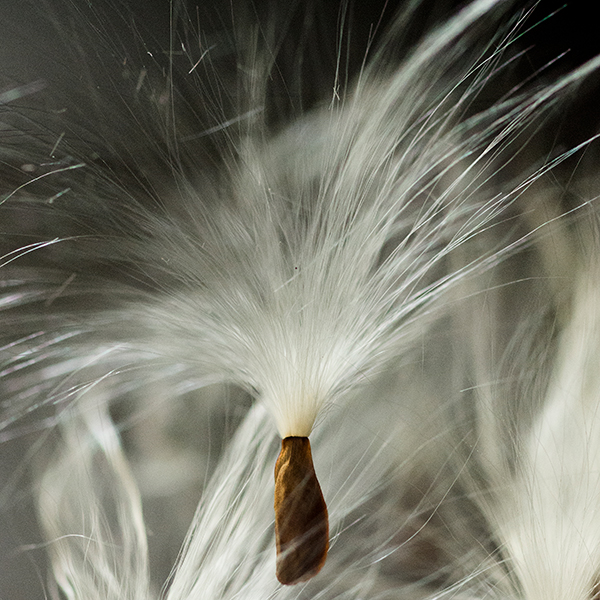
These flight-ready seeds from the Cornell Weed Science Teaching Garden may look like milkweed, but they come from an insidious invader: pale swallow-wort. Native to southwestern Russia and Ukraine, this plant has crawled, climbed, clung and smothered vegetation throughout the Northeast. Part of its success, said Antonio DiTommaso, professor in the School of Integrative Plant Science, is due to the fact that some seeds can produce up to four plants each, making the species a prolific threat to natural areas. Photos by Robyn Wishna (above) and Larissa Smith (right).

Using lacey cross sections of root, stem and the stalk that joins leaf and stem—the petiole, pictured above—Taryn Bauerle, associate professor in the School of Integrative Plant Science, is tracing how drought-stricken roots send electrical signals to the leaves to close their pores. She and her students not only look; they also listen for the “pops” and “pings” that denote hydraulic signals via breaks in the plant’s water column. Photos by Annika Huber (above) and ansebach/123RF (right).
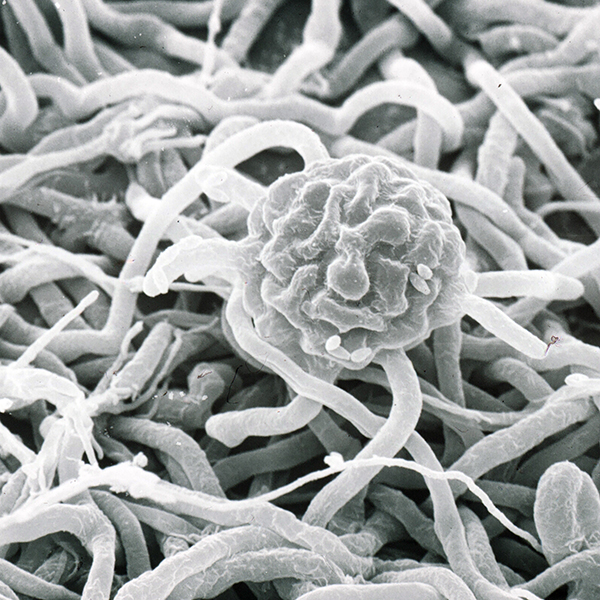
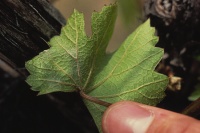
This high-resolution image of the microscopic structure of grapevine powdery mildew was taken by David Gadoury, senior research associate in the School of Integrative Plant Science. It’s a portrait of a well-adapted pathogen: The spaghetti-like hyphae will anchor the spore-filled globe securely to the leaf only until autumn. Then, swept by rainwater onto the bark, it will be safe from the appetites of earthworms and in prime position to infect new leaves in the spring. Photos by David Gadoury.