periodiCALS, Vol. 6, Issue 2, 2016
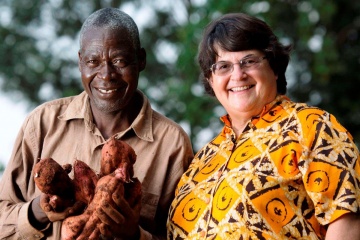
Orange is the new hot color when it comes to nutrition and human health. And thanks to agricultural economist Jan Low, M.S. ’85, Ph.D. ’94, and her efforts introducing the orange-fleshed sweet potato into households across Sub-Saharan Africa, it’s a hue that won’t soon go out of fashion.
In June, Low was named a 2016 World Food Prize co-laureate for her work on a crop with the potential to alleviate hunger and promote global food security. The prize committee called the orange-fleshed sweet potato the single most important example of biofortification, a process of breeding varieties that naturally accumulate higher levels of vitamins and minerals.
For the past two decades Low has spearheaded an integrated approach combining agriculture, nutrition and marketing as she and colleagues have taken on the daunting challenge of changing a continent’s taste for a beloved white-fleshed type of sweet potato for another, more nutritionally dense version with a huge health upside.
The orange-fleshed sweet potato is very rich in beta-carotene—just one small root meets the daily vitamin A needs of a young child. Vitamin A deficiency hits young children and pregnant women hardest, especially those in low-income countries.
“The group already growing sweet potato is the group that really needs the vitamin A. We knew it would be a real win-win if we could first convince plant breeders to invest the resources to produce locally adapted, orange-fleshed sweet potato varieties, and then get people to eat it,” Low said.
She designed and implemented a series of integrated agriculture-nutrition studies that demonstrated the health impact of vitamin A, and she spearheaded community-level marketing initiatives to sway opinion on how orange sweet potatoes could help. Through her efforts, the Sweetpotato for Profit and Health Initiative, which Low leads, convinced almost two million households in 10 African countries to plant, purchase and consume biofortified sweet potatoes.
“We showed, really for the first time, that nutrient-sensitive agriculture can make a positive impact on major nutritional problems,” Low said.