Back

Discover CALS

See how our current work and research is bringing new thinking and new solutions to some of today's biggest challenges.

You want to change the world. So do we.

We are a community with a common goal: to leave the world better than we found it. Ambitious? Sure. But Cornell University’s College of Agriculture and Life Sciences has been changing the world for over a century and will continue to do so into the future.

Founded in agriculture and focused on life, we are pioneers who have shaped contemporary science and eagerly embraced international opportunity, while always serving the people in the state of New York.

Our purpose

This is the charge that motivates us: CALS tackles the challenges of our times through purpose-driven science that advances understanding and improves life.

CALS at a glance

14

Departments

8 departments shared with other Cornell colleges and schools

3

Schools

The Ashley School of Global Development & the Environment, the Charles H. Dyson School of Applied Economics & Management and the School of Integrative Plant Science

$292M

Total research expenditures

FY 2024

4,020

Undergraduate students

942

Graduate students

350

Faculty

We seek answers in order to find the next questions.

Our mission

These are our objectives and how we accomplish them: As a premier institution of scientific learning, we connect the life, agricultural, environmental and social sciences to provide world-class education, spark unexpected discoveries and inspire pioneering solutions.

people discussing plants

Teaching passion-driven minds

Scientist and student with computers

Purpose-driven science in action

researchers in field

Sharing knowledge with the community

Latest news, discoveries and breakthroughs

Explore the work we’re doing today and discover how it’s reshaping tomorrow.
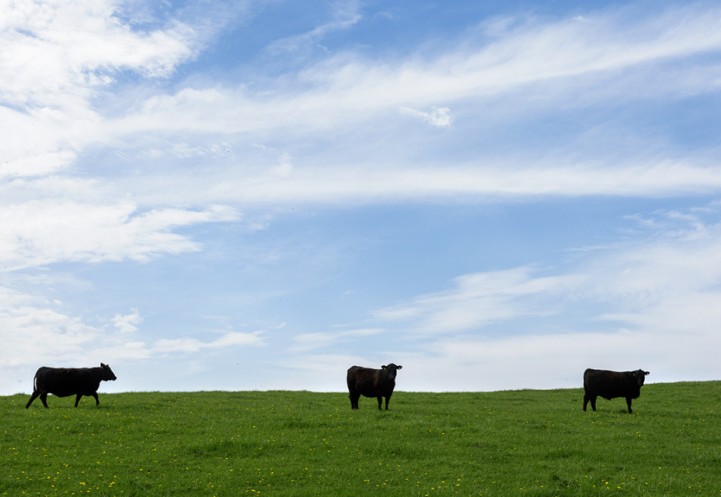
Cattle at Centerdale Farm in Black River, New York.

News

Northeast farmers could profit from grass-fed beef if they expand, join forces

A new analysis finds that grass-fed beef can compete with grain-fed beef in New York state and New England, particularly if production is scaled up.
  • Charles H. Dyson School of Applied Economics and Management
  • Agriculture
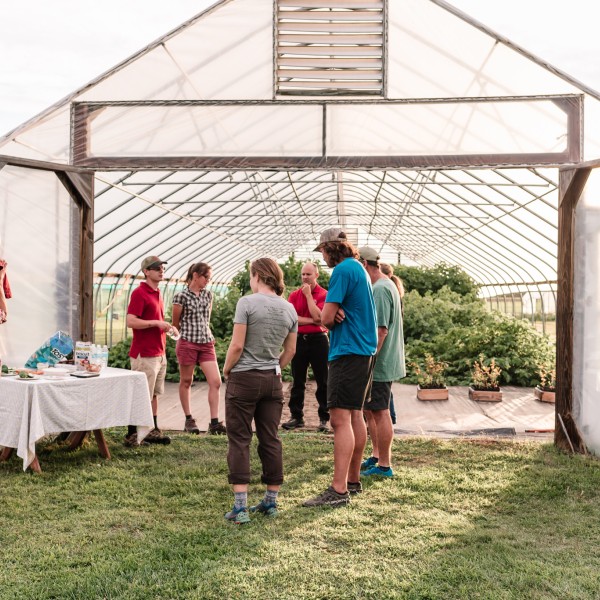
a group of people in front of a high tunnel with crops

News

At Wild Work Farm in the North Country’s Keene Valley, the last frost can come as late as mid-June, and the first frost usually hits in September, said owner and operator Lissa Goldstein. Coping with that very short growing season is one of...
  • Cornell Cooperative Extension
  • Cornell University Agricultural Experiment Station
  • Willsboro Research Farm
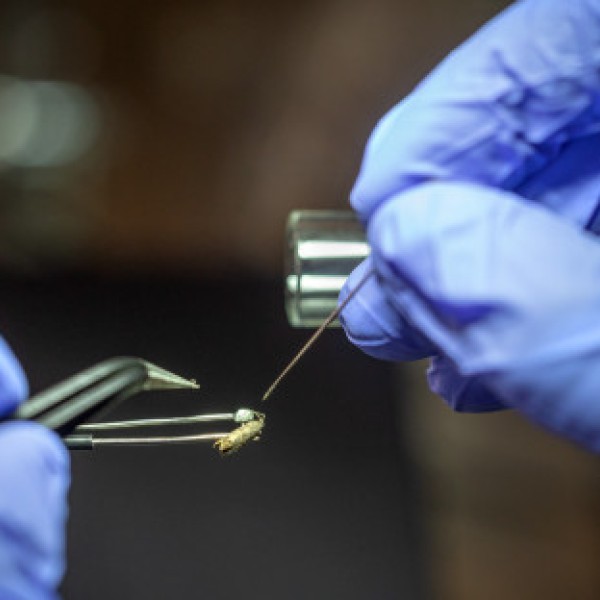
electroantennogram being placed on an insect

News

The device, called an electroantennogram, allows researchers to identify the exact scent molecules detected by an insect’s antennae.

  • Cornell AgriTech
  • Entomology