We live in a time when no part of the natural environment is untouched by human activities. Great strides have been made in addressing many of the natural resources and environmental problems caused by human activities; however, population growth and rising standards of living continue to stress the natural environment and generate a spectrum of environmental problems that need to be solved.

Environmental engineers are called upon to understand, arrange and manipulate biological, chemical, ecological, economic, hydrological, physical and social processes to balance our material needs with our impacts on the environment. Such are the challenges of sustainability, while global climate makes these tasks all the more important.

At Cornell, environmental engineering majors pursue these challenges in a joint program of the College of Agriculture and Life Sciences and College of Engineering.

Environmental Engineering News
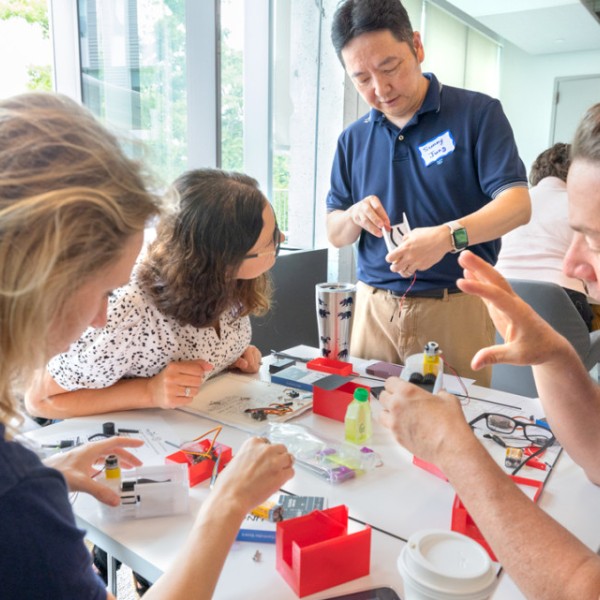
Sunny Jung (left) places a tomato in a prototype bubbler for cleaning produce while Yany Lin films the experiment with a camera.

News

Tiny bubbles, sound waves clean produce safely and effectively

A bubble bath with a constant acoustic sound in the water may be the best chemical-free, gentle method for cleaning agricultural produce.

  • Biological and Environmental Engineering
Yicong Fu, mechanical engineering doctoral student, injects dye into his custom-built, bio-inspired thermal dispenser to observe how particles disperse.

News

Researchers have developed a bio-inspired approach to mixing heat and molecules in fluids – findings that could inform future biomedical devices, heat exchangers and soft robotics.

  • Biological and Environmental Engineering
electron

News

Researchers discovered electron transfer in electroactive bacteria is mediated by CymA proteins’ ability to synchronize and form a biomolecular condensate in the cell’s inner membrane.

  • Biological and Environmental Engineering