Sustainable cropping systems for maple sugarbushes
Project Overview
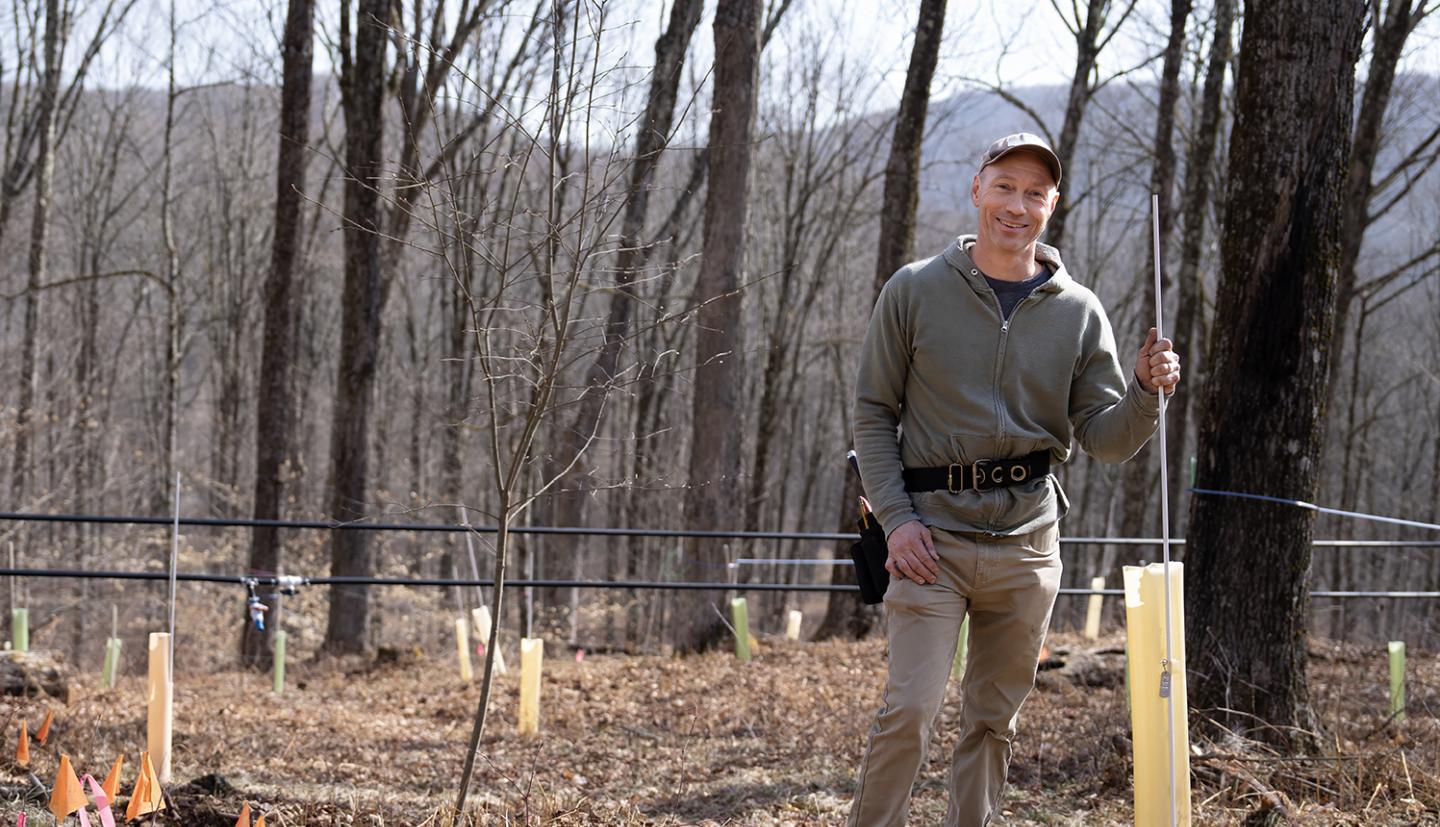
Designing sustainable multistory cropping systems for maple sugarbushes
This project seeks to support maple farmers and consumers by evaluating the growth performance of potential crops to grow alongside maples in a sugarbush agroforestry system and by developing value-added maple product concepts.
Maple sugaring is a growing sector in New York. Studies indicate that only a small fraction of maple trees suitable for tapping are currently utilized for sap production, suggesting the potential for significant growth. Diversified agroforestry systems, in which maple and other crops are grown simultaneously, could increase farming efficiency and create more diversified lines of value-added maple products.
The challenges to developing these systems are twofold. First, there is insufficient information on the performance of crops grown in the understory of a sugarbush. Second, the crops most likely to be well-suited to these growing conditions are specialty crops without strong connections to culinary traditions, which may leave consumers uncertain about how to use them. To address these challenges, we carried out a multiyear plant performance trial with multiple cultivars of 18 species of fruit- and nut-bearing perennial plants. We evaluated plant performance by height, width, disease, stress and damage. Crops produced by plants were also harvested and weighed. We also conducted product development trials to support use of agroforestry crops in maple sugar-themed recipes and products.
The Impacts
The best-performing plants under low intervention management were pawpaw, hazelnut, Cornelian cherry and aronia berry. A native American persimmon was planted too late in the project to evaluate performance, but it showed rapid growth with some individuals growing more than 2.5 feet in a single season. Blueberry plantings had 0% mortality rate, but most plants grew slowly and several experienced dieback and defoliation. Some individual serviceberries (Amelanchier spp.) also performed well. It would be worthwhile to experiment with more cultivars of serviceberry, particularly species more prevalent in the northeastern U.S. Most Ribes plantings (e.g., gooseberry, black currant) experienced severe sawfly damage. Rubus species (e.g., raspberry, blackberry) are not recommended for cultivation under the shade of sugarbush because they are easily outcompeted, were not productive and had a mortality rate of 70%. To support our product development goal, we developed a list of potential products, produced pilot batches, refined recipes and tested additional batches. The most successful products were a shelf-stable maple hazelnut spread and a maple elderberry wine.
Climate-smart, financially resilient food systems bring economic opportunity to farmers and rural communities.
Related information: Cornell Maple Program
Principal Investigator
Project Details
- Funding Source: McIntire-Stennis
- Statement Year: 2024
- Status: Completed project
- Topics: Forests, maple syrup, agroforestry, sustainability