Building Community Climate Resilience
Following major New York State storm events Irene, Lee, and Sandy in 2011 and 2012, concern and attention paid to extreme precipitation and flooding seemed to be at an all-time high. Though 2016 brought New York State one of its worst droughts in history, 2017 was again a year of serious flooding, this time on Lake Ontario and the St. Lawrence Seaway as regional precipitation hit record highs. Additional heavy precipitation events followed in 2018, this time impacting many Southern Tier counties bordering Pennsylvania. Across the state, citizens and decision makers are increasingly faced with complex choices about land use, economic development, and infrastructure investment in the context of flooding, extreme precipitation, and drought. Researchers and extension staff are increasingly being asked to forecast the probability of such flooding and drought events and provide support to individuals and communities seeking to plan for, and respond to, flooding and drought in more effective ways. The research and outreach work we do on flood and drought resilience for NYS communities focuses on: predicting and reducing exposure to flooding and drought, characterizing the sensitivity of natural and human systems, and enabling the adaptive capacity of communities to deal with flooding and drought.
Check out WRI's climate resilience work in partnership with HREP staff.
Submerse NY
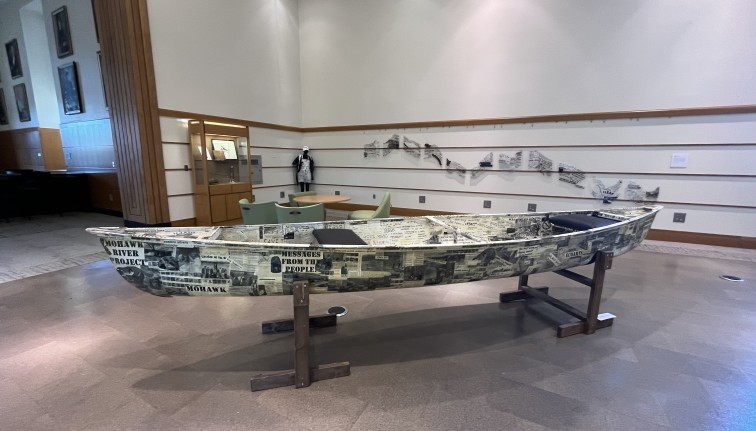
Submerse NY is a state-wide flood-risk awareness and outreach effort - led by New York Sea Grant, New York State Water Resources Institute (NYSWRI) and FEMA - that aims to supplement local community capacity to communicate flood-risk creatively through visual markers and public art.