About us

Pollinators are incredibly important to the agricultural economy of New York and to the floral diversity of natural ecosystems. The Pollinator Network at Cornell is a multidisciplinary group of researchers, extension personnel and students that collectively work to understand wild and managed pollinators in New York, across the United States and around the world.

We are committed to promoting healthy pollinator populations and a sustainable beekeeping industry. Our research enables us to understand the biology and evolution of bees, investigate the role of pollinators in natural and agricultural systems, and identify the current factors threatening pollinator health. Our findings are communicated to growers, beekeepers, policymakers and the public through a variety of extension and outreach programs.

What is a Pollinator?

A pollinator is any animal that helps plants reproduce by transferring pollen from the male structures of one flower to the female structures of the same or another flower. Pollinators perform a vital service, enabling reproduction in over 85% of the world’s plants. While some bird and bat species are pollinators, most pollination relies on insects. Insect pollinators include bees, wasps, butterflies, moths, beetles, and flies. Bees are the most important group of pollinators because they deliberately gather pollen from many flowers of the same species to provision their offspring. This makes bees effective and efficient pollinators.

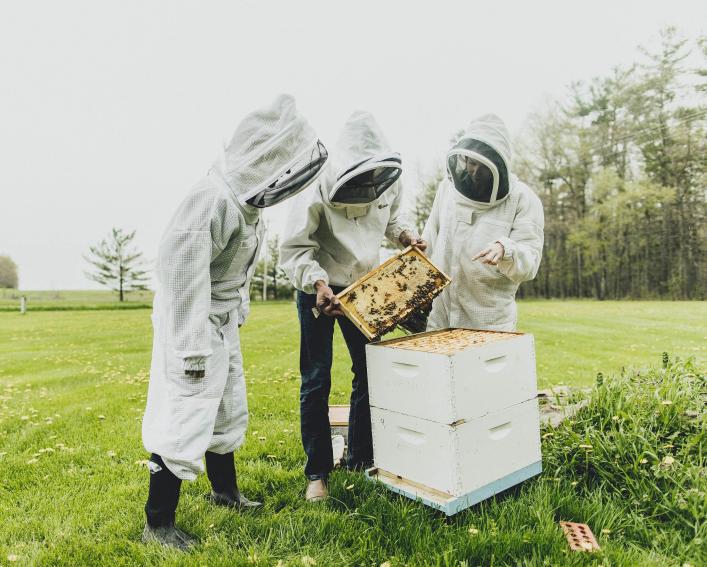
People in beekeeping gear inspect frames from a hive.
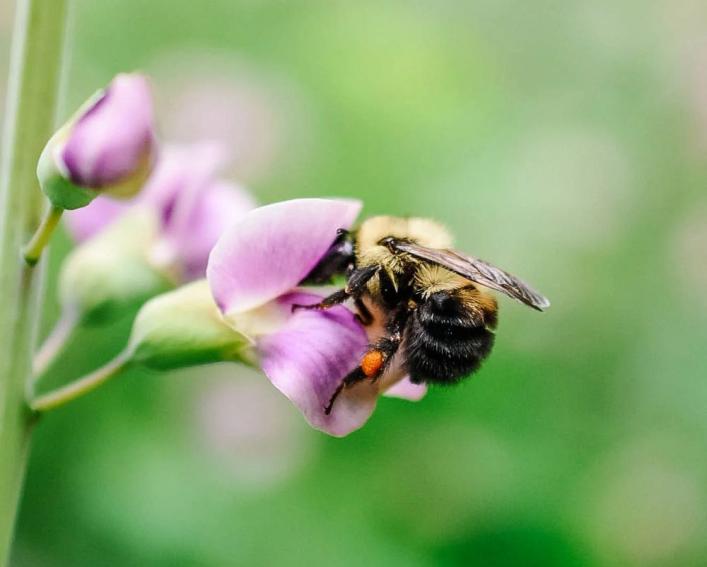
A bee pollinates a flower.

Pollinator research news

Doctoral student Sylvana Ross spent the summer leading the Cincinnati Urban Ecology Study to better understand the insects in the city’s green spaces.

News

The secret lives of city insects: bringing urban ecology to the community

Doctoral student Sylvana Ross and a team of Cincinnati youths spent their summer studying city-dwelling insects, amassing data that can inform decisions that support healthy green spaces.

  • Entomology
  • Pollinators
A wild bee drinking nectar from a flower

News

A new publicly available tool uses data from the Cornell Lab of Ornithology’s eBird program to track and estimate the diversity of wild bees across the eastern and central U.S. - with implications for conservation and agriculture.

  • Cornell Atkinson
  • Lab of Ornithology
  • Entomology
Melissa Guzman Headshot

Spotlight

Academic focus: Biodiversity big data and insect conservation Research summary: The goal of my research is to help improve insect conservation by developing statistical methods that better use all available data. While the distribution of some...
  • Department of Entomology
  • Entomology
  • Pollinators
Research associate Wayne Anderson loads bee samples into a liquid chromatography mass spectrometer for analysis in the lab of Scott McArt in Comstock Hall.

News

Cornell bee experts are analyzing samples of bees and related material to help identify the cause of unprecedented managed honeybee losses this winter.

  • Department of Entomology
  • Entomology
  • Pollinators
Brown soil and green plants in a field

News

Fifty-four research projects addressing New York’s agriculture, environment and communities have collectively received $1.6 million from the USDA.

  • Cornell University Agricultural Experiment Station
  • Biological and Environmental Engineering
  • Ecology and Evolutionary Biology