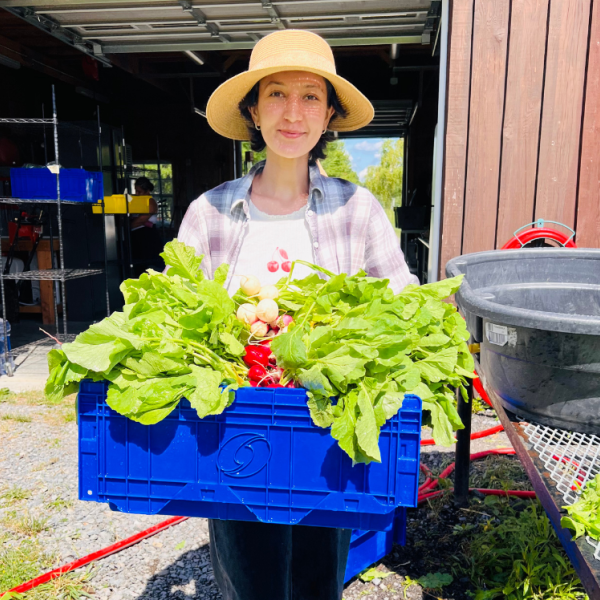
The feeling of waking up each weekday morning, knowing that I will play a significant role in the development of a growing, living art project, is like no other. Cornell Botanic Gardens is a massive canvas, saturated with a beautiful array of animated elements. Each cultivated plant acts as a smear of paint, generating a dazzling mosaic masterpiece, bursting with vivacious, raw energy. As a summer horticulture intern, my sowing and planting add substance to the brush, and my weeding and mulching add contrast to the stroke.
When I first began the internship in May 2018, I felt somewhat distant from the purpose of the job. I viewed myself as a source of physical potential that the garden staff could direct towards needed work. I was primarily focused on the money and the CALS credits that would come with the job. But as the summer unfolded, the internship became an embodiment of creative liberation, a source of imaginative passion, and a landmark of personal and enlightened growth.
One cannot visit Botanic Gardens without feeling inspired and emotionally stimulated. After almost every work day, I spent time painting, drawing, and sculpting – honing in on what it means to be a gardener, and more broadly, what it means to be alive, from the perspective of both a human and plant essence. The similarities between people and plants are often overlooked, and therefore the vast majority of natural areas in the world are taken for granted, and increasingly overshadowed by human-focused desires.

During the interning process, I experienced the natural allure of the botanic gardens and a growing enthusiasm within myself for plants, the natural world and creativity. It’s actually comforting to feel such a strong connection between gardening and art-making. It goes to show that you do not need to major in fine arts to learn how to create and be routinely inspired.
The botanic gardens have shed light on a diverse range of artistic paths that I have been eagerly pursuing outside of work. Ironically, the internship has helped me realize that I do not want to pursue a horticulture-based occupation in the future, but rather use my plant-science knowledge and hands-on gardening experience to assist in my artistic endeavors, and blossom as an inspirited artisan following graduation.
Bottomless appreciation goes out to the individuals who keep Cornell Botanic Gardens flourishing, including the staff, donors, and all the visitors. Never let this spark of elegance and enchantment burn out!
Alex Schaef ’20 is a viticulture and enology major