Using soil to fight climate change, saving the Amazon with wind and solar energy, boosting wildlife conservation through bioacoustics – these innovative approaches are the result of a new competitive grant program aimed at solving some of the world’s biggest sustainability challenges.
The 2019-20 Collaborative Research Partnership grant program is the latest collaboration between the Atkinson Center for a Sustainable Future and The Nature Conservancy (TNC). Since 2013, the organizations have worked together on interdisciplinary initiatives including the NatureNet Science Fellows program, which gives early-career scientists an opportunity to tackle problems at the interface of conservation, business and technology.
Now, continuing to benefit from a $1 million gift commitment in 2015 from James Morgan ’60, MBA ’63, and Rebecca Quinn Morgan ’60, teams of Cornell and TNC researchers are embarking on three joint projects that aim to drive change in policy, implementation and management. Each project will receive up to $200,000 over a two-year period.
In May 2018, faculty members affiliated with the Atkinson Center and TNC scientists traveled to Arlington, Virginia, for a workshop designed to connect research partners and unearth potential projects. Afterward, Cornell-TNC teams submitted funding proposals in categories ranging from green infrastructure to conservation finance to mitigating and adapting to climate change.
“We asked Cornell scientists what research they felt was underutilized, and we asked TNC’s on-the-ground scientists what practical science they wish they had, and connections formed organically from there,” said David Lodge, the Francis J. DiSalvo Director of the Atkinson Center.
The projects selected for the 2019-20 Collaborative Research Partnership grant are:
How can soils help mitigate climate change in Zambia? Soils are the world’s largest terrestrial carbon pool yet are missing from the list of “intended nationally determined contributions” (INDC) outlined in the Paris Climate Accord. Focusing on Zambia as a case study, a team led by Ying Sun, assistant professor in geospatial sciences in the School of Integrative Plant Science, and Deborah Bossio, lead soil scientist for TNC, will quantify the mitigation potential of soil-based climate solutions.
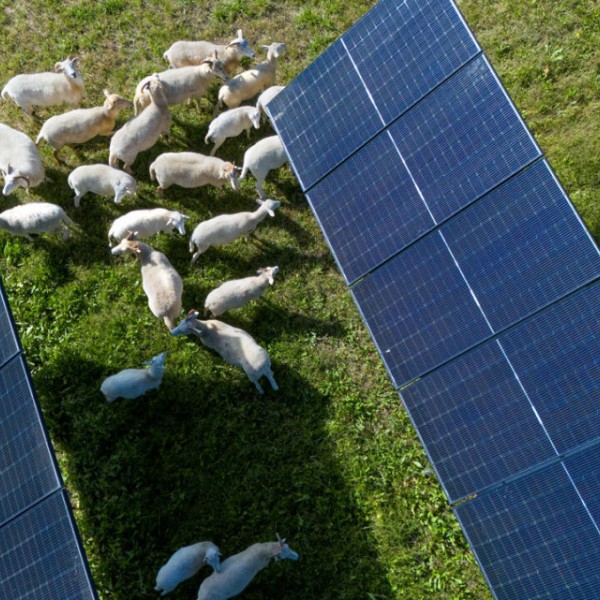
Can wind and solar save the Amazon? Hydropower makes up most of current renewable electric energy production but has negative impacts on freshwater systems and livelihoods. This project, led by Eilyan Bitar, associate professor of electrical and computer engineering, and Joe Kiesecker, TNC’s lead scientist of global lands, will consider how greater proportions of low-impact wind and solar renewable energy could be integrated as alternatives to proposed hydropower.
Can bioacoustics lead to more reliable conservation decisions? This project will explore the next frontier in bioacoustics: using the technology to estimate animal populations. Applying methods used with endangered gibbons in Borneo, Indonesia, a team led by Angela Fuller, associate professor of natural resources, and Edward Game, lead scientist for TNC’s Asia-Pacific region, will demonstrate how bioacoustics detectors can be used to estimate the density of other species, providing quick and reliable information to help guide land-use decisions.
“Ultimately, we looked for projects that would advance sustainability, deliver outcomes for people and nature, and change or influence behavior or policy at significant scale,” said TNC’s chief scientist Hugh Possingham.“This new grant program focuses on projects that address the world’s biggest sustainability challenges and science that is actionable and useful to decisionmakers and planners.”
“There’s much to be gained by cultivating a collaborative network among TNC and the Atkinson Center,” added Lodge. “I’m looking forward to the unexpected discoveries that come from bringing different perspectives together.”