What do you like to do when you’re not working? Basketball, biking, playing with my kid and reading.
Current outreach/extension projects: I am developing a project with The Nature Conservancy on the conservation and reforestation in Southwest U.S.
Three adjectives people might use to describe you: Collaborative, perceptive, patient
What brought you to Cornell CALS? Century-long excellence in ecology, integration of theoretical and applied studies, novel synergies, like the Institute of Computational Sustainability and Atkinson Center, and of course, the beauty of Ithaca.
What do you think is important for people to understand about your field? Vegetation is an important hub within global carbon, water and energy cycles. Understanding the ecophysiology, adaptation and acclimation of the diverse plants is critical to predicting their (and also our) fates under the ongoing global change. Novel technology such as remote sensing from different platforms and increasing computational power adds to our capability to answer these questions.
If you had unlimited grant funding, what major problem in your field would you want to solve? Why tropical plants are so diverse and what does that diversity mean for the ecosystem’s sensitivity to global change.
What was your most valuable research experience when you were a student? Visiting our field sites in northwestCosta Rica after ‘growing’ trees in my computer with vegetation models and realizing how complex the ecosystem can be, as well as how the model abstracts key processes that govern critical ecosystem dynamics.
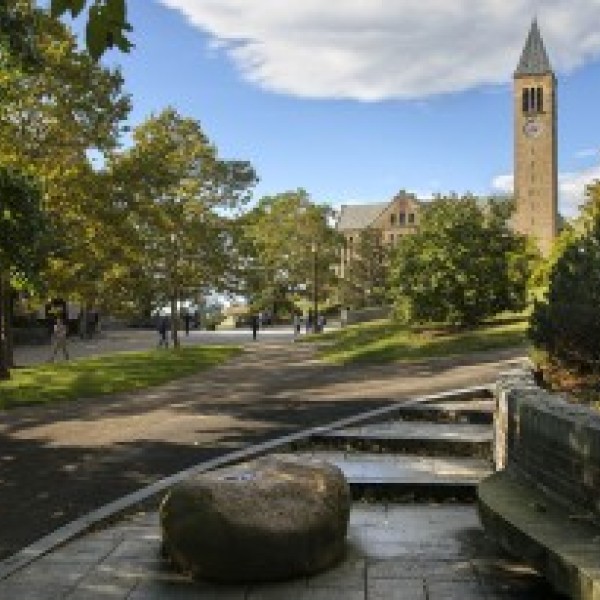
What’s the most surprising thing you’ve discovered about Cornell and/or Ithaca so far? Big long slopes everywhere! Fruits from Wegmans and Farmers market are so fresh and tasty!
Meet all our new faculty