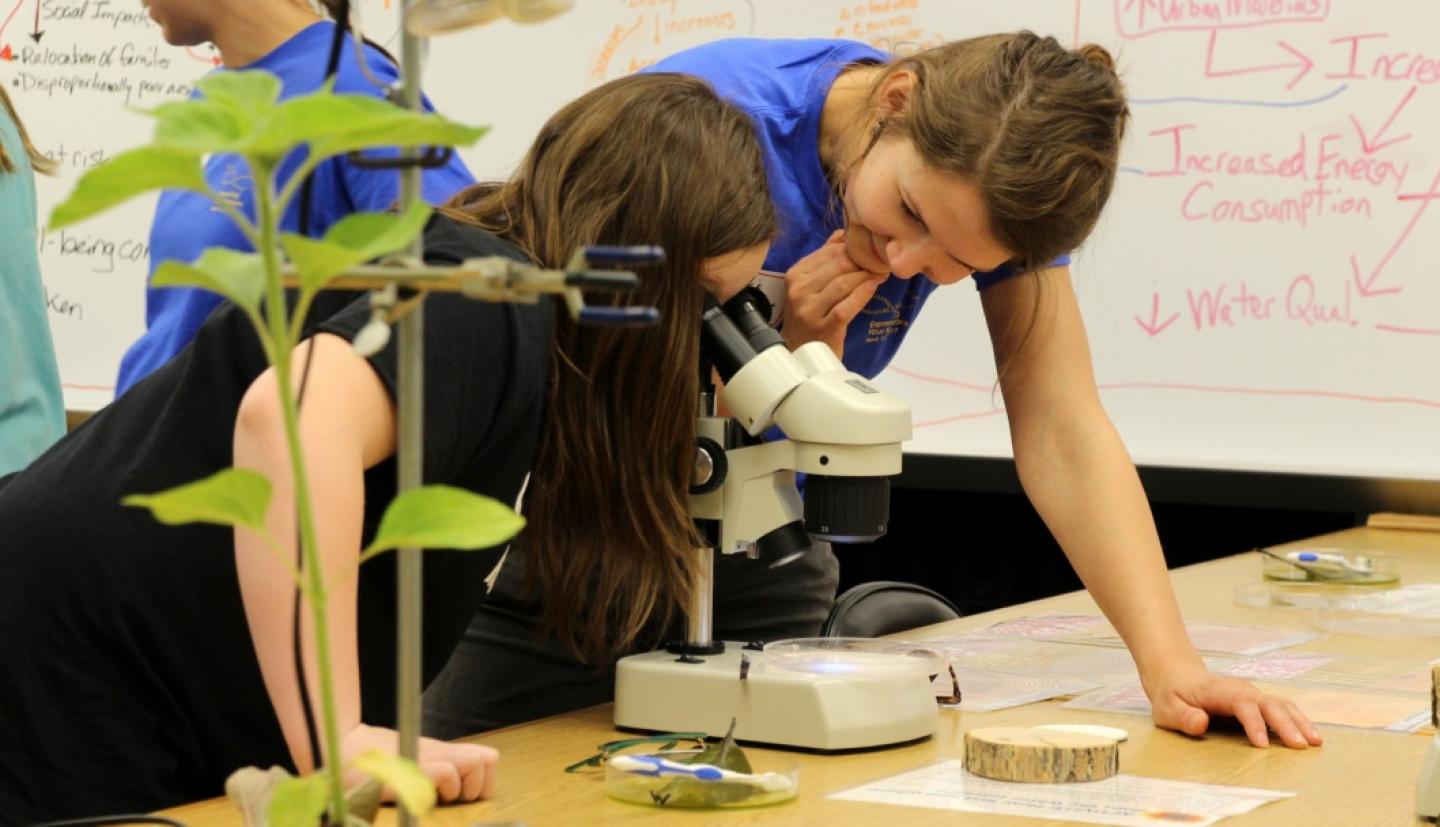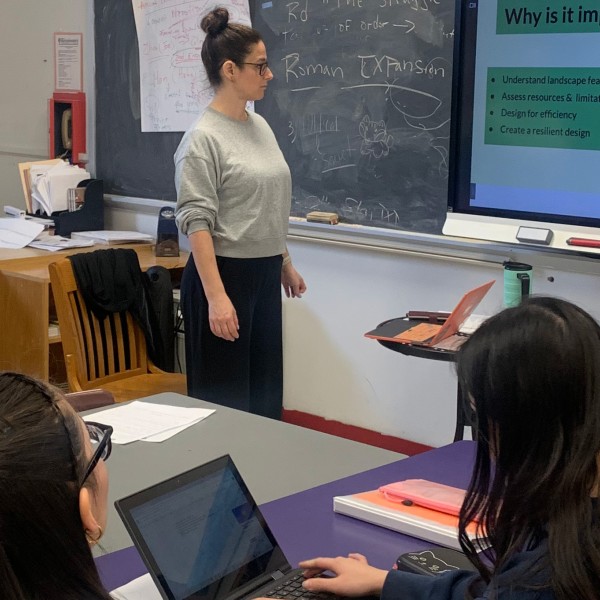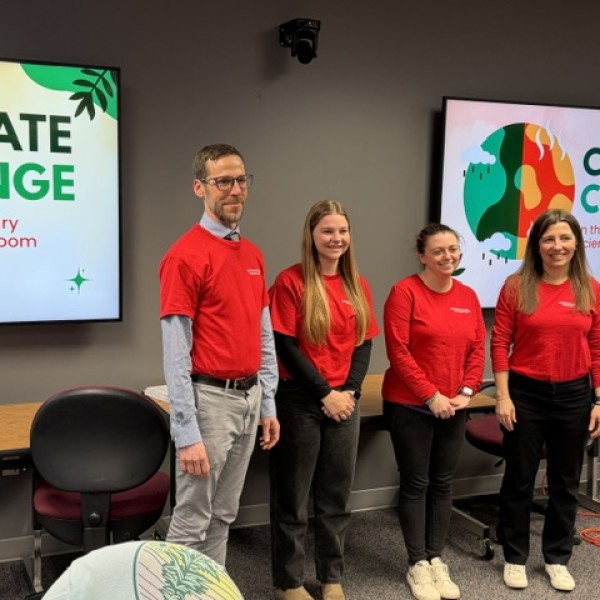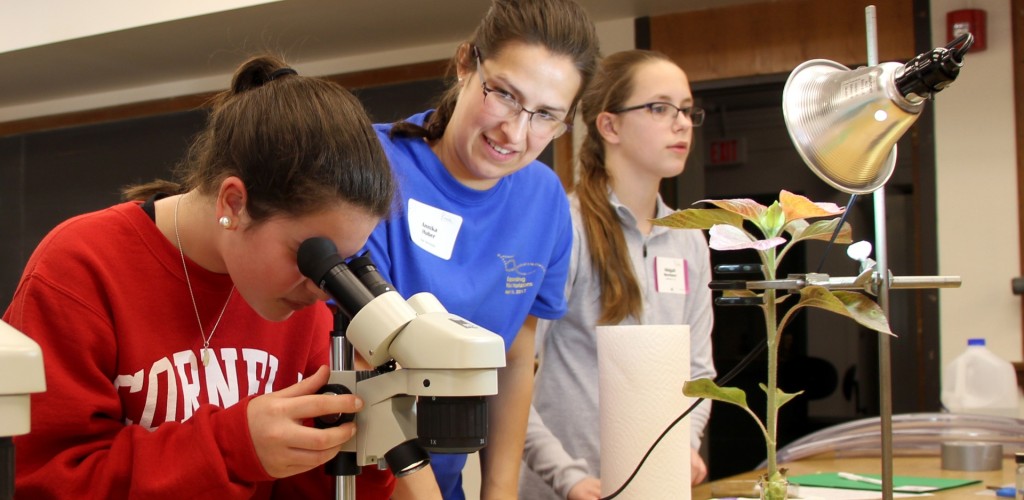
Cornell faculty and graduate students welcomed girls in grades 7-9 to campus April 15 to learn about STEM and discover role models in the fields of science and math. The Cornell Expanding Your Horizons conference used hands-on activities to stimulate interest in math and science, and to foster awareness of career opportunities.
As part of the program, horticulture graduate students in the Bauerle Lab — Annika Huber, Juana Muñoz Ucros, and Marie Zwetsloot — led workshop sessions on “Engineers of Nature: How do plants drink?”
The three students developed activities directly related to their research on woody plant root physiology and helping plants cope with water stress. Their middle school workshop participants assembled water columns simulating the hydraulic systems plants use to transport water from roots to leaves, graphed their observations of how different sized tubes performed, used water to transport dyes into sunflower plants, and skeletonized leaves to observe the microscopic structure of their veins.
“It’s the third year Annika, Juana, and Marie have pitched in to lead workshops for this event,” says Taryn Bauerle, associate professor in the Horticulture Section. “It’s great to see them as role models for the next generation of scientists.”