October 29, 2026
Awards
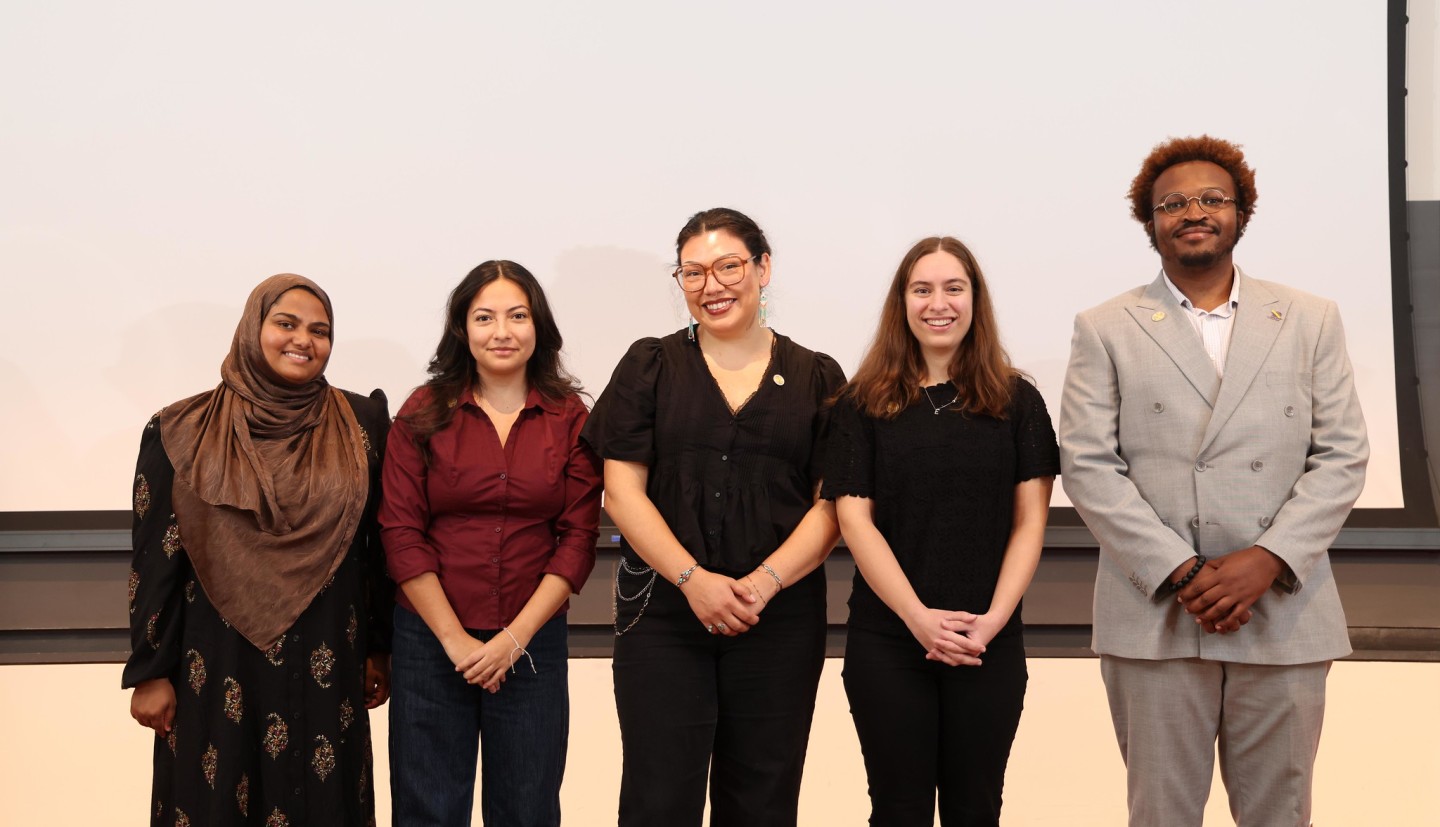
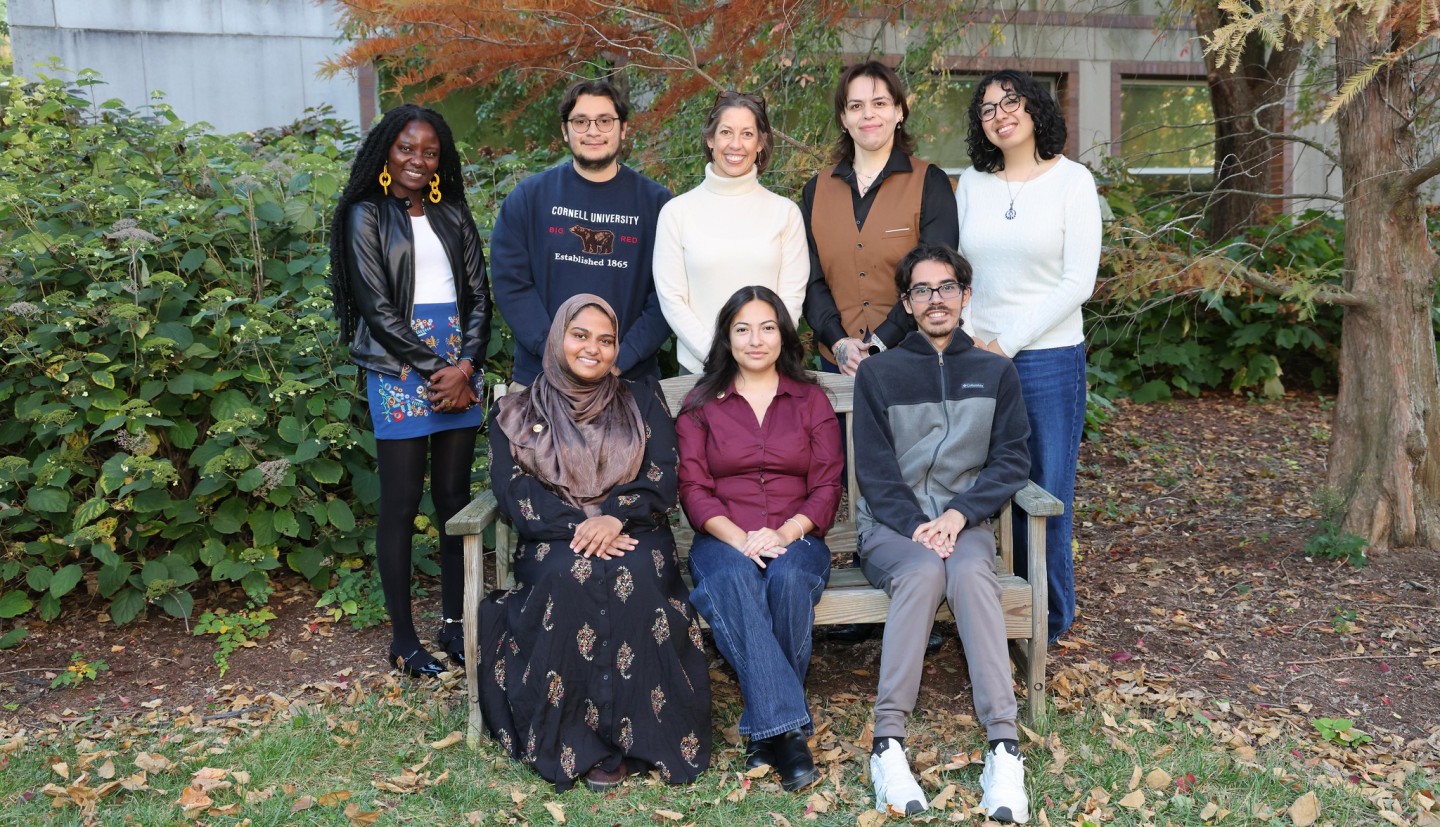
Graduate students Jessica Lopez Diaz and Nishat Tasnim were awarded 2026 Cornell Graduate School Dean’s Scholar Awards. This distinction recognizes academic excellence and strong potential to contribute to Cornell’s scholarly community. (See photos below.)
Conferences
Graduate student Margaret E. Foster (Maggie) presented two papers at the Association of Internet Researchers conference.
In her first paper, “Turning the Page: Promoting Queer Literary Counterpublics in the Platform Era,” Maggie addressed how literary spaces promote queer counterpublics, focusing on independent bookstores’ and "social reading” platforms’ branding practices.
In her second paper, “’The Space Does Not Live Alone’: Negotiating Authenticity, Creativity, and Community in Dormitory Personalization Contests,” she discussed the negotiation of an “authentic” college student experience through university-sponsored dormitory personalization competitions as a means of university marketing, even as they promote campus community.
Graduate student Jackline Kemigisa presented “Worsening Disinformation: Generative AI and Chatbots in Uganda’s 2026 Election and the East African Context” at the Union for Democratic Communication 2026 conference.
In her paper, Jackline provided anecdotal evidence of AI disinformation in the Ugandan election and argues for a reinterpretation of disinformation frames. She did so by contrasting how authoritarian election environments use disinformation as a communication strategy with how disinformation is conceptualised in academic studies. Based on seven expert interviews and 20 media reports, her study finds a) AI-generated disinformation was an election communication strategy for political actors for and against the regime; b) All actors relied on similar content topics to manufacture disinformation, such as military violence or threats to national sovereignty by “homosexuals”; c) AI disinformation was gendered; for example, women journalists and politicians experienced trolling with deepfake nudity pictures.
Senior Lecturer Michelle LaVigne and M. Nicely presented “Speculative Choreographies: On Assembling and Disassembling Languages” at the Speculative Choreographies conference.
During the presentation, the authors chronicled a series of workshops on language and embodiment conducted over the past 10 years. They describe the writing, moving, and mapping methods used to facilitate exercises that ask individuals and groups to examine how decisions can be made tangible and legible. These methods and frameworks pose language as both speculative and directive, oriented toward discovering means for bodily cohesion and consensus, as well as (re)addressing discord, dispersal, and reassembly. They concluded by inviting the audience to participate in an embodied exercise examining how different language choices can make for different experiences of movement as freedom, oppression, liberation, repression, and others. The aim of the exercise was to open possibilities for participants to consider how vocabularies make bodies and how our habitual ways of moving and decision-making can be challenged or even changed.
Professor Jon Schuldt participated in a panel at the World Association for Public Opinion Research conference, where he showcased his work “Perceiving Public Opinion across Borders: Challenges and Opportunities.”
Jon presented theoretical perspectives and experimental survey results suggesting that the beliefs that residents of one country hold about public opinion in other countries may play an underappreciated role in support for climate change policy. It further considered relevant intergroup theories that may explain how people come to estimate the views of other groups near and far, especially in the absence of direct knowledge about what others believe.
Events
Join us for COMMColloquium Monday, November 9, 2026, 3:00 pm, in 102 Mann Library Building. Graduate student Margaret E. Foster (Maggie) will present “Signs, Stock, and Staff: How Indie Bookstores and Social Reading Platforms Produce Queer Literary Counterpublics.” The colloquium is followed by a reception located in The Hub of the Department of Communication.
Invited Lectures
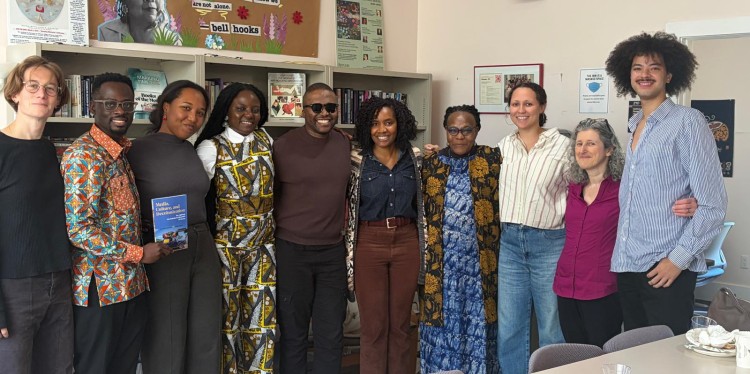
Assistant Professor Wunpini Mohammed recently presented two talks about her book Media, Culture and Decolonization: Re-writing the Subaltern Histories of Ghana.
She presented the first on September 30 for the Yale Council on African Studies Lecture Series. In attendance were graduate students and faculty members from sociology, African studies, history, religious studies, etc.
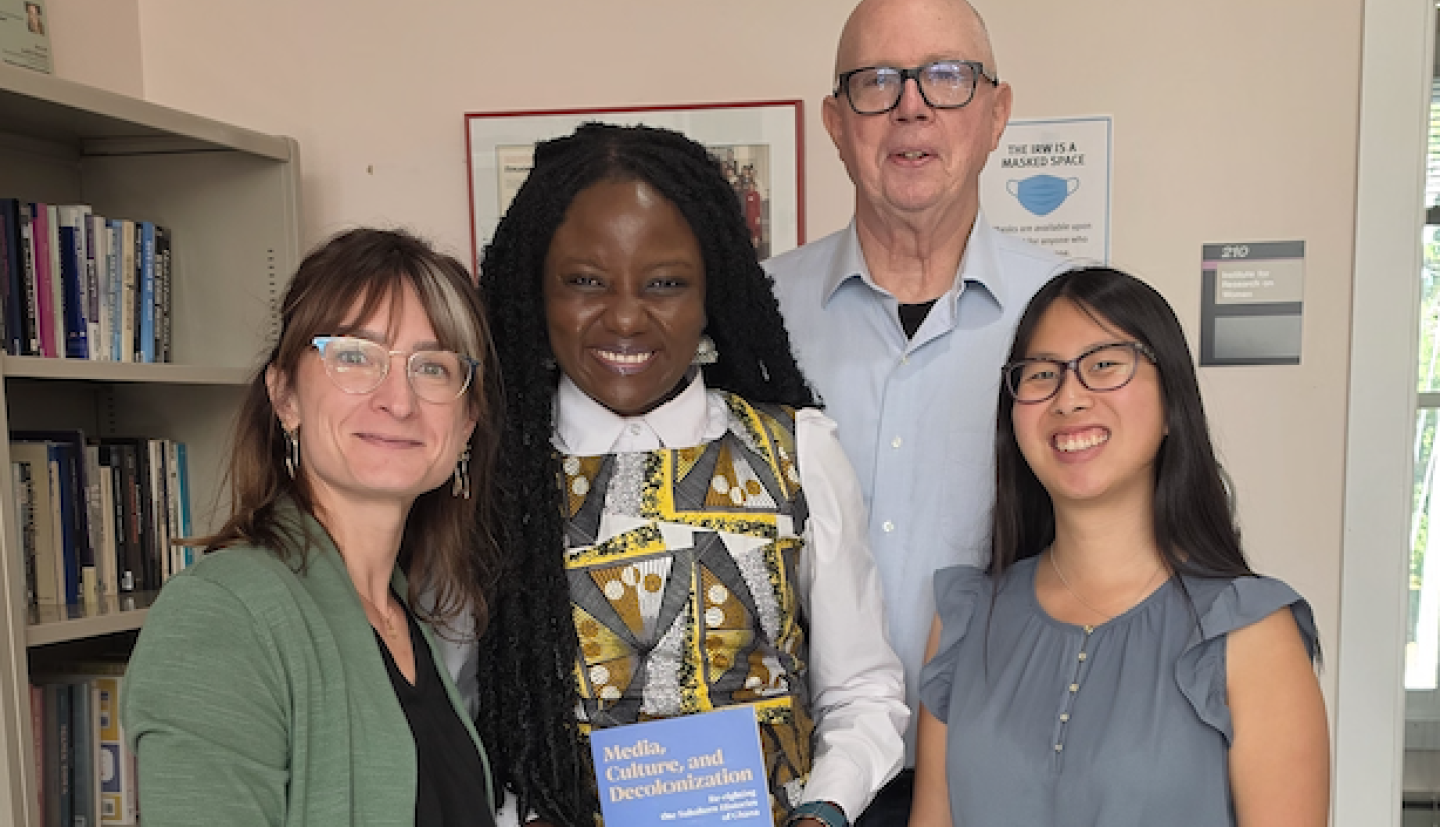
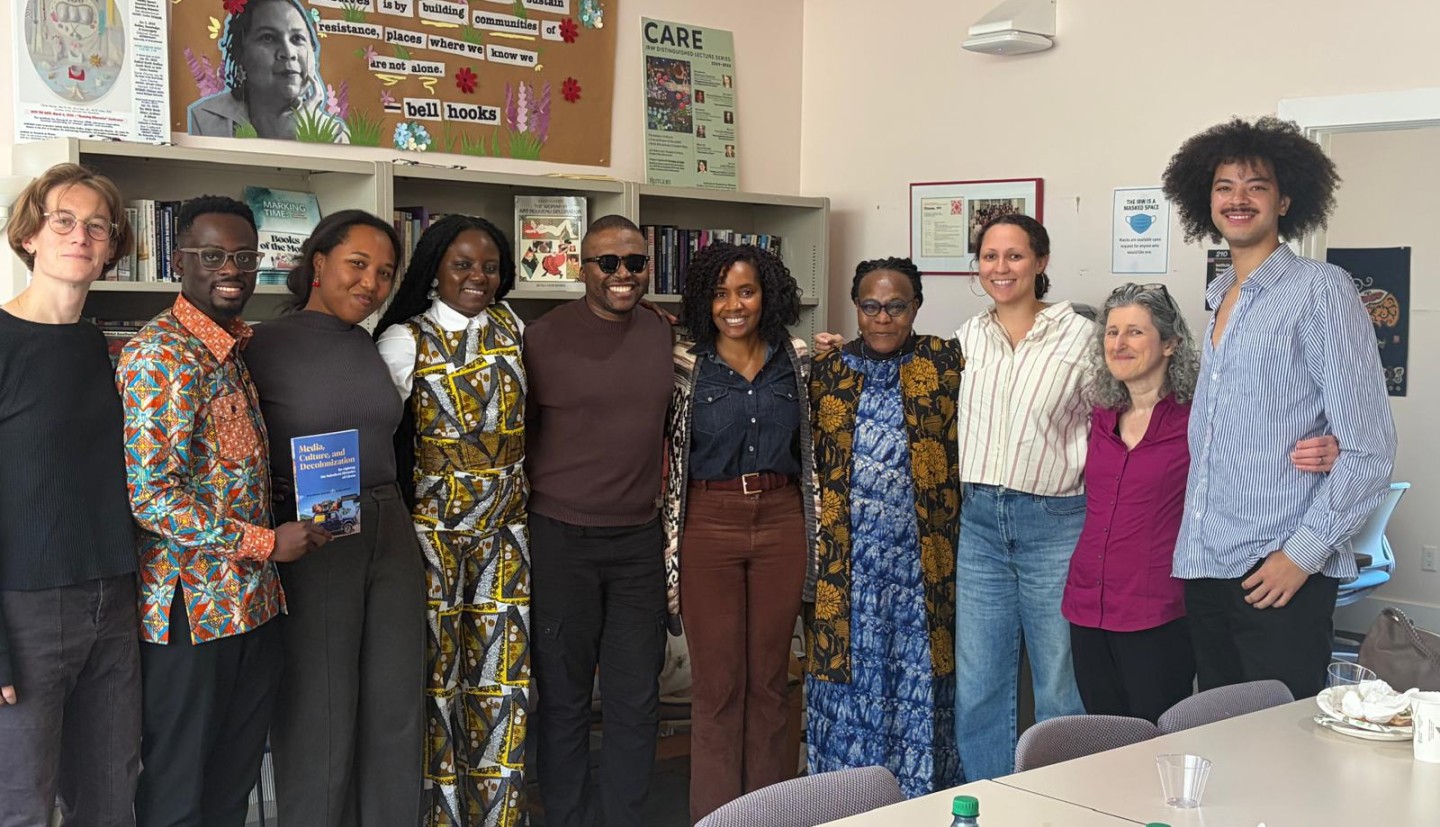
On October 15, Wunpini presented the second at Rutgers University’s Institute for Research on Women. Her editorial team were in attendance to support her. (See photos below.)
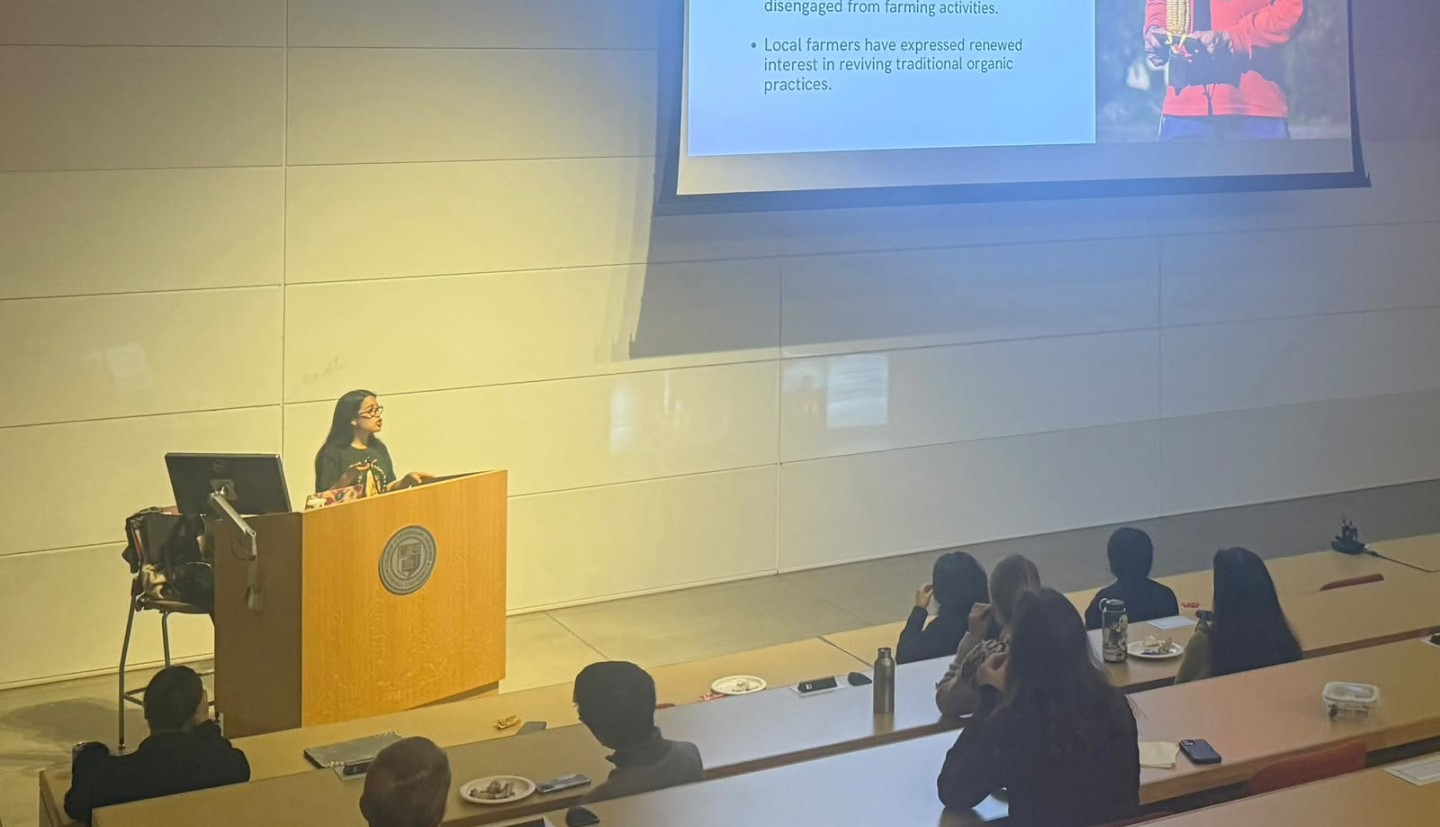
Graduate student Amanda Vilchez delivered an invited lecture entitled “Tradition as Innovation: Collaborative Evaluation of the Ancestral Use of Vampire Bat Guano” as part of the Cornell Veterinary One Health Association’s seminar series.
Publications
Graduate student Maggie Sardino, book review of The Death and Life of Gentrification: A New Map of a Persistent Idea, October 2026, Rhetoric Society Quarterly.
In The Death and Life of Gentrification, Japonica Brown-Saracino draws on analyses of a range of cultural products to argue that gentrification as a term referring to a specific urban process of change and suggesting the need for political intervention has died. In its place, gentrification as a highly flexible and politically evocative term has emerged. In her review, Maggie examines what this broadening of the term “gentrification” means for communities who are involved in resistance against displacement and brick-and-mortar urban transformation. She concludes by considering how discussions of gentrification may need to shift given its politically flexible nature.
A. Wanless, Associate Professor Claire Wardle & D. Scales, “How Can Approaches from Physical Ecology Help Research and Policy on the Information Environment?” October 2026, Harvard Misinformation Review.
Scholars and policymakers increasingly use ecological metaphors such as “information environment” and “information ecosystem” to describe contemporary informational spaces. The authors argue that ecology offers concepts and frameworks that can help researchers understand relationships among people, technology, content, and society. They leverage natural science definitions of physical ecosystems to develop concrete models for studying complex informational systems.