Back

Discover CALS

See how our current work and research is bringing new thinking and new solutions to some of today's biggest challenges.

Share
  • Animal Science
  • Animals

by Angelina Tang '28

Millions of pets in the United States enter animal shelters every year, putting facilities at capacity with no end in sight anytime soon. Couple that with a trend of dogs, particularly large dogs, spending more and more time in shelters before adoption, and the nation has an overburdened shelter system on its hands.

That is why Kaylin Barefoot ’26 decided to found Students for Animals in Shelters, an undergraduate club that supports local animal shelters through volunteering, fundraising, and outreach to adopters. Additionally, the club provides students with shelter veterinary medicine career opportunities.

The club began operations in 2023, with Barefoot at its helm as president for three years. She got the idea after she began volunteering at the Tompkins County SPCA through the vet school’s Maddie Shelter and Community Medicine program and noticed a lack of undergraduate involvement.

“I wanted students to get excited about shelter med,” Barefoot said. Thus, SAS was born, and now their students volunteer every week at the SPCA.
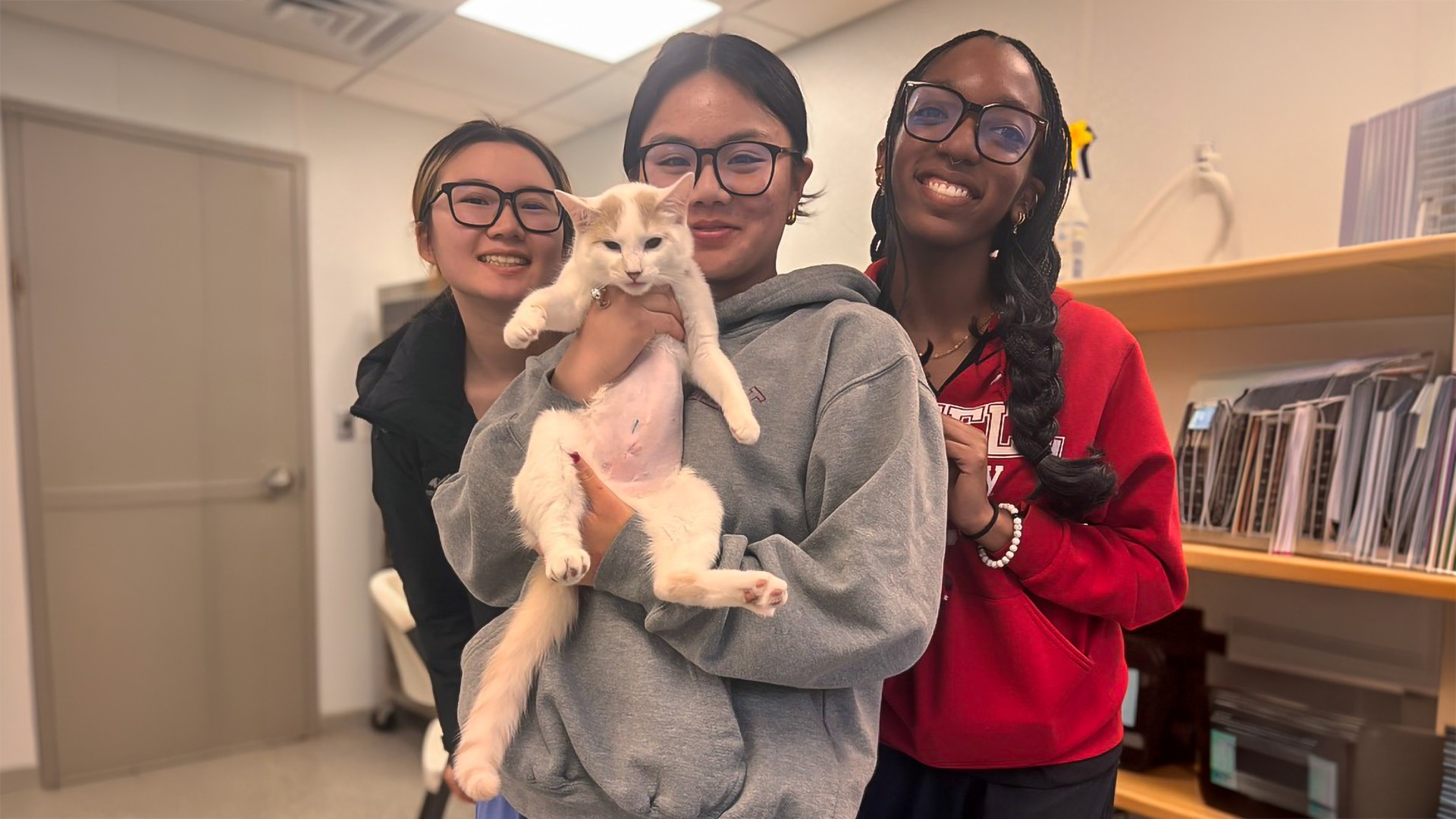
SAS also works with Browncoat Cat Rescue, Chemung County SPCA and Shelter Outreach Services, which is a spay and neuter clinic serving the greater Ithaca area. They have previously done fundraisers for these shelters and assisted staff during spay and neuter clinics, which shelters provide as a preventative for overpopulation and to improve animal health.

Additionally, SAS supports shelters through outreach to potential adopters; they maintain a very active social media presence, with club members creating posts every week about adoptable animals at the Tompkins County SPCA and Browncoat Cat Rescue.

The club has made a difference at the Tompkins County SPCA, said Jim Bouderau, executive director. “The SPCA of Tompkins County is incredibly grateful for our partnership with the Students for Animals in Shelters Club,” he said. “Club members’ assistance with our veterinary and medical teams provided much-needed support, while their compassionate, hands-on care touched the lives of hundreds of animals in our shelter."

SAS has grown to roughly 250 students enrolled on their mailing list. Many are animal science students, and all of them are united by a common love for helping animals.

“I love being part of SAS because it’s a meaningful way to give back to animals in need while connecting with people who share the same passion,” said Hanni Yang ’28, an animal science major and SAS member.

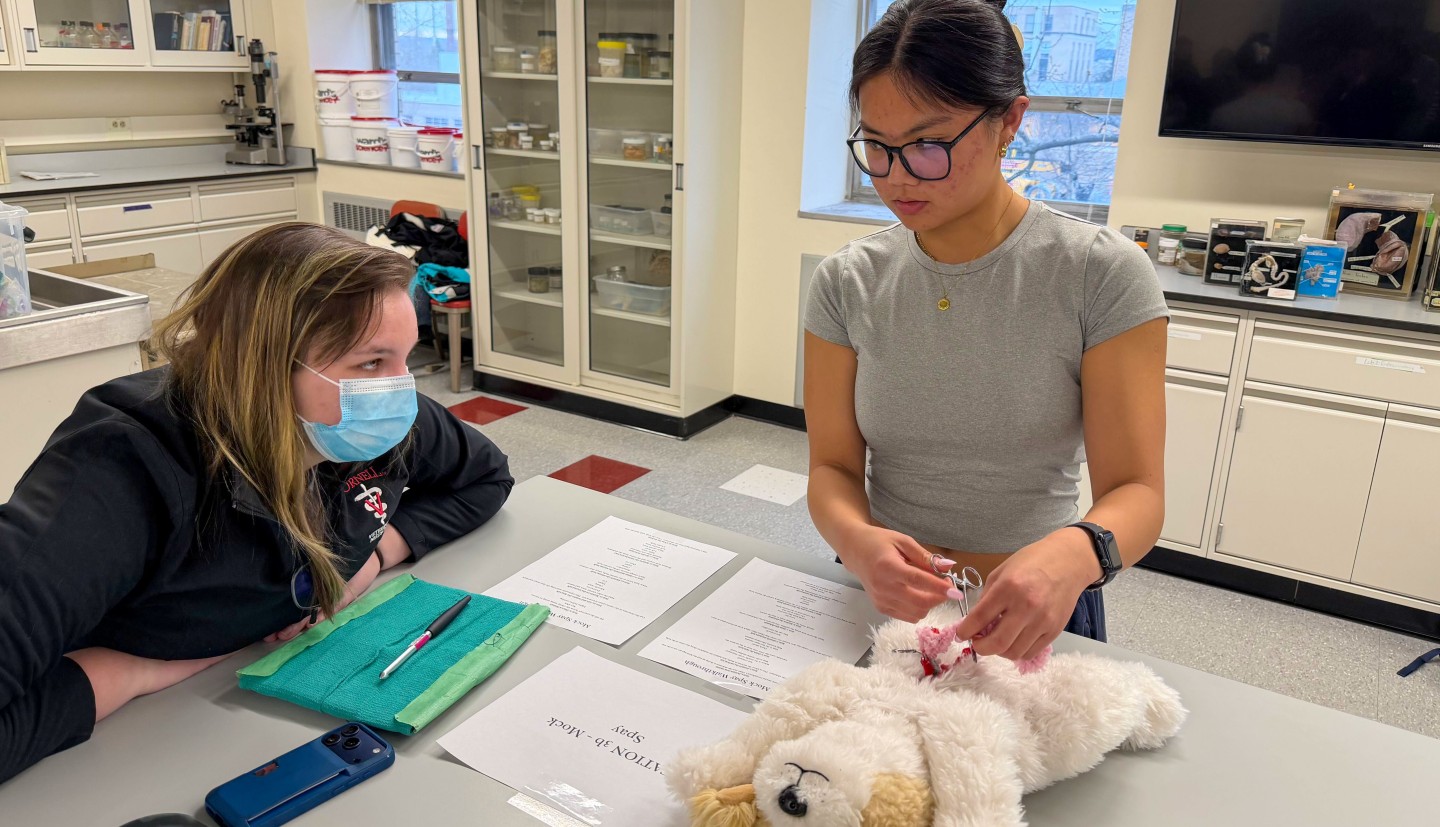
Apart from directly volunteering at local shelters, SAS also seeks to bring more students into shelter medicine — veterinary care specifically for animal shelters. One event SAS held in spring 2026 was a mock spay and neuter, in which students learned how to perform these surgeries using plush cats and dogs. They were also able to practice vaccination and suturing techniques under the guidance of a vet student.

The mock spay and neuter was Barefoot’s favorite event that she hosted, as she wanted to give students potentially applicable veterinary career skills. “My idea was to do a skills lab,” she said. “We set up different stations. One of them was how to wrap a spay and neuter pack, because most shelter jobs require you to be able to do that skill.”

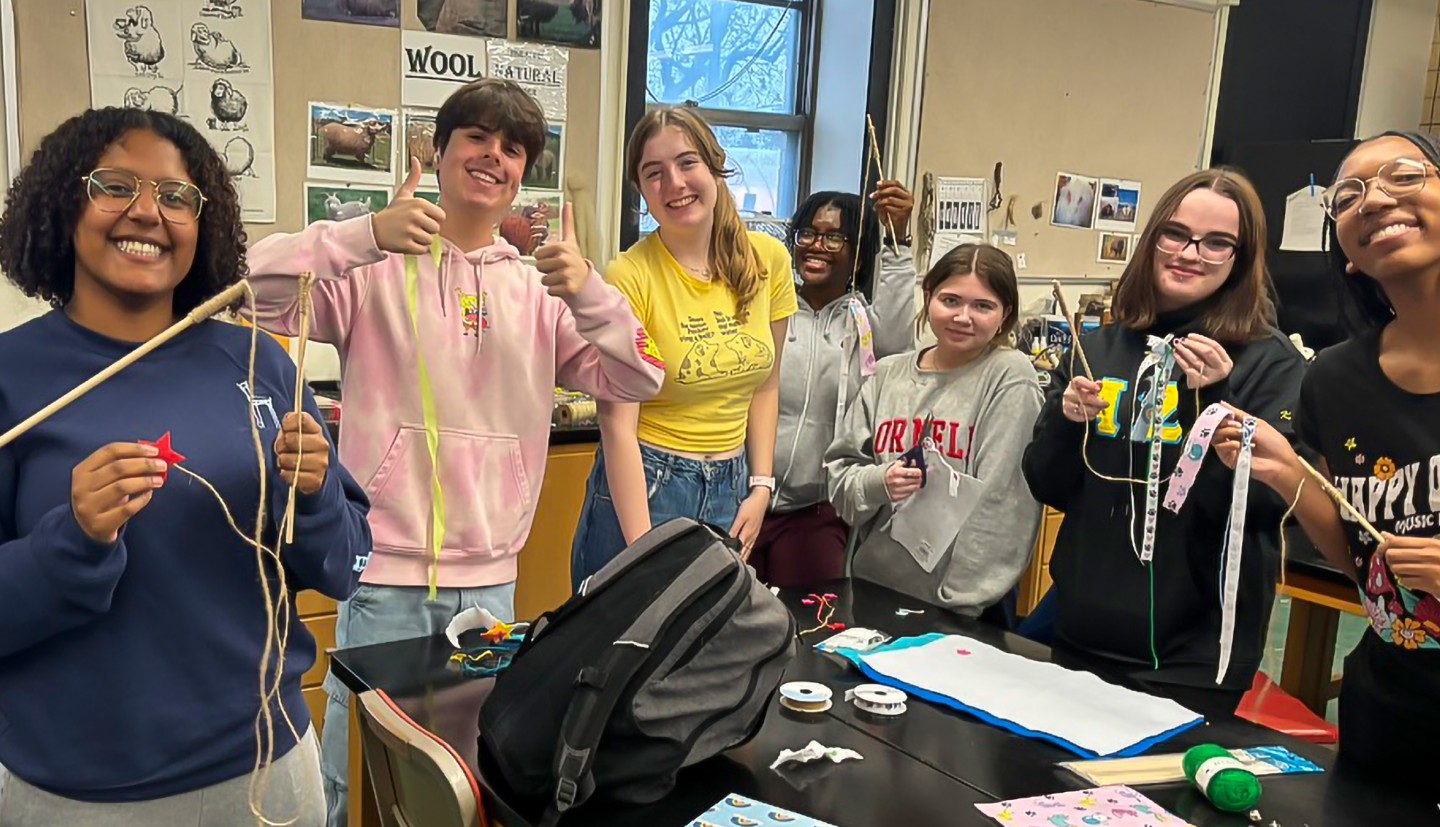
However, SAS’s ultimate goal is just to support animal shelters both near and far, and sometimes, that just means demonstrating that someone cares. Barefoot recalled one craft-night event she held where SAS created little paintings of some of the animals at the Tompkins County SPCA to give to their future adopters.

“When I brought the paintings in, the shelter staff were so excited to see them,” Barefoot said. “Working at the shelter is so stressful sometimes, and you're often seeing a lot of sad things. The fact that we, as a little club, were able to make them so happy with our goofy little drawings of cats and dogs was really sweet.”

Angelina Tang ’28 is an animal science and communication double major and the communications assistant for the Cornell CALS Department of Animal Science.

Keep Exploring

Infection

News

Diet changes and infection resize an organism’s intestines through different cellular strategies. In malnourished fruit flies, infectious microbes became a source of food, not just a threat.

  • Entomology
  • Health + Nutrition
  • Disease
Worker bees on a frame of honeycomb.

News

Strict regulations have prevented continental U.S. beekeepers from participating in the lucrative organic honey market, but new findings could provide evidence to open organic markets to U.S. producers.

  • Entomology
  • Food