Back

Discover CALS

See how our current work and research is bringing new thinking and new solutions to some of today's biggest challenges.

Field crops specialist and team leader

Share

From weather to weeds: How Erik Smith found his place in Extension

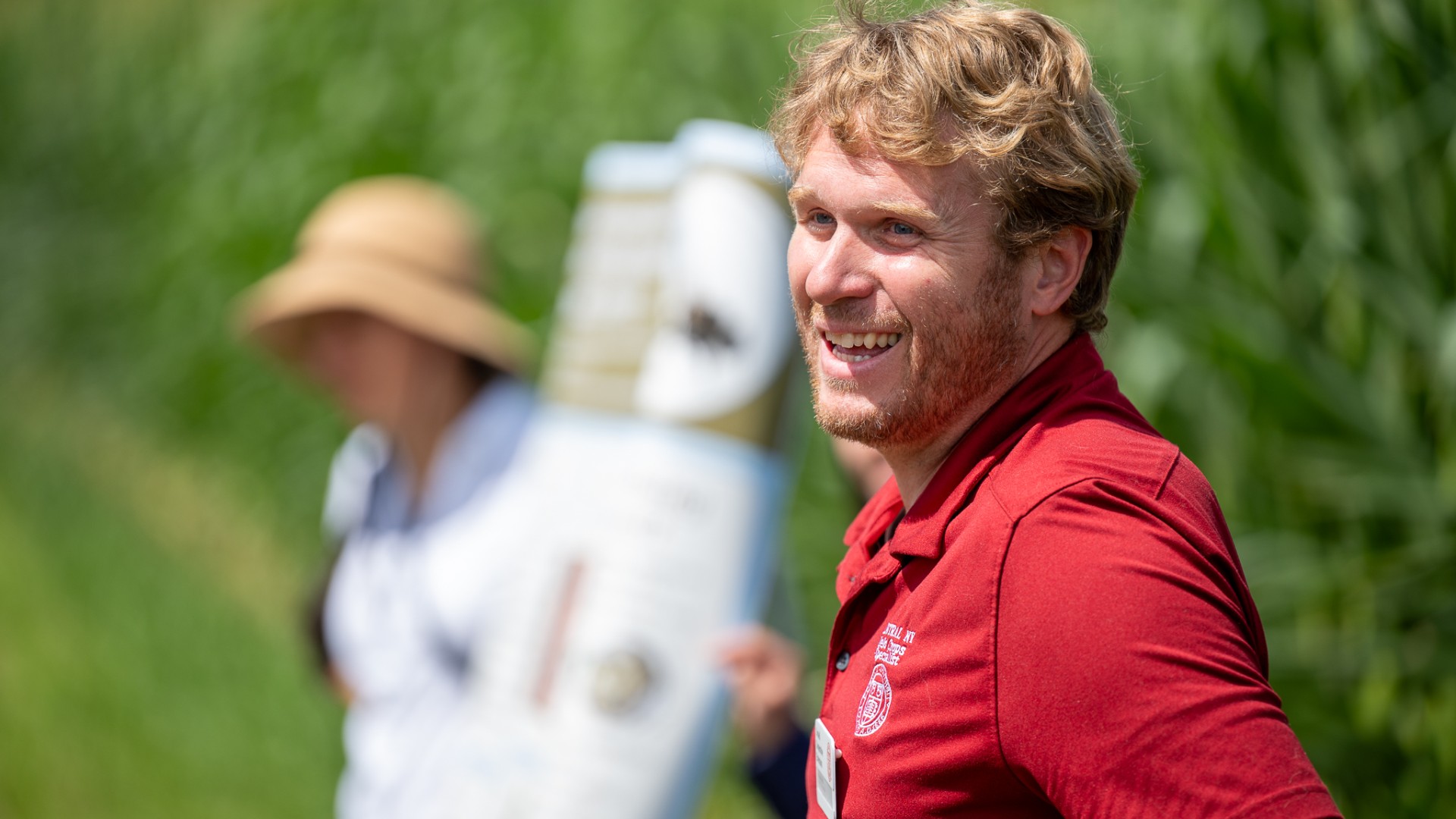
Erik Smith, field crops specialist and team leader with Cornell Cooperative Extension's (CCE) Central New York Dairy, Livestock, and Field Crops Program, didn't grow up on a farm. But a family legacy in agriculture—and a summer job studying insects—set him on an unexpected path to Extension. Today, he serves grain and forage producers across eight counties, combining education, on-farm consultation and applied research, including a major statewide study examining neonicotinoid seed treatments.

My way to Extension

I didn't grow up on a farm, but my mom's side of the family has farmed the same ground in Ovid, in the Finger Lakes, for more than 150 years. My grandfather, LeConte Myer, operated it as a dairy farm until the late 1970s, when my uncle John took over and began transitioning to organic grain production. By the early 1980s, Myer Farm had fully converted to organic grains. Today it's about 1,000 acres and even has its own distillery.

I always felt connected to agriculture, but I went to SUNY Oswego to study meteorology. By my sophomore summer, I realized I loved atmospheric science, but I didn't love the idea of spending my career in front of computer screens.

That summer, I took a field position in Brian Nault's entomology lab at what is now Cornell AgriTech. It completely changed my perspective. I discovered I could do meaningful science, work outdoors and directly support the agricultural community.

Watching Christie Hoepting, a Cornell Cooperative Extension regional vegetable specialist, work alongside onion growers was really the spark that pointed me toward Extension.

Supporting farmers across Central New York

I'm the field crops specialist for the Central New York Dairy, Livestock, and Field Crops regional team. Essentially, I'm the agronomist, working in pest management, weed management, and soil fertility and soil health for farmers growing grains and forages.

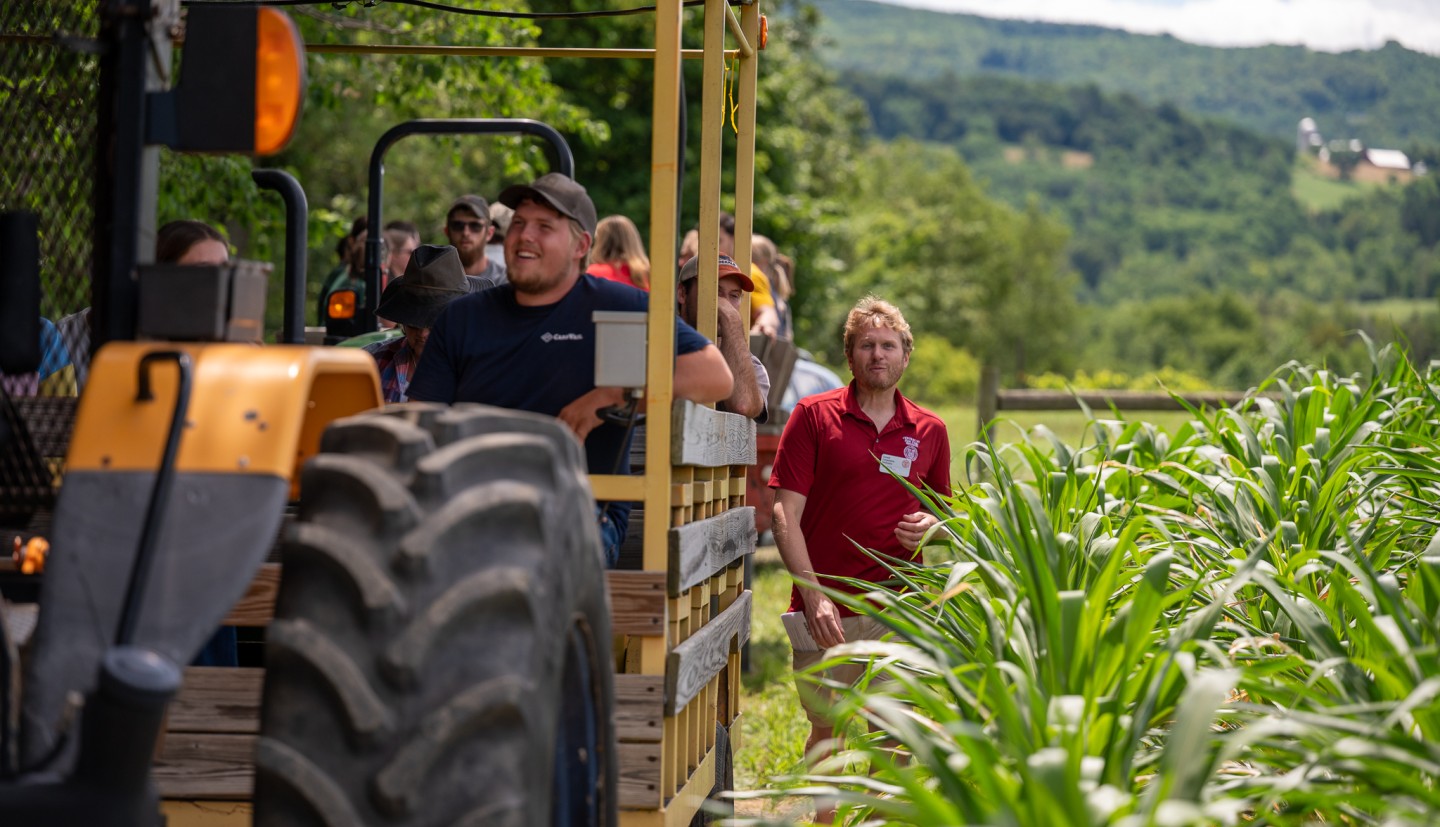
I cover eight counties: Madison, Chenango, Herkimer, Otsego, Schoharie, Fulton, Montgomery and Saratoga, stretching across eastern Central New York and the Mohawk Valley.

I usually explain field crops this way: they're crops that need one more step before they reach your plate. Forage is fed to livestock to produce milk or meat, while grain is milled into flour or processed into other products.

Education, consultation and research

My job really has three main components.

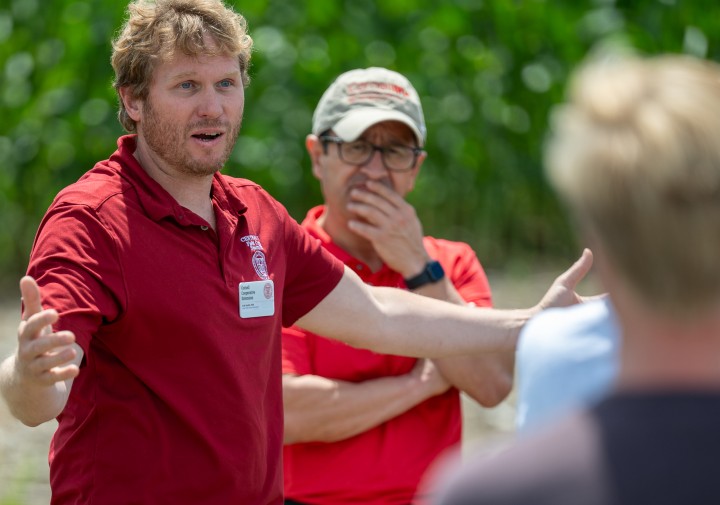
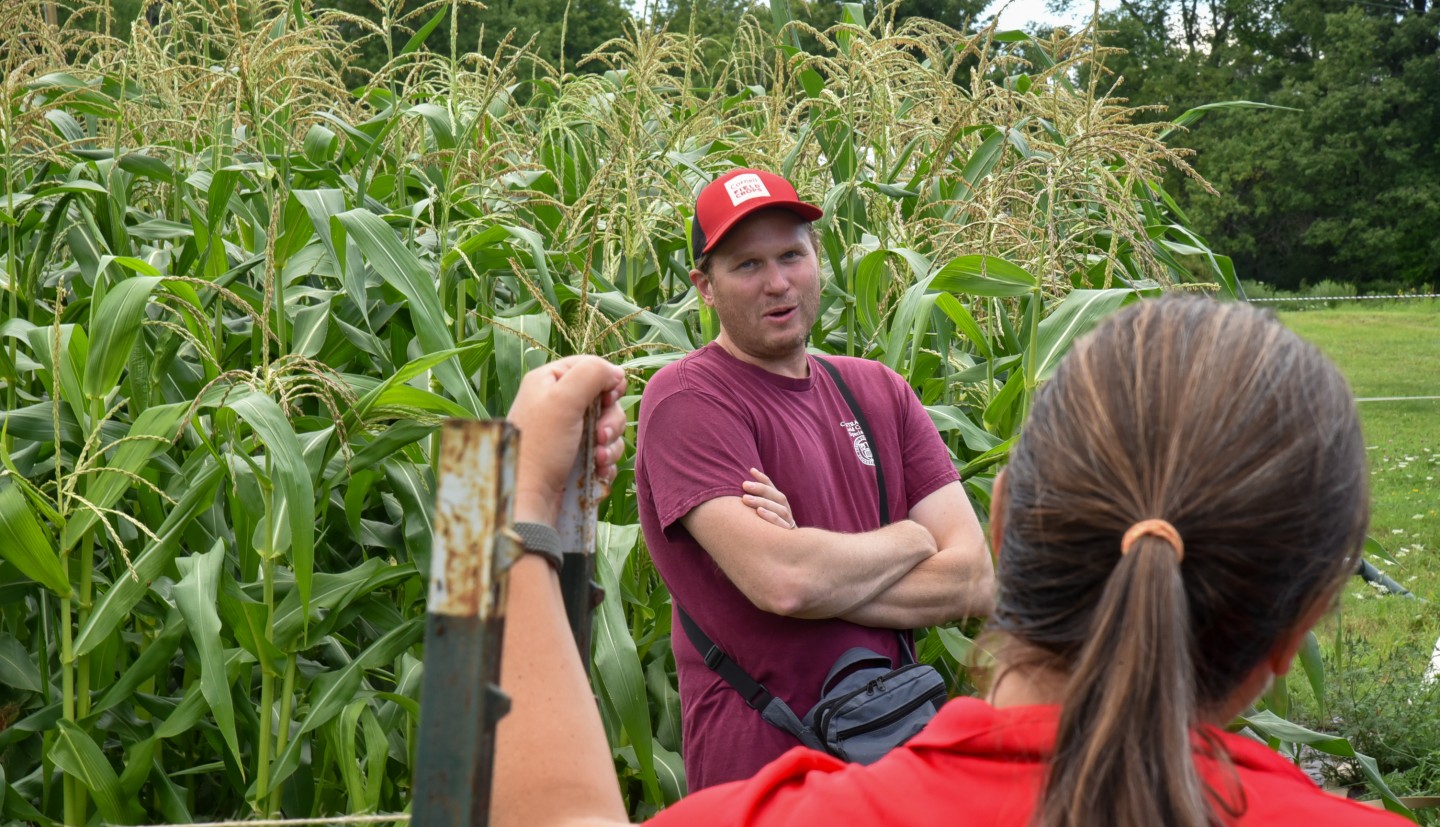
The first is education. I organize farmer meetings throughout the year, including our annual Corn and Soybean Day, an all-day winter conference, along with smaller workshops focused on topics like weed management in corn and soybeans or emerging pest issues. Altogether, I typically organize eight to 12 grower meetings each year.

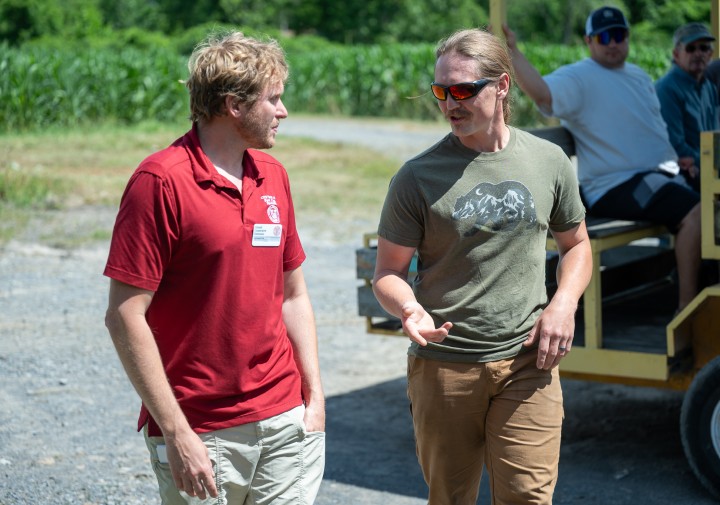
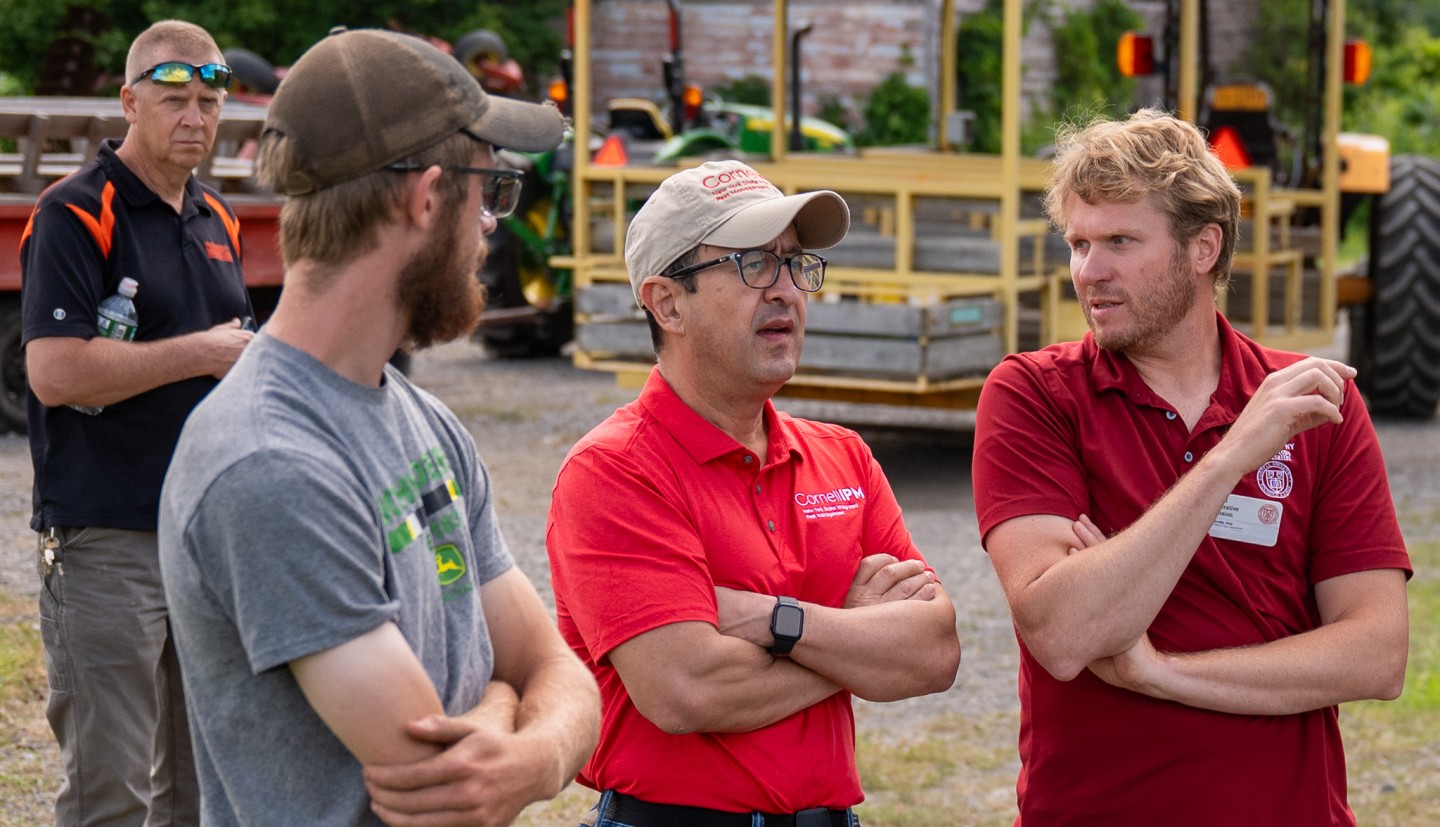
The second is farmer consultation. I answer calls and emails, visit farms to troubleshoot problems and work closely with producers, crop consultants and seed representatives. I also publish a weekly Field Crop Update newsletter, where I share what I'm seeing in the field along with pest and weed monitoring data so growers know what to watch for.

The third is research. I work with Cornell faculty to identify farms for on-farm research trials, help manage plots and collect data. Our regional team also develops and conducts its own research projects.

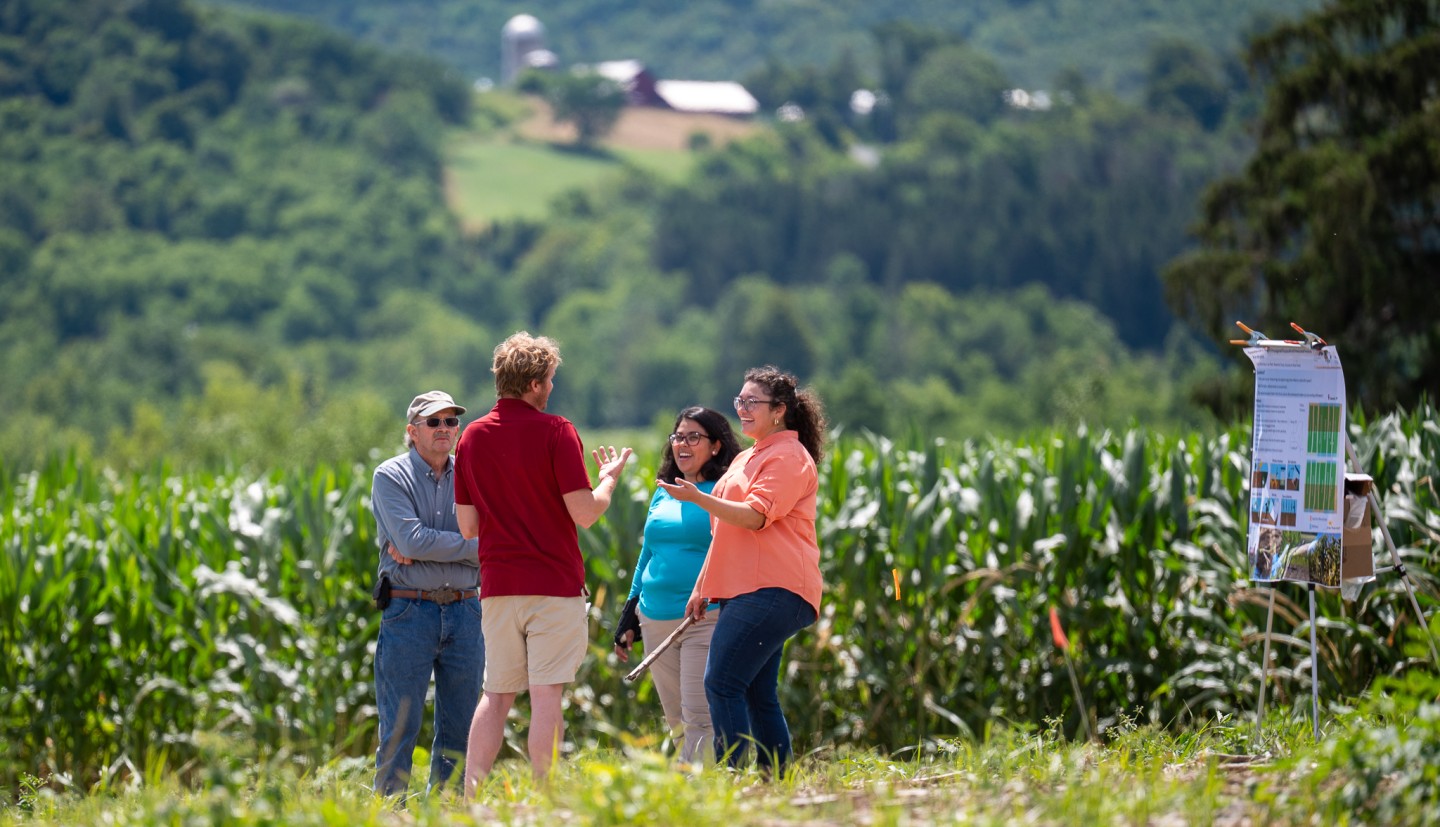
The work follows the seasons more than the calendar. Winter is meeting and grant-writing season. Spring is spent coordinating with growers and establishing field trials. During spring and summer, I'm in the field most days managing research plots, scouting crops and monitoring pests.

Researching the future of seed treatments

One of my largest projects focuses on New York's upcoming ban on neonicotinoid seed treatments, an issue that's receiving significant attention across Extension.

Working with Cornell faculty, Cornell Integrated Pest Management and other Extension specialists, we're managing about 80 research plots statewide. We're comparing treated and untreated seed in corn, soybeans, dry beans, snap beans and sweet corn to evaluate pest pressure, plant growth and yield.

My role is identifying farms willing to host these trials, which is a substantial commitment. Each site requires two acres—one for treated seed and one for untreated seed—and participating farms agree to maintain those plots for at least three years.

I currently oversee 15 plots on about 10 farms, including SUNY Cobleskill, where I've built a strong partnership.

During the growing season, I collect data every week or two before helping coordinate harvest, sometimes using farmers' equipment and other times working with seed companies to bring in a weigh wagon to measure yield.

I also conduct weed management research with Cornell weed scientist Vipan Kumar. Together, those projects make up a significant part of my summer.

Mentors who made a difference

Two people stand out as especially influential in my career.

The first is my graduate advisor, Brian Nault. He ran the entomology lab where I started as a summer field worker. I fell in love with the science, but I imagined myself becoming a lab manager or technician. Brian encouraged me to pursue a master's degree, something I hadn't even considered because I thought I was finished with school.

That advice changed everything. After earning my master's degree, I went on to complete a Ph.D. Without Brian's encouragement, I wouldn't be in this role today.

The second is my Uncle John.

My graduate work focused on vegetables, while field crops are a different production system, even though many integrated pest management principles carry over. As I prepared for this position, I leaned on him for advice about what was happening in the industry and what I should be paying attention to.

More broadly, though, he's been an inspiration. He was one of the pioneers of organic grain production in New York state and approached farming with a philosophy of always trying to do things better—not just for profitability, but for the community and the environment.

That's not to suggest conventional farmers don't care deeply about their land or soil health. Every farmer I work with does. But my uncle's example helped shape how I think about agriculture and the role Extension can play in helping farmers solve problems and continue improving their operations.

Keep Exploring

a woman wearing rubber gloves holds a plastic cassette is about to put it into a small square piece of tech with a touch screen

News

If you love an ice cream sundae in the summer or a latte while the snow flies, then you know how important it is for dairies to produce milk all year around. But to do that, they have to ensure that their cows become pregnant in a timely manner...
  • Dairy
  • Animal Science
  • PRO-DAIRY
students in a field of flowers

News

While some students spent their summer in offices, the student managers at Dilmun Hill Student Farm worked full-time growing produce for the Ithaca community. The farm’s philosophy is to “learn by doing,” and that’s exactly what the students did...
  • Dilmun Hill Student Farm