September 4, 2026
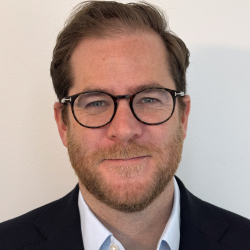
The Department of Communication is pleased to welcome Dr. Dominic Balog-Way as an Assistant Professor. Dominic is a scholar of risk communication. His research examines how societies communicate, interpret, and govern risk amid rapid technological innovation, social and political controversy, and environmental change. Working at the intersection of communication science, geography, and risk analysis, he studies how people negotiate complex and contested societal issues, particularly when different values and priorities come into conflict. His work has advanced policy-engaged scholarship on topics including risk perception, trust, transparency, misinformation, uncertainty communication, and strategic public engagement. Across environmental, technological, and public health contexts, he addresses three interconnected questions: Why do we disagree about risk? How can we tackle complex communication problems? What do our core communication concepts really mean? Dominic brings this expertise to his teaching, offering courses in Risk Communication (COMM 4860/6860) and Communication, Environment, Science & Health (COMM 2850/STS 2851).
Dominic’s evidence-based research has informed policy discussions and public engagement. He has advised and collaborated with organizations including the UK Cabinet Office, the European Medicines Agency, the U.S. Food and Drug Administration, and numerous national and international regulators, public health agencies, and scientific organizations. He currently chairs the Society for Risk Communication’s Strategic Endowment Fund Board. His past field service includes chairing the Society’s Risk Communication and Risk Policy & Law groups.
Dominic holds a Ph.D. in Geography (King’s College London). He has held postdoctoral appointments at King’s College London and Cornell University, and he served as a visiting lecturer at Maastricht University.
Awards
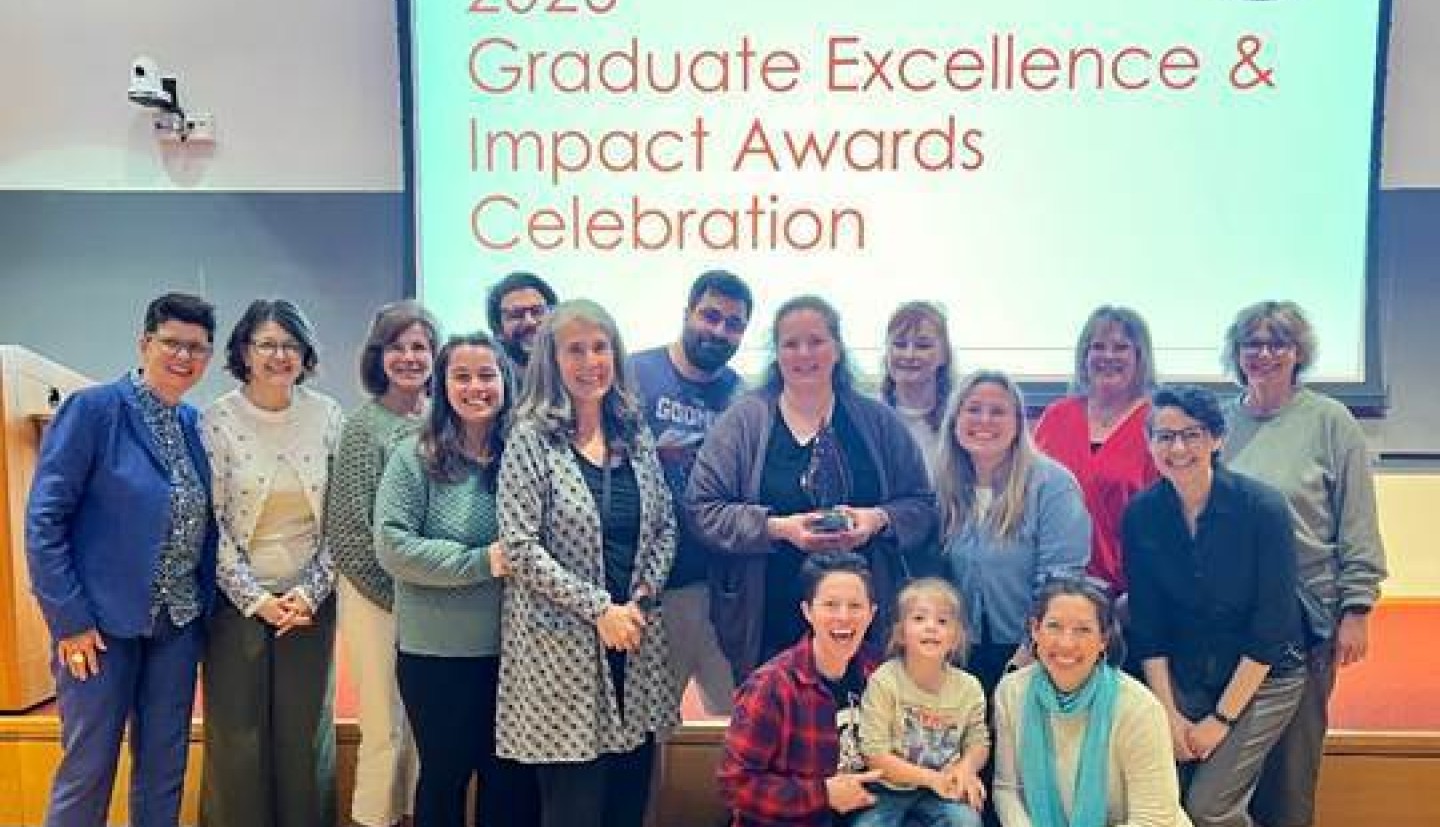
Graduate Field Administrator Joanna Alario received the Casey Moore Impact Award in the individual category. The honor, awarded by Cornell’s Graduate School, celebrates a community member who is neither a graduate student nor a faculty member and contributes to the advancement of access, equal opportunity, and success in graduate education. Recipients go above and beyond in their mentoring and support of the success of Cornell graduate and professional degree students, especially as it relates to enhancing their sense of belonging, overall well-being, progression, and achievement.
Graduate student Emma Cox received the 2026 Anson E. Rowe Award for promising graduate students. The award recognizes pre-A-exam students who have proven research productivity and teaching excellence, and have made a contribution to the communication community.
Graduate student Tianqi Liu , W.-C. Lin…& Associate Professor Andrea Stevenson Won received the Best Workshop Paper for their paper, “May I Help You?” Predicting Help-Seeking for Robot Assistance in Challenging Environments,” which Tianqi presented. The award was conferred by the Honda Research Institute as part of the Third Workshop on Nonverbal Cues for Human-Robot Cooperative Intelligence during the IEEE RO-MAN 2026 conference.
Graduate student Kevin Martinez received the 2026 Glass Family Fellowship, which recognizes graduate students who exemplify leadership to the department, university, and field. The Fellowship was established in honor of Dr. Royal Colle, an esteemed emeritus professor in the Department of Communication.
Graduate student Amanda Vilchez received the 2026 Anson E. Rowe Award for advanced students. The award recognizes post-A-exam students who have proven research productivity and teaching excellence, and have made a contribution to the communication community
Grants
As part of the Black Feminist Media Cultures Working Group, graduate student Jackline Kemigisa received a $250 grant from Cornell Media Studies. The grant supported her summer research project rethinking the meta-narrative that “homosexuality is Un-African,” often used in African media and political speeches, and leveraged to pass anti-gay laws. The project examined the “homosexuality is un-African” claim from the perspective of political disinformation, combining disinformation studies with identity research to map the networks sustaining this narrative and to examine its persistence across different African countries, ethnicities, and races.
Lectures
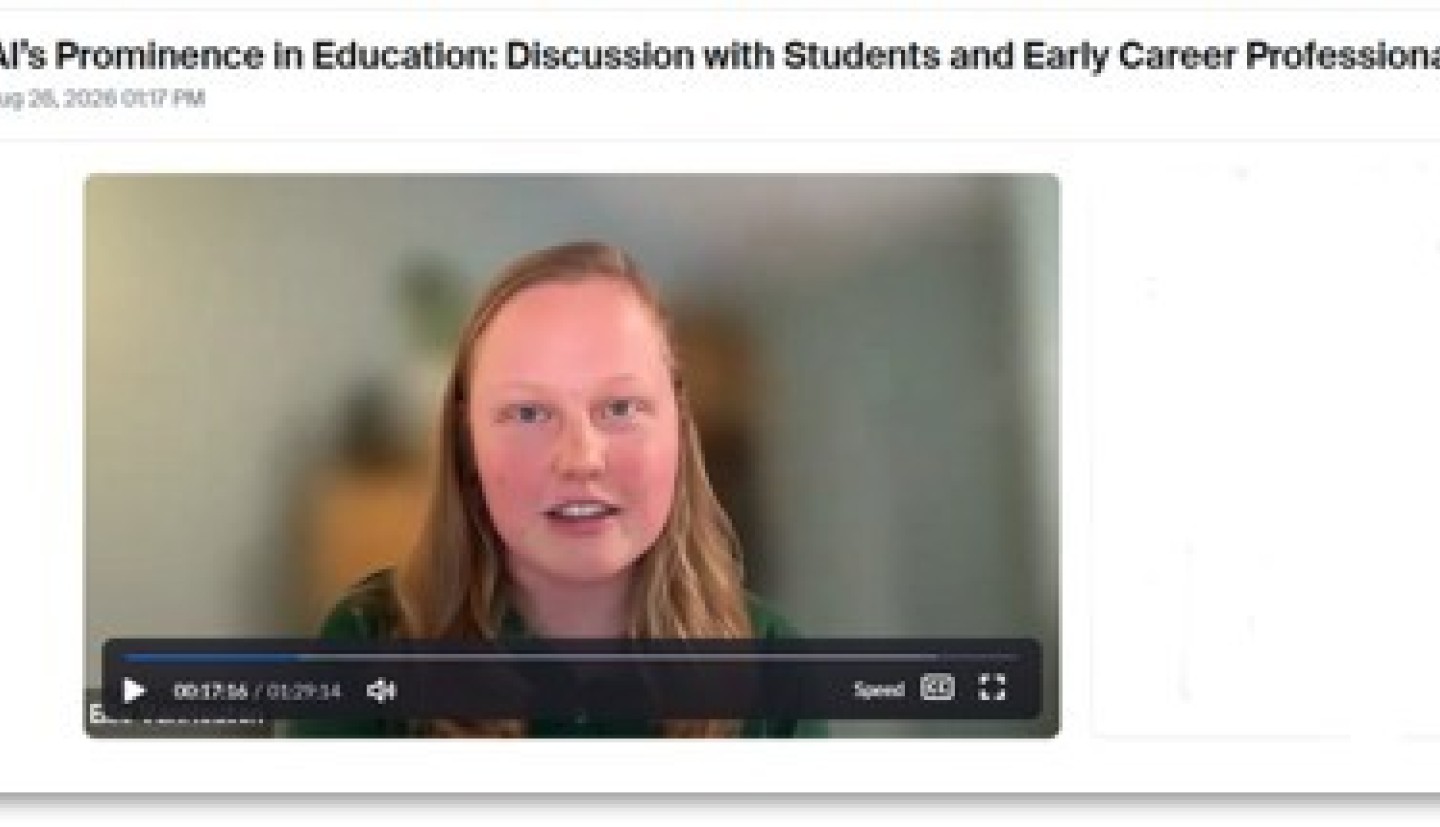
As part of the 25th Anniversary of the Oxford Internet Institute, Professor danah boyd delivered the lecture “Dreaming of a Networked World: Reflections on the Political Economy of the Internet.” In addition to broader political economy topics, she wove in new data about teens’ attitudes towards GenAI. A video of the lecture is available for viewing.
As part of the Center for Racial Justice and Equitable Futures’ grad student lunch seminar, graduate student Emma Cox will present “Leveraging Theory-Driven Communication Interventions to Bolster Support for Policies that Advance Racial Equity.” The event takes place on September 8, 12:00–1:30, in the Computing and Communications Building, 235 Garden Avenue. Emma will present results from a series of randomized message-design experiments examining strategies to increase Americans’ understanding of structural causes and policy solutions to racial health disparities. The studies support that politically and racially diverse audiences are generally receptive to evidence about racial inequalities, and communication theories offer guidance on what kinds of evidence are most persuasive.
In August, Professor Katherine McComas participated in the TrustTalk podcast in the episode entitled “Being Right Never Earns Trust.” During the interview, host Severin deWit asked Katherine about how institutions earn trust. Using examples drawn from her research on Cornell and the local community, she argued that trust is not a reward for being right but something you earn by demonstrating trustworthiness through procedural fairness and strong relationships.
Media Mentions
Liberty Hyde Bailey Professor Jeff Niederdeppe and Research Associate Norman Porticella were referenced in two New York Times guest opinion essays, the first examining an ultra-processed food lawsuit and the second examining the food industry. The articles pointed to their June 2026 article, “Public Awareness and Support for Governmental Intervention to Address Harms Associated with Consumption of Ultraprocessed Foods: A National Survey, United States, June 2025,” published in the American Journal of Public Health.
Graduate student Ashley Shea was quoted in the article “Meta Defends Its Child Safety Efforts but Critics Say the Social Media Giant Falls Short,” published by The AP (syndicated to The Seattle Times, Daily Mail, Independent, CTV News, US News & World Report, and other outlets).
Publications
Graduate student Ria Gualano, June 2026, “’We’re the Ones Making the Future:’ Reflections on the Community Co-Curation of a Disability and Neurodiversity Arts Exhibition,” Disability Studies.
Ria’s article details the spring 2024 “Invisible Aspects of Disability and Neurodiversity” arts exhibition hosted in the Department of Communication. It features details from the organizational process, photos of the art, interviews with contributors, and connections to disability studies values and practices, concluding with key takeaways and open questions for disability arts curators, artists, and visitors.
Graduate student Jackline Kemigisa, August 2026, “From the Feminist Charter to Beyoncé and Radical Optimism: Reflections of Younger African Feminists,” Feminist Africa Journal.
This published transcript stems from a roundtable with younger African feminists that Jackline moderated. The discussion focused on the African Feminist Charter, its history, significance, gaps, and changing relevance. Participants from Uganda, Kenya, Morocco, Cameroon, Ghana, and South Africa shared their feminist journeys and how the Charter and feminist principles influence their work and activism. It was published in the journal’s movement conversation section.
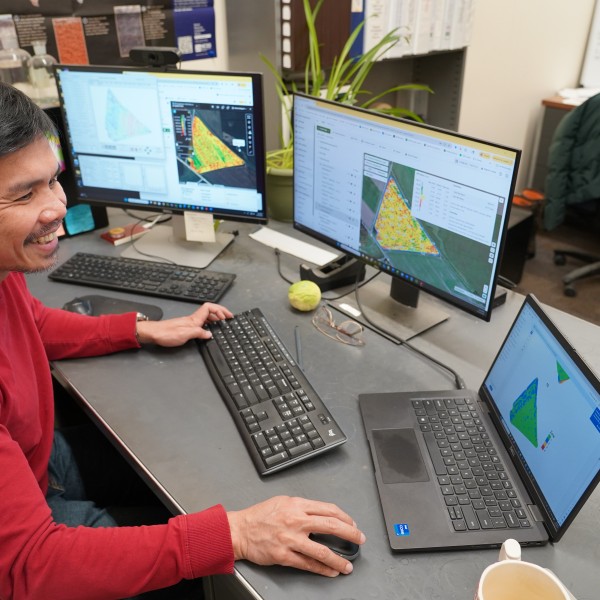
Professor Jonathan Schuldt et al, July 2026, “Naturalness Catalyzes Public Support for Carbon Dioxide Removal and Low-Carbon Energy Technologies,” Communications Earth & Environment Journal.
In this article, the authors present their research findings that the U.S. public is more likely to support climate mitigation technologies seen as natural. Climate solutions perceived as natural were also rated as more beneficial and less risky. The authors saw that this preference for naturalness was found among all political groups surveyed.