Back

Discover CALS

See how our current work and research is bringing new thinking and new solutions to some of today's biggest challenges.

Share
  • Animal Science

If there’s someone that every animal science student knows, it would be Jeremy Allen, senior lecturer and director of undergraduate studies. And that’s for the better — from teaching to advising, Allen values helping students above all else.

“My favorite part of my role is when I see a student who’s been struggling to understand something finally understand it, and that light bulb goes off,” he said.

Allen teaches BIOAP 1100: Domestic Animal Physiology, which first-year undergraduates entering the major usually take in the fall, as well as ANSC 2400: Biology of Reproduction. Both are required core courses for the animal science major. BIOAP 1100 is notoriously difficult for many, which Allen recognizes.

“We have students coming in with a lot of different backgrounds,” he said. “Some have gone to STEM [science, technology, engineering and math] prep schools, and then others haven’t taken a biology course since ninth grade. Getting everyone on the same playing field is tricky.”

Allen offers extra support to students early in the semester, re-teaching many general biology concepts as a refresher. The biggest challenge, however, is the fast pace of the course, as it covers all the different body systems, from hormones to blood circulation to digestion. This is a far cry from ANSC 2400, which focuses only on the reproductive system.
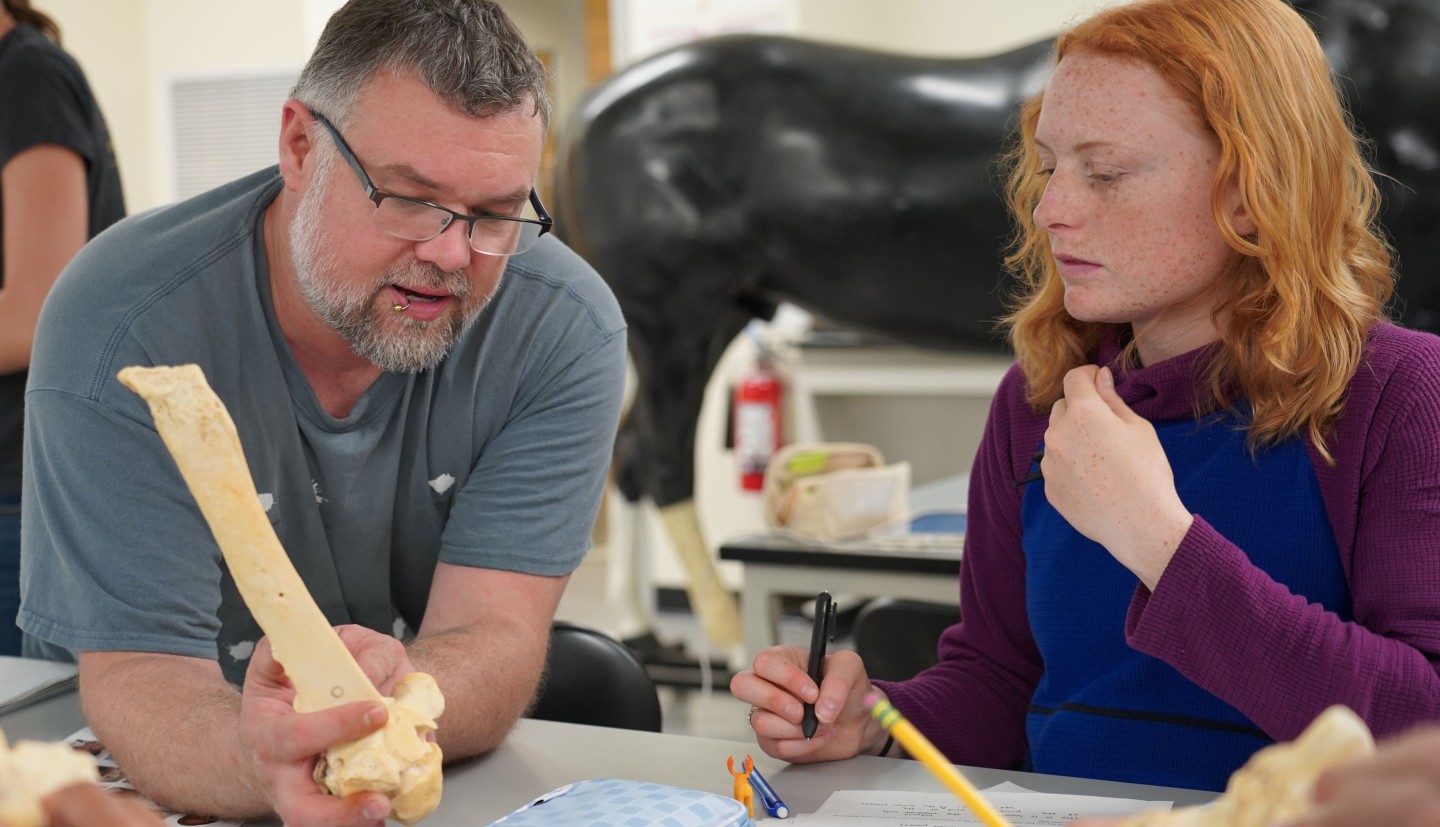
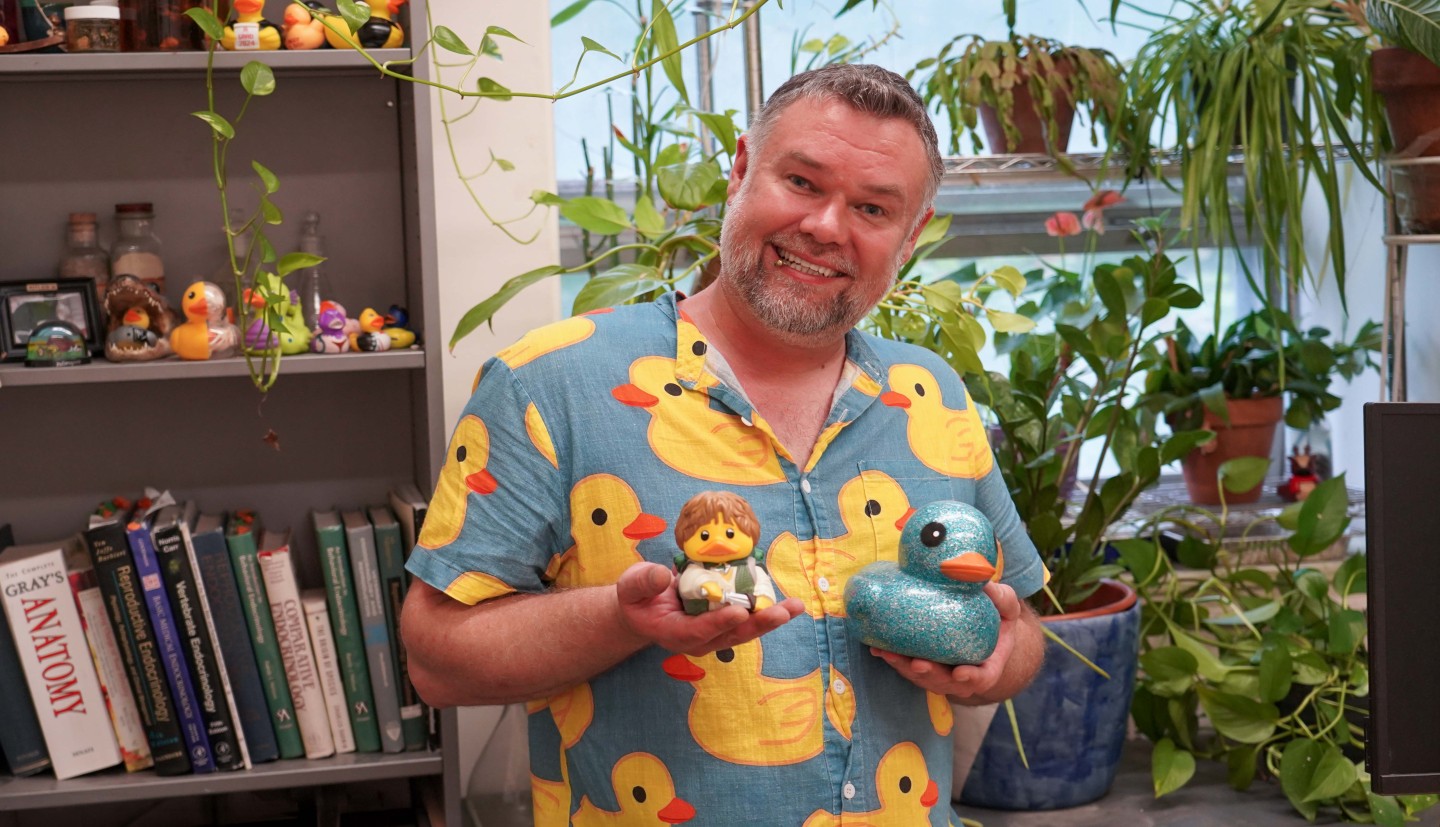
Reproductive biology in animals is Allen’s specialty. It’s what he studied for his doctorate from Cornell after receiving a bachelor’s degree in biology and English from State University of New York at Albany. However, his true passion lies in teaching and working with students, as he said he got a PhD primarily to become a college professor.

Today, Allen helps students both inside and outside of the classroom. He supports all undergraduates majoring in animal science but serves as the official advisor for about 75 students. While he helps them organize their schedules each semester and stay on track to obtain their degree, he also assists them throughout their transformative college years.

“As an advisor, I enjoy knowing that every now and then I can have a positive impact on somebody’s life and academic path.”

“As an advisor, I enjoy knowing that every now and then I can have a positive impact on somebody’s life and academic path,” Allen said.

He is also particularly attentive to creating a welcoming environment for students through openly sharing that he identifies as LGBTQIA+. “Representation for LGBTQIA individuals was not prominent when I was growing up, and I didn’t know any scientists who were gay,” Allen said. “By being open about my identity with my students, I hope that they feel more comfortable with me. Even if we may not share an identity, I hope that openness supports their identity and experience as well.”

Allen is also the director of undergraduate studies, where he plays an authoritative role in shaping the animal science major’s curriculum in collaboration with the Collage of Agriculture and Life Sciences’ curriculum committee.

When he’s not on campus, Allen is still surrounded by animals at home: three cats, a flock of ducks and geese, and an African Grey parrot named “Gandalf” after the Lord of the Rings character. He loves plants and has an extensive rubber ducky collection, which is also apparent to any student who has been in his office in Frank Morrison Hall.

From studying in Albany as a first-generation, low-income student to working in the Cornell Animal Science department, Allen’s path through academia was not linear. He was rejected from Cornell as both an undergraduate and as a graduate student applicant, and he switched from the pre-veterinary track to studying English mid-way through his undergraduate years.

Looking back on his experience, he advised students today to stay flexible.

“You don’t have to force yourself down one path,” Allen said. “Even if you wanted to be a veterinarian since you were five, you’re a different person now. Be open to change and experience new things, because you might not know that you really like something until you try it.”

Angelina Tang ’28 is an animal science and communication double major and the communications assistant for the Cornell CALS Department of Animal Science.

Keep Exploring

Fungi

News

Fungal diseases can contribute up to 20% of staple crop losses and drug-resistant fungal infections lead to some 3.8 million human deaths, globally per year.

  • School of Integrative Plant Science
  • Plant Pathology and Plant-Microbe Biology Section
a woman wearing rubber gloves holds a plastic cassette is about to put it into a small square piece of tech with a touch screen

News

If you love an ice cream sundae in the summer or a latte while the snow flies, then you know how important it is for dairies to produce milk all year around. But to do that, they have to ensure that their cows become pregnant in a timely manner...
  • Dairy
  • Animal Science
  • PRO-DAIRY