Response
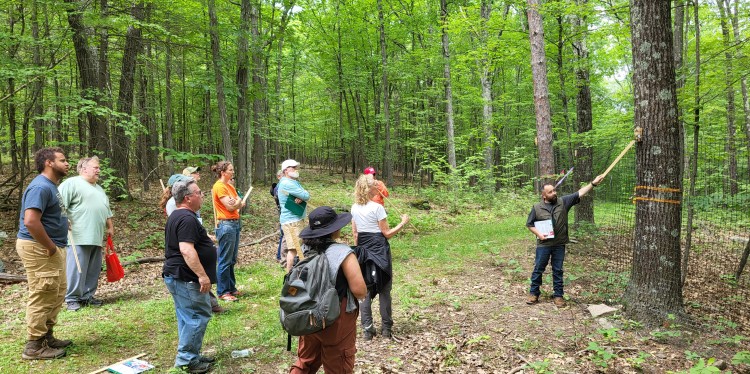
Cornell Cooperative Extension’s Master Forest Owner Volunteer Program worked with 142 trained volunteers during the last program year to deliver forestry education statewide. The program responded to 346 landowner requests representing 11,929 wooded acres across 50 counties. Volunteers completed 226 woodland visits covering 9,157 acres in 45 counties, providing site-specific guidance tailored to landowner goals.
County-level engagement reflected broad regional participation. In Tompkins County, volunteers completed 17 woodland visits covering 470 acres focused on forest regeneration, thinning and habitat improvement. Greene County volunteers conducted 20 visits on 418 acres addressing ownership objectives, deer impacts and vegetation management. Saratoga County volunteers completed nine visits covering 115 acres with an emphasis on stewardship planning and forest health. In Wayne County, nine visits covering 150 acres supported woodland owners with management planning and woodlot health concerns. Allegany County volunteers completed six visits on 412 acres focused on long-term stewardship and landowner objectives. Collectively, volunteers contributed 937 hours connecting woodland owners with research-based information and professional forestry resources.
Results
Landowners most frequently requested guidance on forest regeneration, woodlot health, biodiversity, deer impacts and ownership objectives, with each topic discussed in more than 140 visits. Following program participation, 103 landowners reported plans to contact a professional forester, 76 intended to define ownership objectives and 70 planned to develop written forest management plans. Forty landowners expected to pursue cost-share assistance for conservation practices.
Participants also identified planned management actions within the next year. One hundred twenty-one intended to manage interfering vegetation, 90 planned to thin woodlands and 89 expected to establish forest plantations. Additional planned actions included improving firewood production practices and enhancing wildlife habitat. Landowners also reported increased engagement with educational resources and statewide stewardship networks.
Public Value
By equipping private woodland owners with science-based knowledge and professional connections, Cornell Cooperative Extension’s Master Forest Owner Volunteer Program supports sustainable forest management, protects natural resources and strengthens rural communities across New York.