Back

Discover CALS

See how our current work and research is bringing new thinking and new solutions to some of today's biggest challenges.

Why New York and why now?

Share
  • Cornell Cooperative Extension
  • PRO-DAIRY
  • Animal Science
  • Dairy
The addition of billions of dollars of processing plant capacity in New York is creating a lot of excitement in the dairy industry. It has also sparked billions more in on-farm investment, creating significant opportunity for rural economic development.

New York has been experiencing a quiet revolution over the last quarter century. This has not only kept the state on the map in terms of continuing to be a leading dairy state but also appears to have seeded a surge in New York dairy. 

The numbers below tell the story.   


State ranking

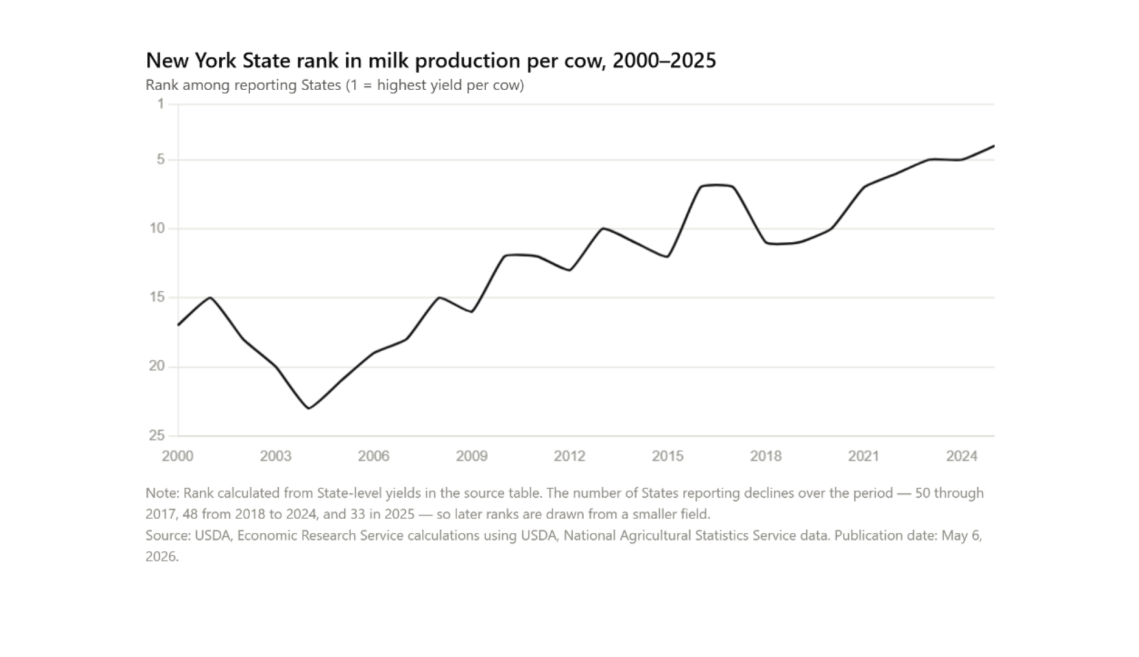
Among the biggest factors in the New York dairy story is the steady progress of moving up state ranks to take a place among the top five U.S. states for milk production per cow.   

In the year 2000 New York production per cow was ranked 22 among U.S. states and ranked as low as 24th in 2004. But since then, New York dairy farmers have turned the table and delivered many annual improvements in milk per cow, increasing at a faster rate than many other states. 

As of 2025, New York is now ranked fourth in production per cow, an improvement of 18 places since 2000. 

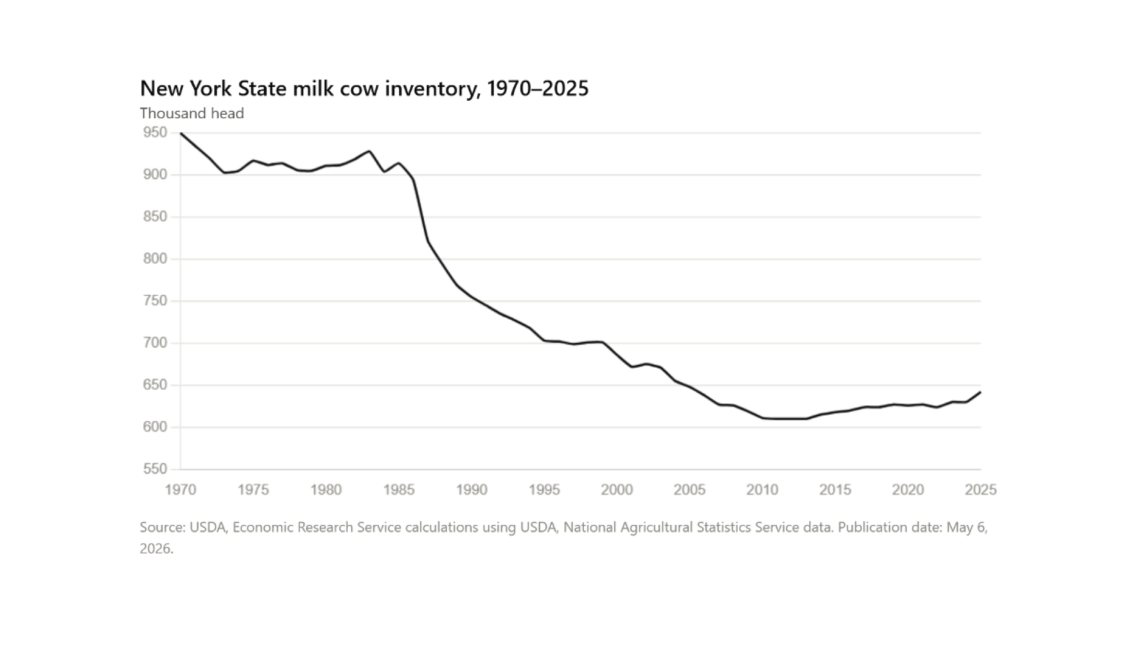
Other aspects of New York dairy have changed significantly as well. In 2000 New York’s 686,000 milking cows made just under 12 billion pounds of milk. Cow numbers decreased to as few as 610,000 cows in 2011 to 2013 before turning up slowly. United States Department of Agriculture (USDA) data indicates New York had 642,000 milking cows in 2025 while total milk production increased to over 16.5 billion pounds. 

Total number of milk cows

New York’s modern dairy industry has roots dating back to the 1800’s. One historical marker is New York’s first industrial scale cheese plant that opened near Rome, NY in 1851, with over 100,000 pounds of cheddar cheese made in its first year of operation. As populations and markets shifted, and as refrigeration and transportation methods improved and became cheaper, dairy expanded westward with the growing nation. 

USDA National Agricultural Statistics Service (NASS) tracks dairy production information and provides a summary of U.S. dairy and leading dairy states covering 1970 to 2025. In the 1970s through the mid-1980s, New York had more than 900,000 cows but then saw a steady decline in cow numbers for about 25 years, before leveling off at a little more than 600,000 cows after 2010. After a few level years in the 2010s, the 2020s have witnessed a modest increase in cow numbers, with USDA reporting 642,000 cows for 2025. 

Milk production per cow

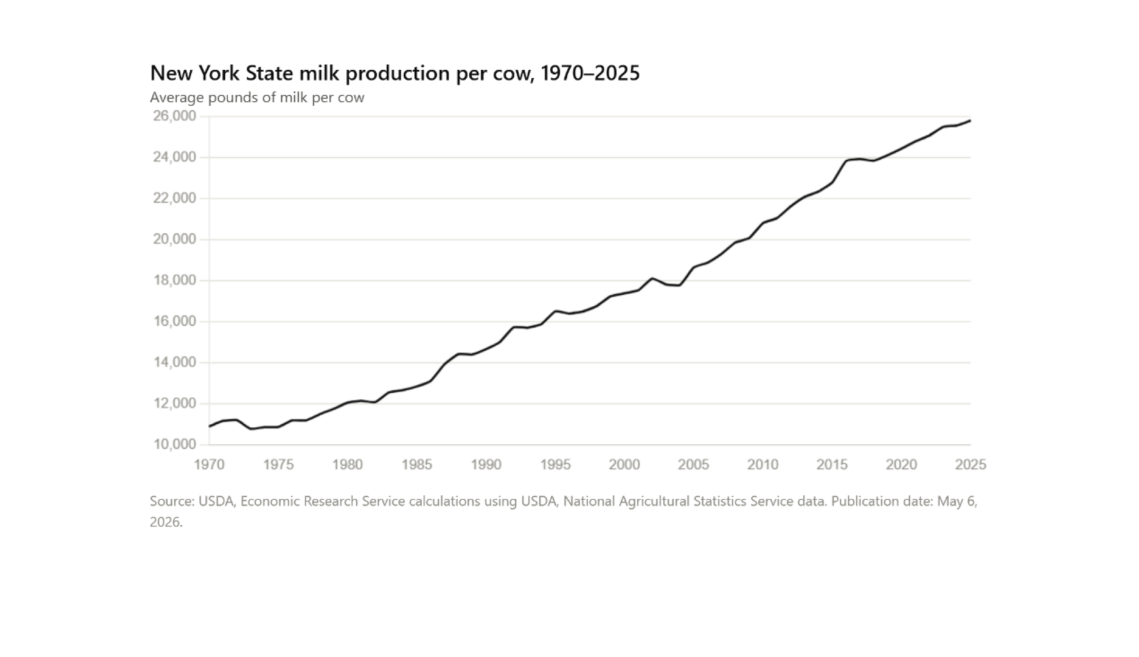
New York cow numbers dropped by about one-third between 1985 and 2015. Then, starting in the mid-1970s, and following a national trend, New York milk production per cow has more than doubled. Since 2023 New York milk production per cow has been in the top five of U.S. states.   

Total milk produced

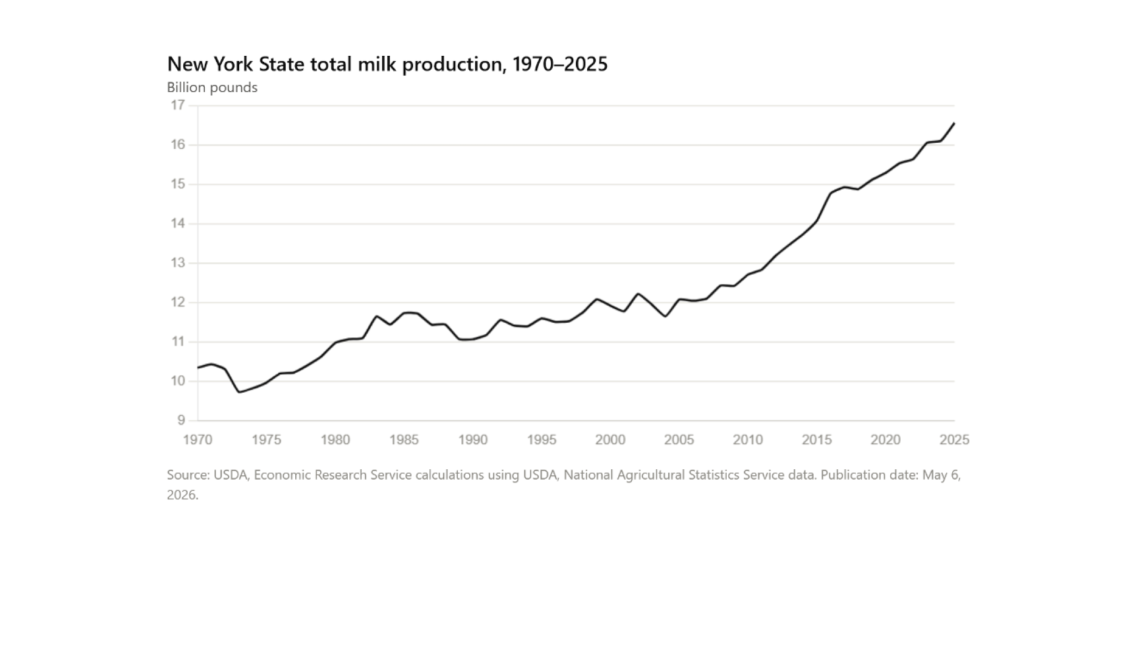
While total number of New York dairy cows decreased significantly after 1985 before stabilizing around 2015, increasing milk per cow offset the declining New York dairy cow population. Incredibly, while cow numbers decreased by about 300,000 head from the mid-1980s through around 2005, New York total milk production was steady, hovering in the 11 to 12 billion pounds range annually. 

Yet after 2007 (before cow numbers bottomed out in 2011 through 2013 at 610,000) annual New York total milk began to steadily increase and cracked the 13-billion-pound level in 2012. 

Total production in 2025 was just over 16.5 billion pounds, a roughly 3.5-billion-pound increase in total milk since 2012. 

How much of the increased production is more cows and how much is more milk per cow? 

In 2025, annual production per cow was 25,800 pounds with 32,000 more cows than in 2012.  More milk per cow is responsible for over 2.5 billion pounds of the 3.5-billion-pound increase in total milk in the period. This illustrates how increasing productivity stabilized and then dramatically increased New York milk supply, protecting and adding to dairy processing jobs and serving as a rural economic engine.      

New York dairy finds its mojo

A quiet revolution has been happening in the New York dairy industry over the last quarter century. Since a low production per cow ranking of 27 in 2004, New York dairy farmers have turned the tables and delivered many annual improvements in milk per cow, increasing at a faster rate than many other states. 

As of 2025, New York is now ranked fourth in production per cow, jumping 18 ranking places since 2000. In 2000 New York’s 686,000 milking cows made just under 12 billion pounds of milk. With increases in productivity, cow numbers decreased to as few as 610,000 cows in 2011 through 2013 before turning up slowly, with USDA data indicating New York had 642,000 milking cows in 2025, while increasing total milk production to over 16.5 billion pounds. 

The addition of billons of dollars of processing plant capacity in New York is creating a lot of excitement in the dairy industry, leading to billions more on-farm investment, and creating significant opportunity for rural economic development.

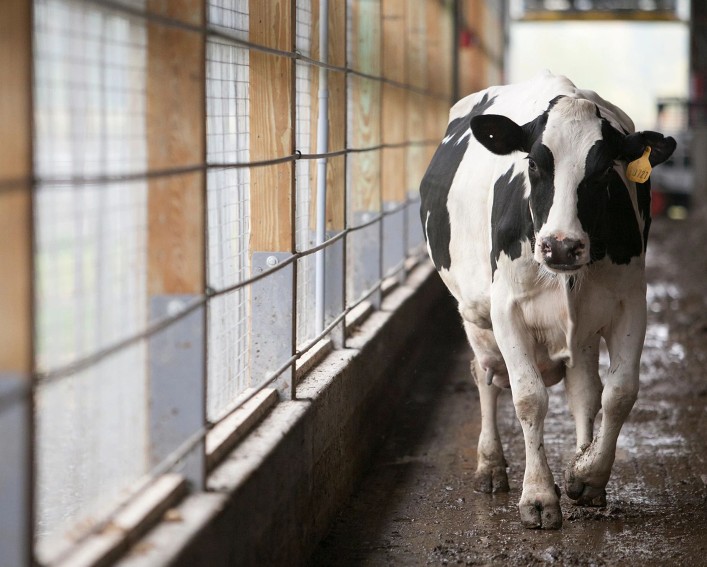
a cow walks in a barn

Keep Exploring

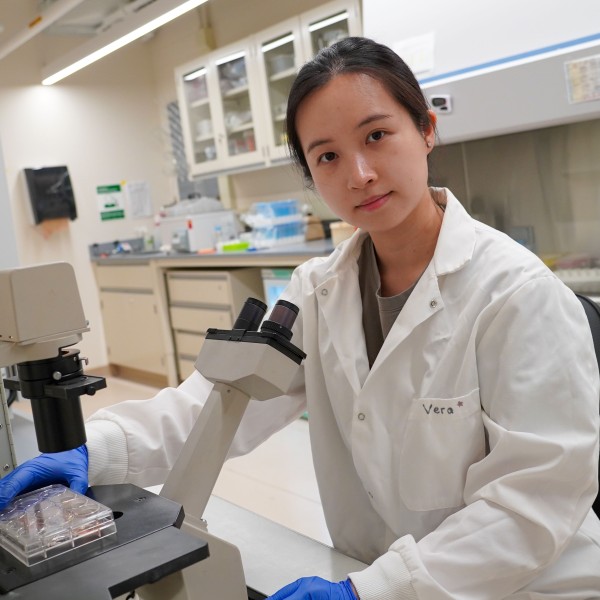
a woman sits in front of a microscope

Field Note

Xingtan (Vera) Yu PhD’27 is a doctoral student working in the lab of Jingyue (Ellie) Duan , assistant professor of functional genomics. Vera’s research focuses on the effects of heat stress on the mammary gland of the dairy cow. We spoke to her...
  • PRO-DAIRY
  • Animal Science
  • Genomics
Teaching assistants scoop out the ice cream flavors and hand them to students

News

A quiet revolution has been happening in the New York dairy industry over the last quarter century. Since a low production per cow ranking of 27 in 2004, New York dairy farmers have turned the tables and delivered many annual improvements in...
  • Cornell Cooperative Extension
  • PRO-DAIRY
  • Animal Science