Back

Discover CALS

See how our current work and research is bringing new thinking and new solutions to some of today's biggest challenges.

Share
  • Cornell Cooperative Extension
Impact: Agriculture and Food Systems

Relevance 

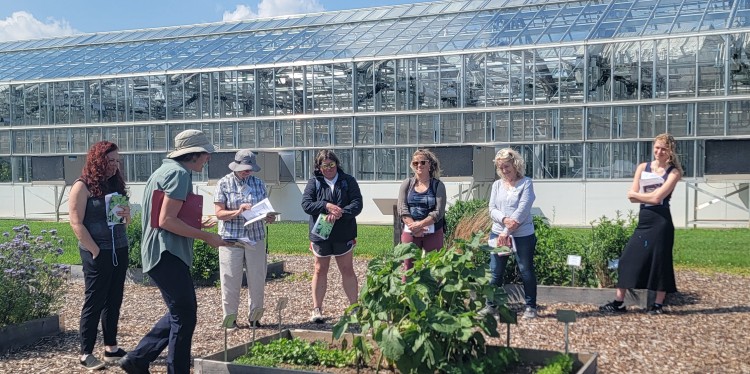
Many New York State residents want to grow their own food but face barriers, including limited gardening knowledge, a need for hands-on training, and disconnection from local resources and support.  The Seed to Supper program is carried out by Extension offices and their partner organizations to address these needs by providing beginning gardening education to those most affected by food scarcity. The program is designed to be tailored to specific community needs, so to best equip novice gardeners with the tools and knowledge they need to connect with others and confidently grow a portion of their own food on a limited budget. The Resilient Gardens Project assessed the strengths and needs of Seed to Supper programs in counties around the state to determine what topics and delivery methods were most effective in supporting new gardeners. The project then developed tools based on those best practices that could be shared to all Seed to Supper Programs, their coordinators, partners, and volunteer educator teams.

Seed to Supper programs’ participant and educator feedback identified a desire for accessible and easily adaptable hands-on materials and instruction, support in volunteer preparation in hands-on education methods, and more coordination with community garden leaders. Expanding access to strong program delivery methods and tools to all Seed to Supper sites and their volunteer teams supported household food production, increased participation in the programs and overall community-based food systems strengthening across the state.
Response

Cornell Cooperative Extension launched the Resilient Gardens Project to strengthen Seed to Supper programming through educator training, hands-on learning resources, and statewide networking opportunities. The project distributed 57 Hands-On Activity Kits to county programs, providing educators with materials and lesson guides on soil preparation, seed starting, pest management, composting, herb drying, container gardening, and watering techniques. Volunteer educators and coordinators expressed appreciation for the pre-made materials, which helped alleviate the burden on volunteers to develop and collect the materials from scratch.

Cornell Garden-Based Learning also hosted 10 regional train-the-trainer workshops in partnership with local Cornell Cooperative Extension offices that prepared 150 garden educators across three years to incorporate experiential activities into local classes. Educators were able to practice in a supportive environment how to deliver culturally relevant, hands-on programming which gave them confidence and a desire to use those methods when teaching their Seed to Supper classes. In addition, the 2025 Resilient Gardens Conference in Geneva brought together 100 participants representing 23 counties for workshops, demonstrations, and site visits designed to strengthen practical gardening skills and expand professional networks. In 2024, the New York City Resilient Gardens conference reached 62 people across all five boroughs and 11 counties for urban gardening tours and workshops. To broaden outreach, 37 counties implemented an Ecological Gardening Social Media Campaign that shared seasonal gardening practices and research-based information with local audiences. Furthermore, 6 videos were created demonstrating the most popular hands-on activities to help train future Seed to Supper volunteers.

Results

Since the project began, the number of Seed to Supper participants growing their own food increased from 862 to more than 2,021, a 134% increase. Three months after completing the program, 92% of participants reported growing a portion of their own food, while 82% reported increasing their fruit and vegetable consumption. Participants also reported stronger social connections, with 97% indicating they felt more connected to others in their community. Conference evaluations showed that 89% of attendees improved their understanding of how to share resources across gardens and community programs.

Public Value

By strengthening hands-on gardening education and volunteer preparation, Seed to Supper helps New York residents increase household food production, improve access to fresh foods, and build stronger community networks. The Resilient Gardens Project helped to tap the expertise of local volunteers and Cooperative Extension offices by providing hands-on activity kits and guides tailored to the needs of program participants, with the end result being increased participation and connection of the community to accessible, affordable healthy food and a stronger relationship with Cornell Cooperative Extension.

Keep Exploring

Yuqing Chen, a doctoral student and the study’s first author, searches for and counts baby oysters attached to shells in trays in Yonkers, New York.

News

A new study offers genetic evidence and proof that farmed eastern oysters are adding to and breeding with wild eastern oyster populations in the western and central Long Island Sound.

  • Ashley School of Global Development and the Environment
  • Natural Resources and the Environment Section
  • Biodiversity
Luke Stevens ’29

Spotlight

Major: Food science Hometown: Glens Falls, New York Why did you choose Cornell CALS? Growing up in upstate New York, I was constantly surrounded by a thriving dairy industry. While I initially planned to pursue a traditional engineering degree...
  • Food Science
  • Food