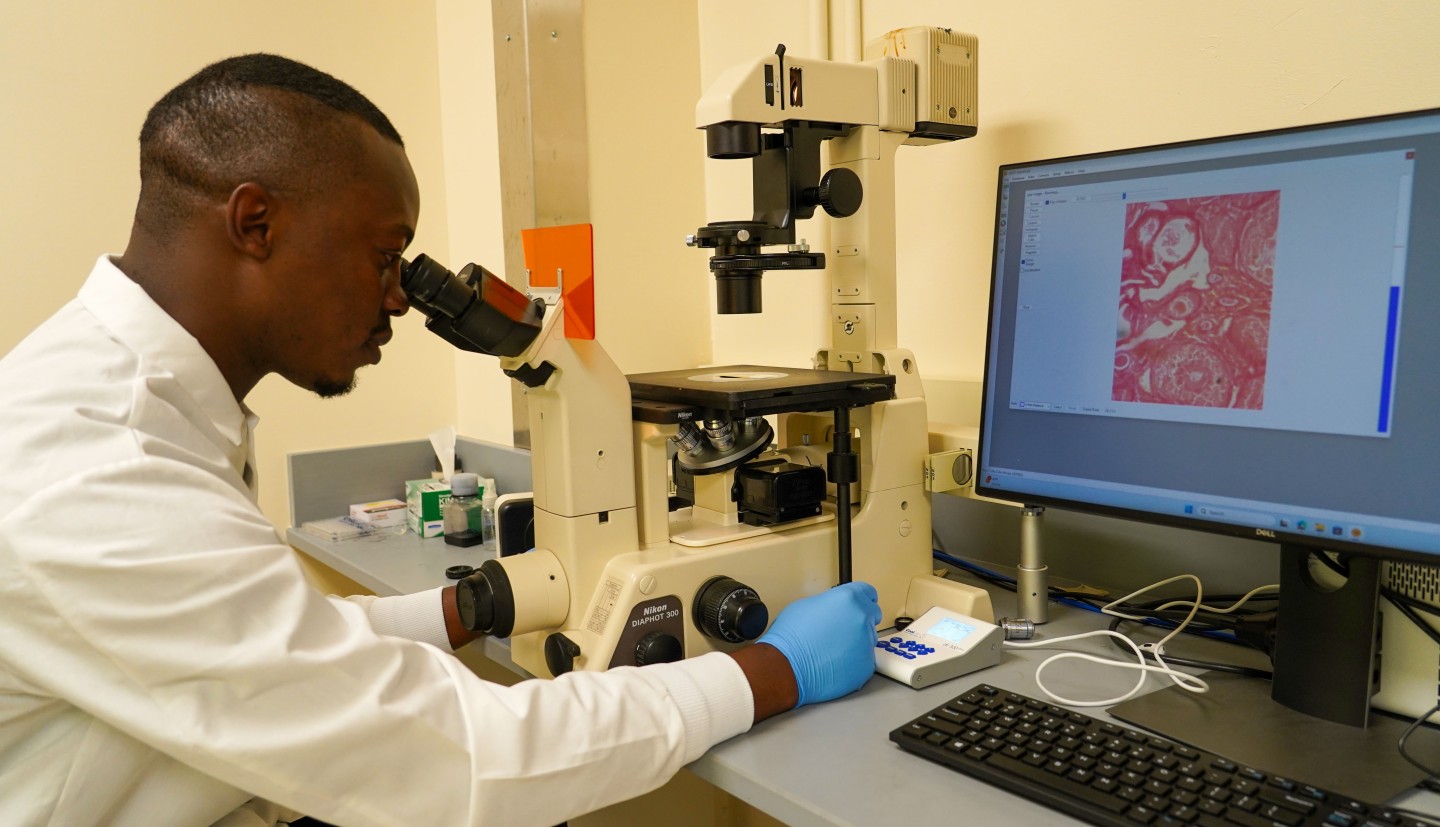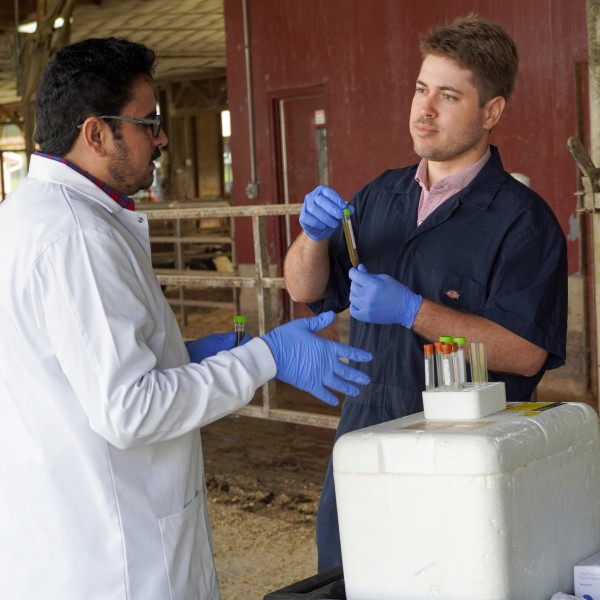
Jackson Sapuleni PhD’28 is a doctoral student working in the lab of Yi Athena Ren, associate professor of reproductive biology. Jackson’s research focuses on the effect of early-life weight gain on the ovary.
We spoke with Jackson about his research and the impact weight gain can have on ovarian development and function.
What does excessive weight gain early in life do to the ovaries?
Weight gain, especially when it leads to an increase in body fat, has a direct impact on how the ovaries function because body fat is not just a passive storage of energy. It actively produces hormones and other signaling molecules. As body fat increases, it alters the balance of important hormones, such as insulin and estrogen, as well as inflammatory signals in the body.
The ovary relies on a very precise hormonal environment to function properly, so even small disruptions in these signals can interfere with its normal role. When these hormonal changes occur, the ovary may struggle to release eggs regularly. This can lead to irregular or missed menstrual cycles. In addition, the environment within the ovary can become less supportive for healthy follicle development, which may reduce fertility.
Weight gain can also lead to increased inflammation and physical changes within the ovarian tissue itself. The ovary may become stiffer and less flexible, which can interfere with how follicles grow and mature. Follicles constitute the environment where eggs grow. So when this environment is less optimal or even detrimental due to obesity and inflammation, even if eggs can mature and be released to fertilize during ovulation, they can be of low quality and lead to defective growth of embryos.