Response
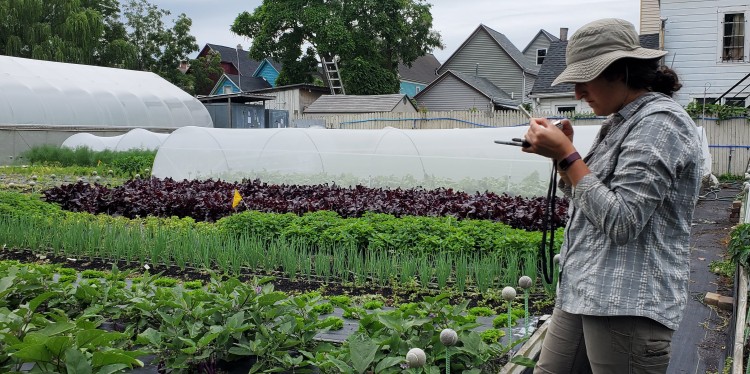
Cornell Cooperative Extension (CCE) led research and outreach to improve farmer preparedness and response to invasive pests. In southwest New York, CCE delivered two educational webinars reaching more than 700 participants, focusing on poultry production and HPAI prevention, with expertise from Cornell University and the New York State Department of Agriculture and Markets. For swede midge, CCE implemented a research and education program monitoring six farms, including three rural and three urban sites. Educators supported growers with pest monitoring, decision-making, netting installation, crop rotation, and the use of experimental ground barriers. These efforts were integrated into a broader educational campaign to promote effective pest management strategies.
Results
CCE programming increased farmer knowledge and adoption of pest management practices across multiple sectors. Swede midge management resulted in an estimated $7,510 per acre increase in sprouting broccoli yields. More than 700 poultry producers and residents improved their understanding of HPAI prevention, strengthening farm biosecurity and reducing risk of flock loss. Grape growers reported removal of alternate host species to reduce SLF risk and identified additional management actions for implementation. These outcomes improved pest control, reduced potential losses, and strengthened farm resilience.
Public Value
New York State benefits from a more resilient agricultural system capable of managing invasive pests and protecting food production. The state’s grape industry supports 79,000 jobs and contributes $6.65 billion annually, underscoring the importance of proactive pest management. By improving farmer preparedness and reducing production risks, Cornell Cooperative Extension helps protect economic activity, maintain open space, and ensure a stable supply of locally produced food.