Back

Discover CALS

See how our current work and research is bringing new thinking and new solutions to some of today's biggest challenges.

Share
  • Agriculture
  • Field Crops
  • Water

Installing artificial drainage in farm fields is an ancient concept that remains relevant today. While its benefits are well-known among farmers, the increasing use of yield monitors means that we now have access to the data necessary to measure those benefits. Cornell researchers are conducting ongoing studies and looking to recruit more farmers so they can expand their dataset and paint a complete picture of the impacts of tile drainage on corn silage, corn grain and soybean fields.

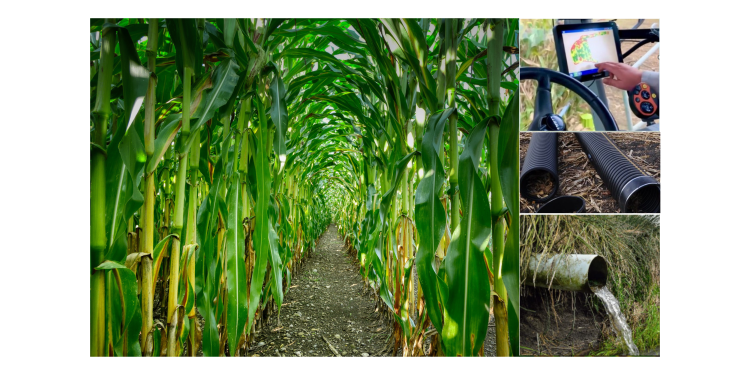
Subsurface tiling involves placing slotted drain tubes beneath the soil surface in poorly drained, wet areas of fields. Farmers install tiles in fields to artificially drain excess water, creating better growing conditions for plant roots. 

Fields with ideal moisture conditions allow crops to thrive and establish deeper root systems, resulting in better access to soil nutrients and water as well as reduced sensitivity to extremely wet and dry conditions. Theoretically, this would mean higher yield and quality of crops, as well as a decreased loss of soil and nutrients through erosion and runoff.

The yield benefits of tiling are well known among farmers, but quantification of yield benefits has been limited in the past. However, with increased availability of yield monitor data on farms in New York, researchers can now quantify the impacts that tile drainage has on crop yield.
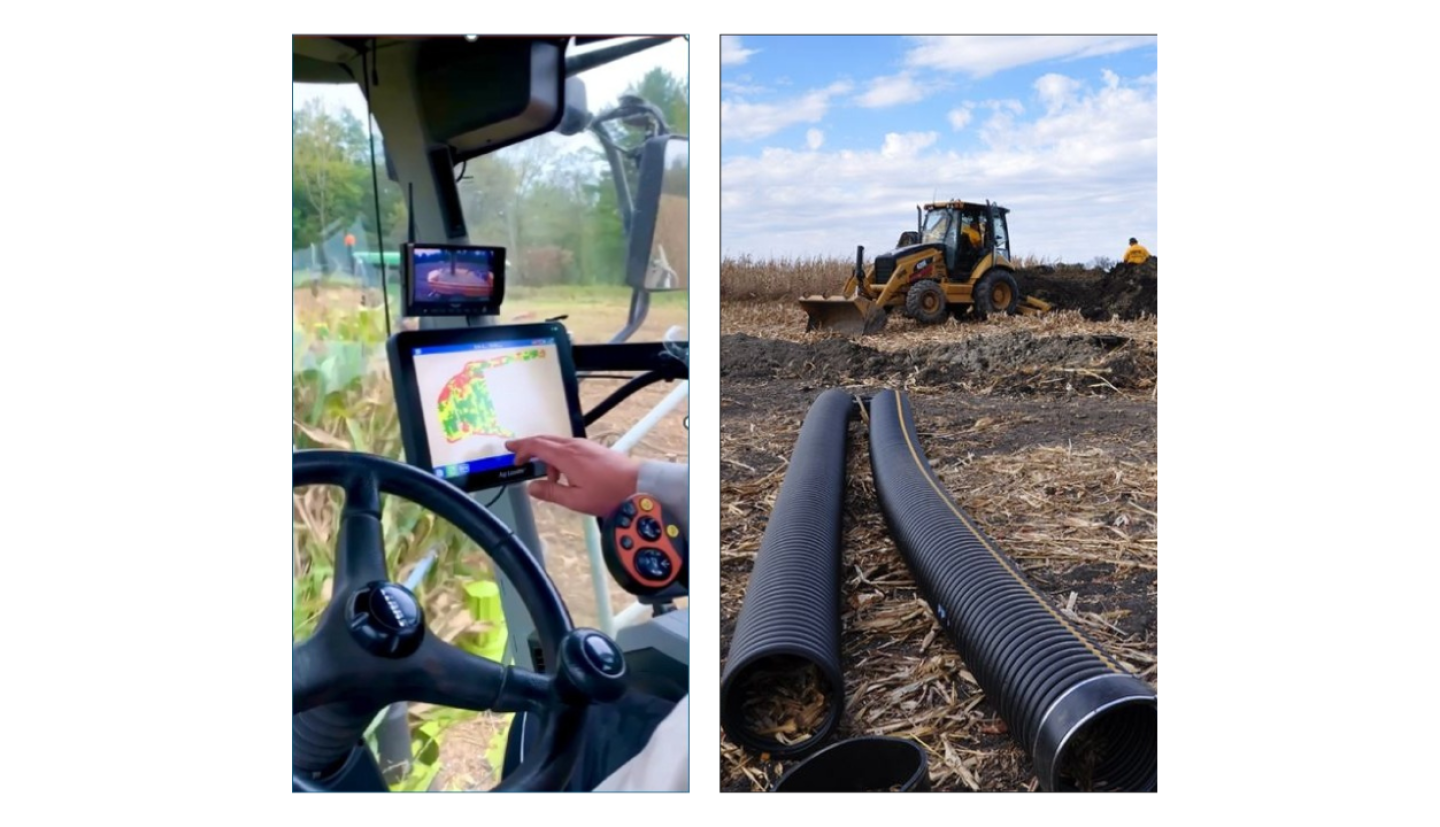
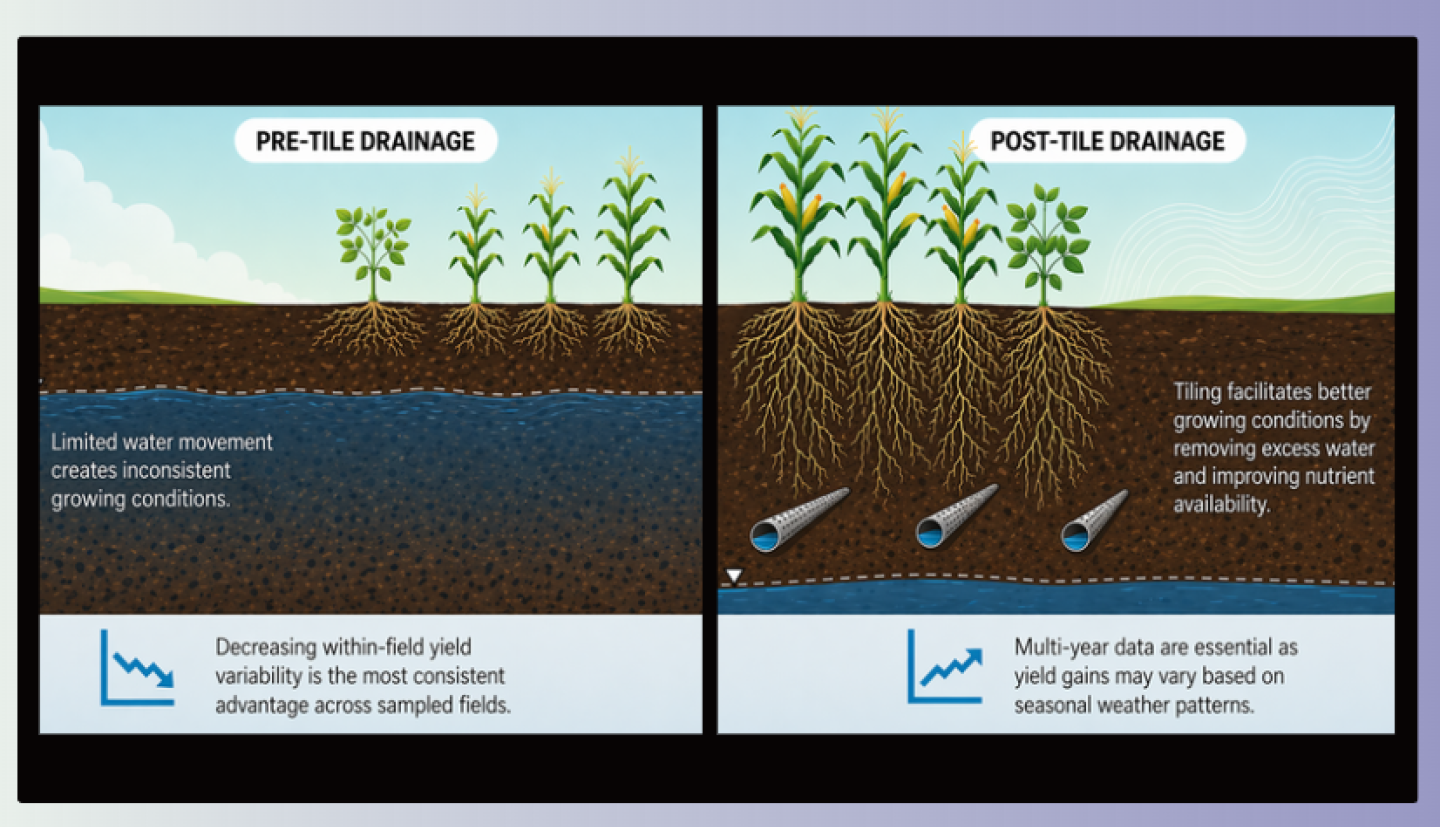
In 2025, Cornell CALS' Nutrient Management Spear Program (NMSP) precision agriculture team began a project investigating the impacts of tile drainage on corn silage, corn grain and soybean crop yield. Farmers who collaborated on this project shared tile installation information and yield data from before and after tiling. This information allowed the team to measure the differences in yield and yield stability before and after tile installation.

So far, based on 53 corn silage fields with at least two years of yield data pre-tile and post-tile, the precision ag team has seen higher yield and lower within-field variability after tiling. The team also looked at 337 corn grain fields, 10% tiled, as well as 308 soybean fields, 12% tiled, and found that the yield in tiled fields was higher than the non-tiled fields for both of these crops. 

Overall, the results showed the benefits of tiling not just for yield, but also for creating more year-to-year yield stability.

This project still needs more data to solidify the findings and allow researchers to determine whether these differences are statistically significant. Any farmers with yield monitor data and tile installation records (including the location and year) are invited to reach out to NMSP’s precision agriculture team and embark on a collaborative partnership. Participating in this project can show farmers the value of their investment in tile drainage and exemplify whether it may be worth it to invest in more tile drainage in the future if the opportunity arises.

In addition to this project, farmers are encouraged to provide feedback about their tiling decisions and practices in this surveyPRO-DAIRY, NMSP and the Miner Institute have partnered to figure out more about why farmers may opt to install tiles or not. Questions in this survey focus on the known advantages and disadvantages of tiling from a farmer’s perspective, and the extent of tile drainage on the responder's farm. 

With increasing access to yield monitor technology, we now have a great opportunity to come together to quantify the benefits of tile drainage and identify the greatest barriers to installing it. With this information, researchers will be able to support farmers in their pursuit for more stable and fruitful yields, decreased nutrient loss, increased profitability and overall payoff of their investments.

Read more about NMSP's tile drainage research findings in a recent What's Cropping Up? blog post: Drained Fields, Steadier Yields? Tile Drainage and Yield Performance in New York Farms – What's Cropping Up? Blog

Madeline Hanscom ‘22 is a science communications assistant for the Nutrient Management Spear Program.

Keep Exploring

Kate Stephens ’26 posing next to banners at the CARET conference

Field Note

Kate Stephens ’26, a CALS senior from north-central Montana studying global development and communication, was selected as a student delegate for the Council for Agricultural Research, Extension and Teaching (CARET) conference held in Washington...
  • Agriculture
  • Communication
  • Global Development
Illustration of three piles of manure with a photo of a gardener with soil in their hands

News

Waste could fulfill 102% of nitrogen and 50% of phosphorus needs for the nation’s agriculture, and significant amounts could be distributed locally and sustainably.

  • Ashley School of Global Development and the Environment
  • Global Development Section
  • School of Integrative Plant Science