by Angelina Tang ’28
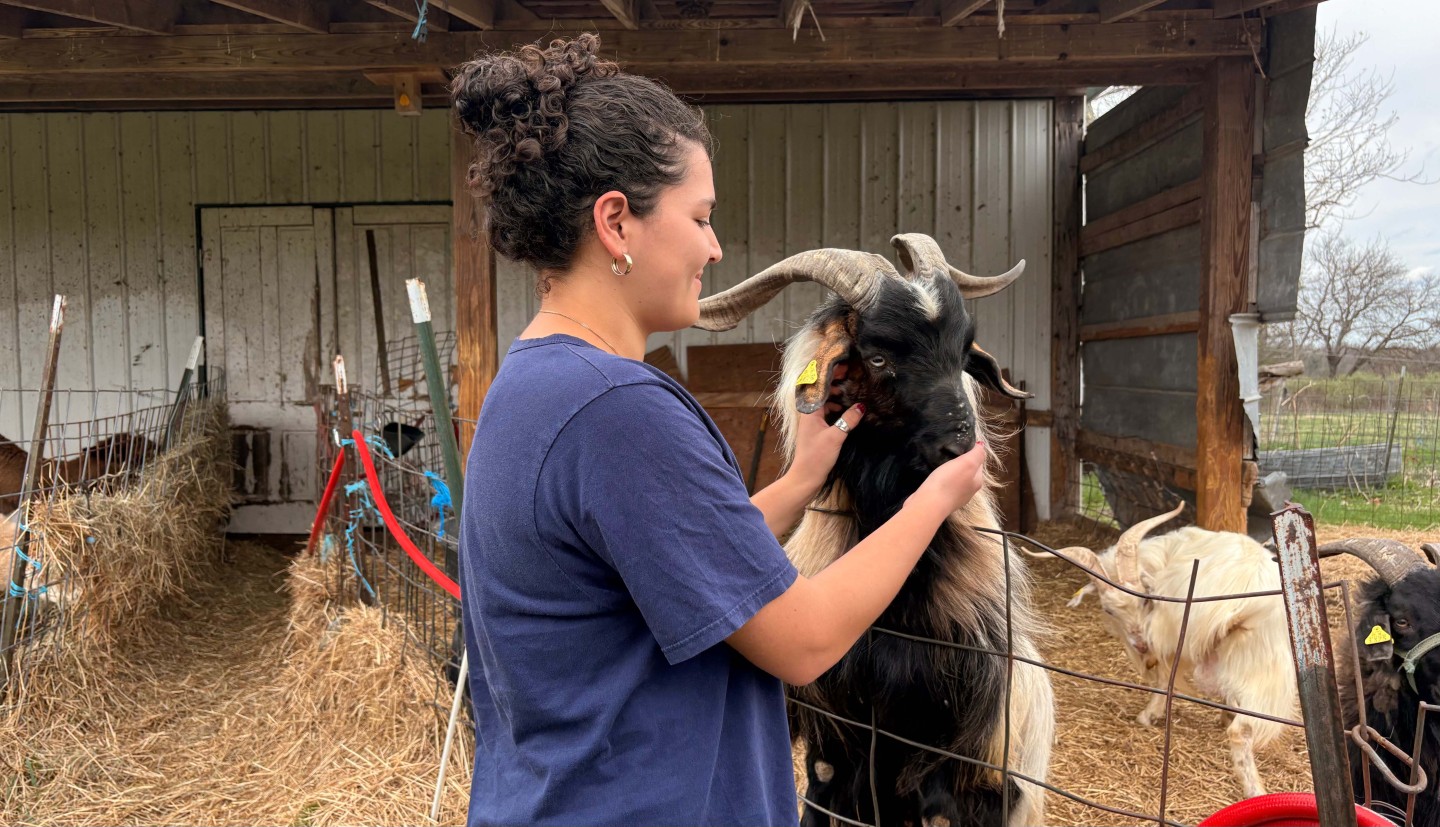
The journey into large animal medicine can be daunting for some, especially if they come from a city background or haven’t had a chance to interact much with large animals. That’s why Katie Krotz ’27 and Sydney Zarb ’27 co-founded the Large Animal Undergraduate Society (LAUS), a club for students to explore their interest in large animals regardless of their previous experience.
“We really wanted to make opportunities for students to learn about large animals and get their foot in the door,” said Zarb, who serves as co-president of LAUS alongside Krotz. “People who don't have any experience with dairy or horses or pigs or anything like that — like myself, before I came to Cornell — we wanted to provide them with those opportunities.”
“We really wanted to make opportunities for students to learn about large animals and get their foot in the door.” — Sydney Zarb
Officially founded in the spring of 2026, LAUS comes amid an on-going severe shortage of large animal veterinarians in the United States. “We've had a 90% reduction in those practicing large animal medicine since World War II,” said Robert Lynch, PRO-DAIRY extension specialist and faculty advisor for LAUS.
According to Lynch, this decline reflects a combination of shifts in industry, the demanding lifestyle of a large animal veterinarian and a lack of awareness of the field. “There are fewer dairy farms, and although there are more cows on the farms that remain, there are fewer veterinarians supporting those farms,” he said. This is reflected in data from the USDA — annual milk production increased by 32% between 2004 and 2024, while the number of licensed dairy herds has decreased 63% over that same period.
Additionally, the job is very physically demanding, and the rural environment is not as lively as city-dwellers may be accustomed to, Lynch explained. Large animal vets also generally drive to their clients, in contrast to small animal vets whose clients come to them. On top of that, small animal vets typically make more straight out of graduation.
However, Lynch believes that the biggest obstacle to bringing more people into the large animal veterinary profession is a lack of awareness. “Students don’t know it’s a career option,” he said. “They might feel like, ‘Well, I’m not from a farm, so I’m not qualified.’ This club is an opportunity for them to become aware of this as a possible career in the future.”
“[Students] might feel like, ‘Well, I’m not from a farm, so I’m not qualified.’ This club is an opportunity for them to become aware of this as a possible career in the future.” — Robert Lynch
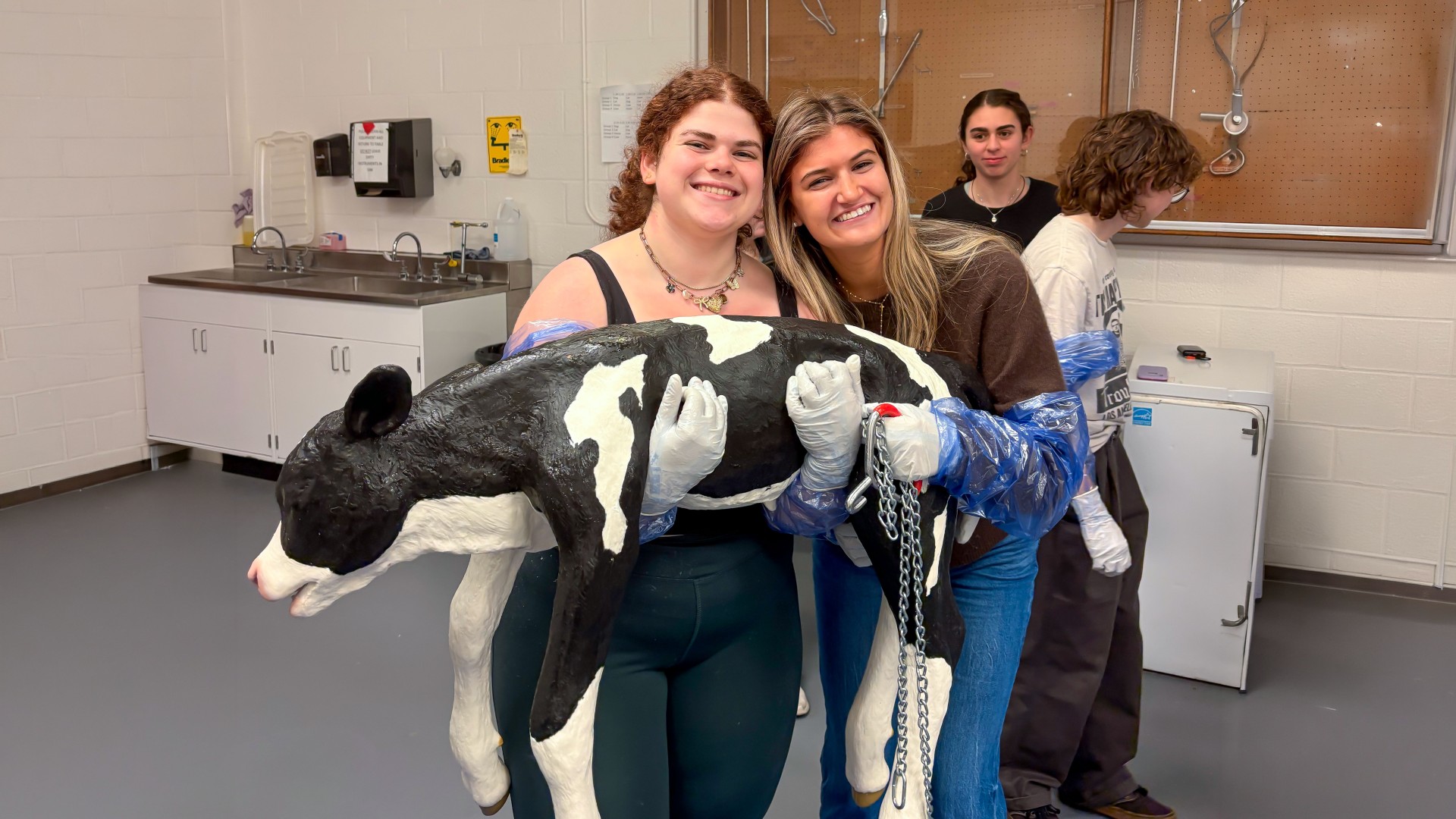
Plans for LAUS had been brewing since mid-2025, but the start was delayed due to club funding issues and establishment logistics. Despite these difficulties, in the fall 2025 semester, LAUS stayed true to its mission and brought a group of students to the vet school for a dystocia workshop.
Dystocias are difficult births in large animals such as cows, horses and goats. The vet school owns life-size models of a cow and a calf, and with the help of Tyler Ward PhD’28, animal science graduate student and licensed veterinary technician, LAUS members got to practice birthing the cow — shoulder-length gloves and all.
“These models are not something that a lot of places have access to, so we thought it was really important to give our members an opportunity to get hands-on experience with them,” Krotz said.