

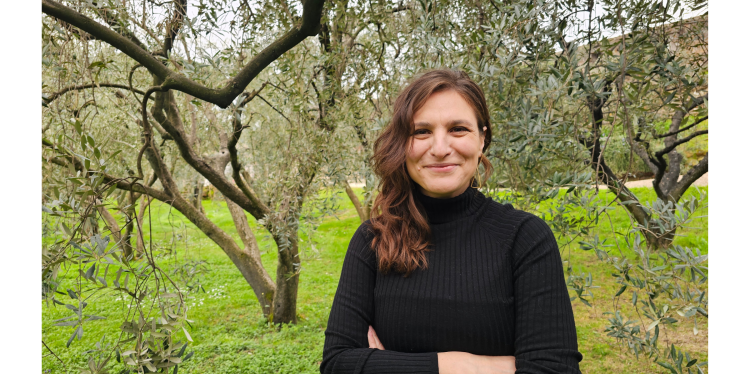
Academic focus: Resilient landscapes and landscape laboratories
Research summary: My work explores how landscape architects and designers might better design “with” changing landscapes across a range of spatial and temporal scales. Over the years, I have studied this question through specific landscapes, such as the littoral zones of the Great Lakes Basin and research forests, and through landscape agents, such as trees and other vegetation. I direct the Great Lakes Design Labs and recently co-authored the book “Five Bay Landscapes: Curious Explorations of the Great Lakes Basin,” published by the University of Pittsburgh Press. My articles and book chapters have also appeared in Places Journal, “The Third Coast Atlas,” “Conceptual Landscapes,” “30 Trees” and Scenario Journal.
What brought you to Cornell CALS?
I was drawn to joining the Cornell community because of its outstanding faculty and students, as well as the fantastic opportunities to engage with the university’s research landscapes. I also deeply appreciate the landscape architecture department’s commitment to teaching that emphasizes contextual and experimental design approaches and working critically with the dynamic conditions of landscapes.
Why did you feel inspired to pursue a career in this field?
For me, landscape architecture is not just a professional design field: it is a way of thinking, seeing and engaging with the world. My favorite aspects of the discipline include its engagement with multiple scales of time and space, focus on process, and its fostering of both creativity and action. Ultimately, when practiced well, the discipline has great potential to create positive change — something I find to be increasingly critical in a world that is facing considerable challenges.
What advice do you have for students interested in your field of study?
My advice for students is to always keep an open mind to trying new ways of thinking and exploring and to not shy away from feelings of uncertainty, particularly in creative processes. While uncertainty and questioning can often make you feel uncomfortable, they are incredibly helpful in expanding your explorations, approaches and, in turn, your educational growth.
What are your current or future outreach/extension projects?
I am the founder and director of the Great Lakes Design Labs, an interdisciplinary design-focused collaborative. Through workshops, built work, planning projects, competitions and exhibitions, the GLDL focuses on various ways of “designing with change, testing landscapes and nurturing a culture of adaptability.” I look forward to continuing the work of the GLDL at Cornell and engaging more with landscapes on the eastern side of the Great Lakes Basin.
Learn more about Karen from her CALS profile and lab website.


