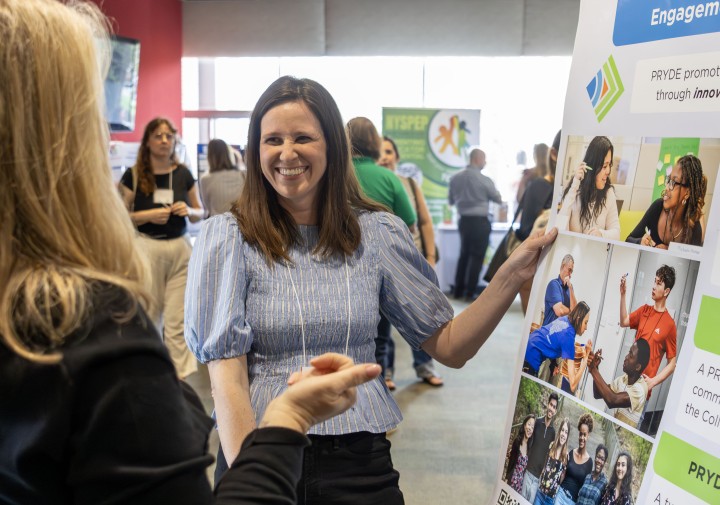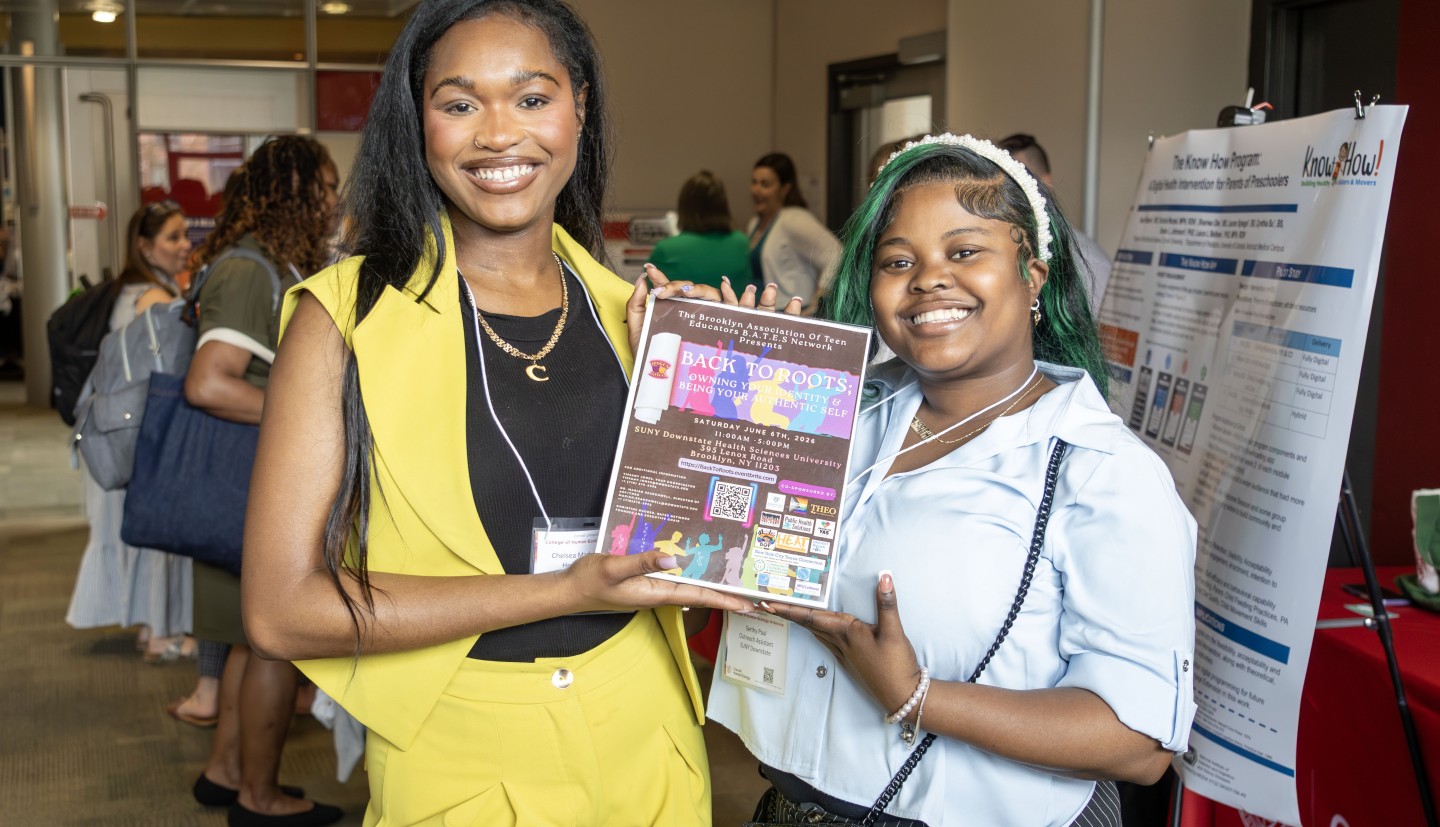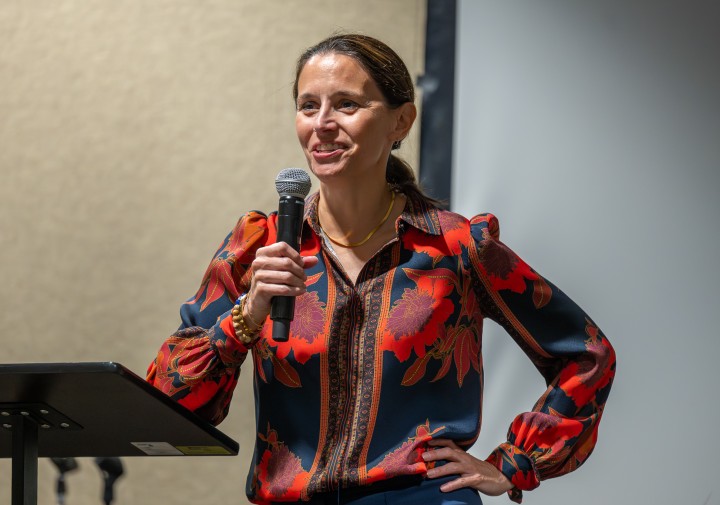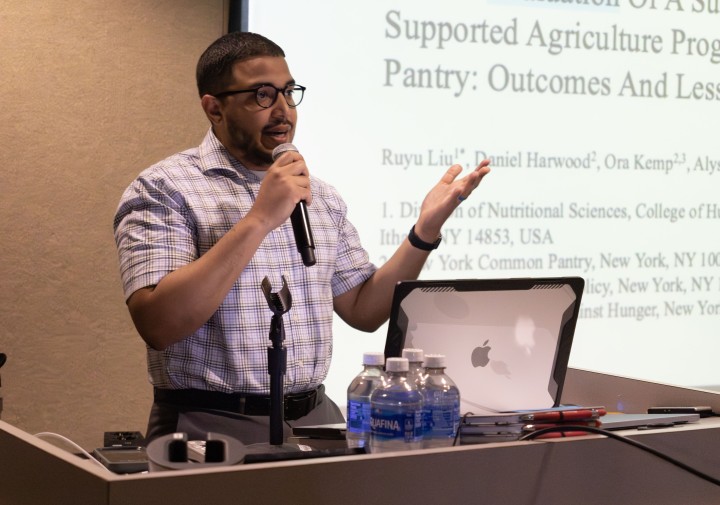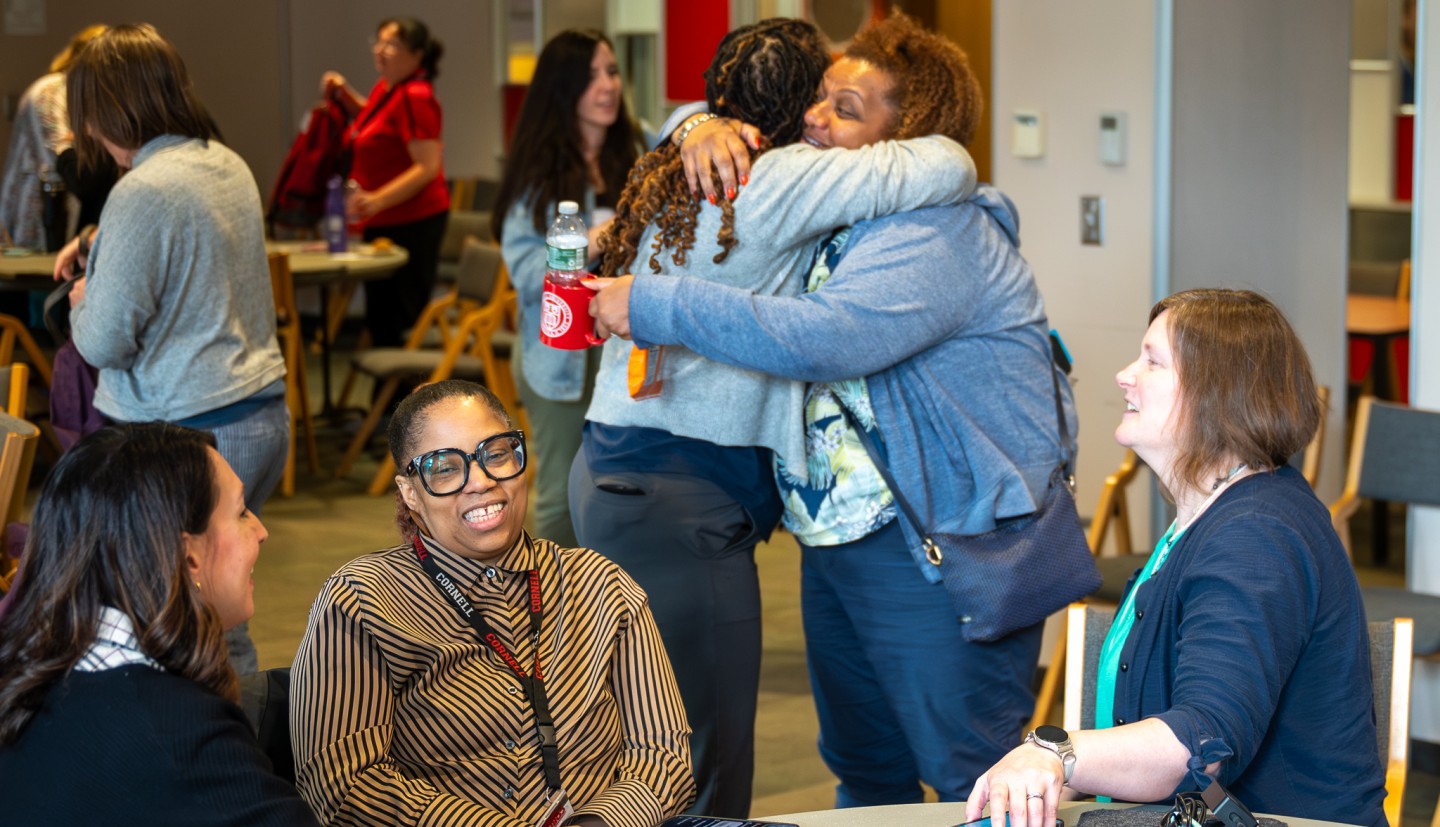
More than 80 Cornell Cooperative Extension (CCE) educators from across New York State gathered on campus April 15-17 for the annual Cornell Human Ecology In-Service.
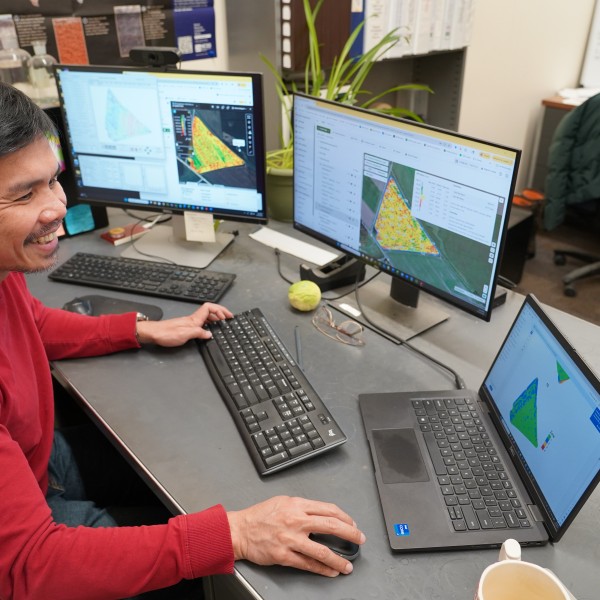
CCE connects communities with Cornell University research from the College of Agriculture and Life Sciences (CALS) and the College of Human Ecology (CHE). It facilitates partnerships among faculty and researchers, CCE staff and leadership, community partners, and students that advance the university’s land-grant mission. CHE’s collaborations focus on youth development and family support, community vitality, and nutrition education and food security.
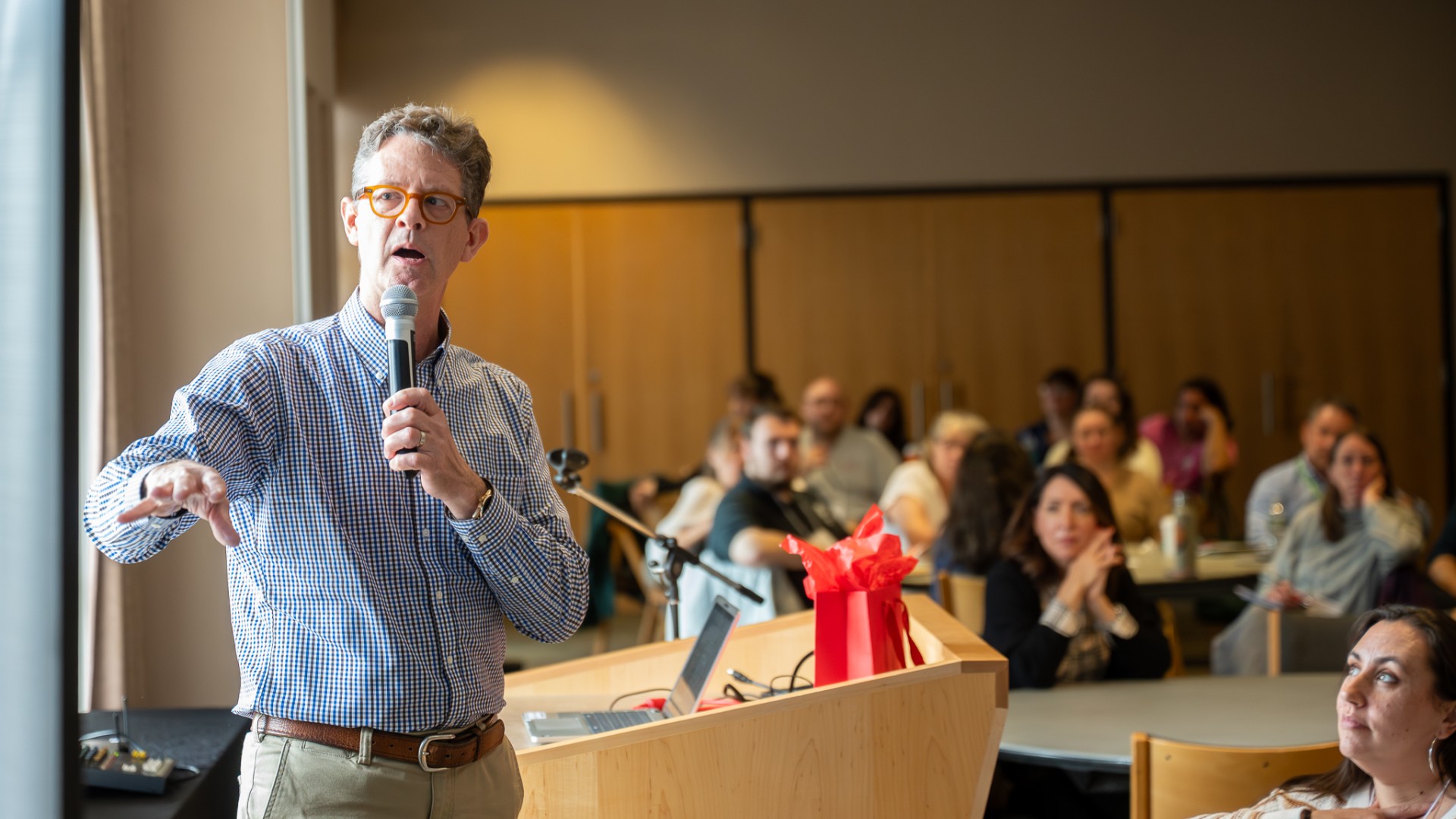
The in-service took place as Cornell is exploring how it can evolve to best serve future generations while pursuing its core missions. Ariel Avgar, chair of the subcommittee focuses on the mission of public impact and community engagement, spoke at the event. He shared the work so far, with a focus on how CCE is advancing that mission.
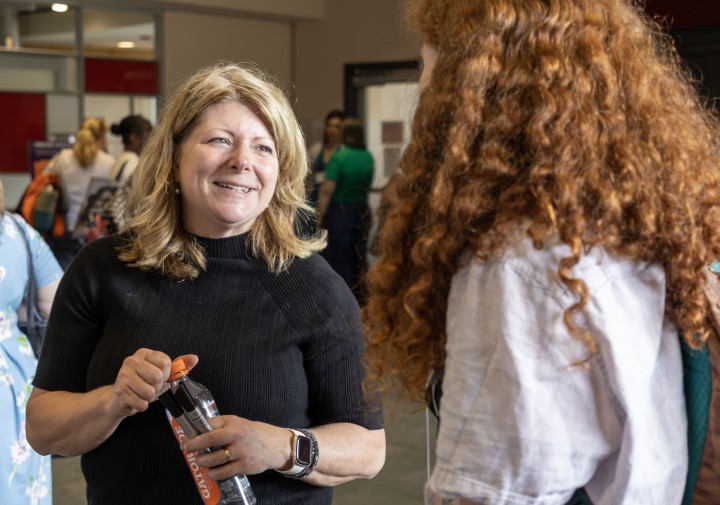
Participants then met in small groups to discuss what Cornell’s evolution might mean for the Extension system's future. They revisited familiar challenges, including adequate staffing, funding, and participant engagement, while also surfacing new priorities such as the impact of artificial intelligence; longer-term, credit-bearing internships for undergraduates; and more equitable partnerships with campus researchers.
At the in-service, attendees took part in workshops focused on youth development, family and parenting support, early childhood education, nutrition, and community partnership and outreach. CHE faculty researchers shared their recent work on topics like caregiving for aging family members, the nutritional impact of access to community-supported agriculture, and autistic youth’s exposure to nature.
Several themes emerged that county educators can carry back to their communities:
- Relationships are key to effective programming. While the content of programs is important, educators need to encourage trust and genuine connection to make a lasting impact and inspire continued participation.
- Cultivate community partnerships to meet people where they are. Extension work can and should extend beyond CCE offices, by taking programming to schools, libraries, military bases, community centers — wherever the community gathers.
- Culture matters. Creating a culture grounded in care and compassion at the county office level is both a foundation and an incentive for CCE staff to further the university’s land-grant mission across the state.
- Research should translate directly into community benefit. Extension work connects research discovery to community need, which is the heart of the land-grant mission.
"Whether you're working in agriculture, nutrition and health, 4-H Youth Development, or other parts of extension, what do we all have in common? We're working through human beings. We're connecting people."
Andy Turner, Cornell Cooperative Extension Director
Andy Turner, CCE director, concluded the in-service by highlighting Cornell’s deep roots in outreach, community education, and youth development, which predate the formal establishment of the Cooperative Extension System.
“At its core, Extension is reciprocity, a two-way relationship between campus and communities,” he said. “The heart, center, and core of what we do will continue to be the work you’re doing.”
Keep Exploring
Report
- Cornell Cooperative Extension
- PRO-DAIRY
- Animal Science
Report
- Cornell Cooperative Extension
- Cornell Dairy
- PRO-DAIRY
Andy Turner, CCE director, concluded the in-service by highlighting Cornell’s deep roots in outreach, community education, and youth development, which predate the formal establishment of the Cooperative Extension System.
“At its core, Extension is reciprocity, a two-way relationship between campus and communities,” he said. “The heart, center, and core of what we do will continue to be the work you’re doing.”
We openly share valuable knowledge.
Sign up for more insights, discoveries and solutions.