Back

Discover CALS

See how our current work and research is bringing new thinking and new solutions to some of today's biggest challenges.

Share
  • Cornell Cooperative Extension
Impact: Environmental Stewardship

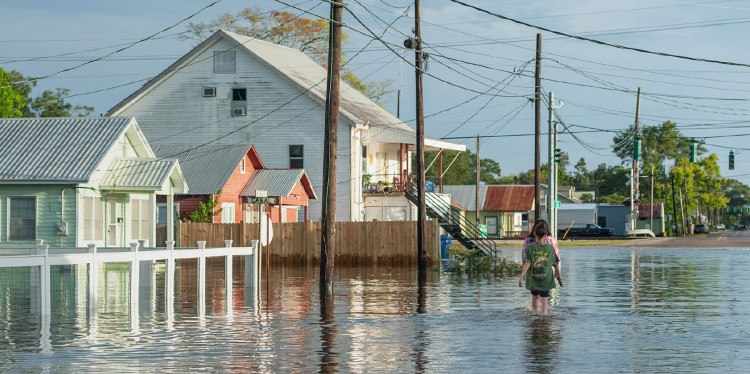
Floods are increasing in size and frequency across New York State, yet many households remain uninsured and vulnerable to financial losses. Social and economic barriers prevent families from purchasing flood insurance, even in high-risk areas. Understanding how people perceive risk and access insurance is critical to strengthening community resilience under FEMA’s new Risk Rating 2.0 policy. 

Cornell University researchers surveyed Hudson River Valley households and analyzed state-wide datasets to examine patterns of flood insurance purchase. They studied how income, mortgage requirements, flood risk perceptions, and trust in institutions affect decisions. Researchers developed policy briefs and shared findings with state agencies, community networks, and national partners, ensuring results reached policymakers and practitioners. 

Results

  • Survey results showed that over 20 percent of residents in high-risk flood zones opted not to purchase insurance, citing low perceived risk and affordability concerns.
  • Both insured and uninsured households expressed low confidence that they could pay for flood damage or that FEMA’s National Flood Insurance Program (NFIP) would cover costs.
  • Insurance take-up outside federally designated flood zones was highly sensitive to local conditions, such as disaster declarations and updated flood maps.
  • Findings were shared with the Hudson River Waterfront Resilience Network, the Hudson River Estuary Program, and the New York State Water Resources Institute and published in multiple academic and policy outlets, directly informing state-level flood preparedness strategies. 

Public Value Statement

This project helps New York households and policymakers understand why many families remain uninsured despite flood risks. By identifying barriers to access, the research supports more equitable and effective flood preparedness policies, protecting communities from financial devastation and strengthening long-term resilience in the face of climate change. 

Keep Exploring

Difference between C3 and C4 plants graphic

Report

Climate change is altering weed dynamics on dairy and field crop farms across New York State. Shifts in temperature, precipitation, and seasonal patterns are reducing herbicide effectiveness, increasing the spread of invasive species, and...
  • Cornell Cooperative Extension
Slashwall Cranmer Han

Report

Forest regeneration across the Northeastern United States is increasingly threatened by over-browsing from high deer populations, which limits seedling survival and prevents the establishment of new forest growth. Poor regeneration undermines...
  • Cornell Cooperative Extension
