Back

Discover CALS

See how our current work and research is bringing new thinking and new solutions to some of today's biggest challenges.

|
By Jake Zajkowski ’26
Share
  • School of Integrative Plant Science

Unlike most world-class universities, Cornell’s campus sits between two gorges, surrounded by native landscaping, meadows and carefully managed turfgrass — not lost among the buildings and asphalt of an urban environment.

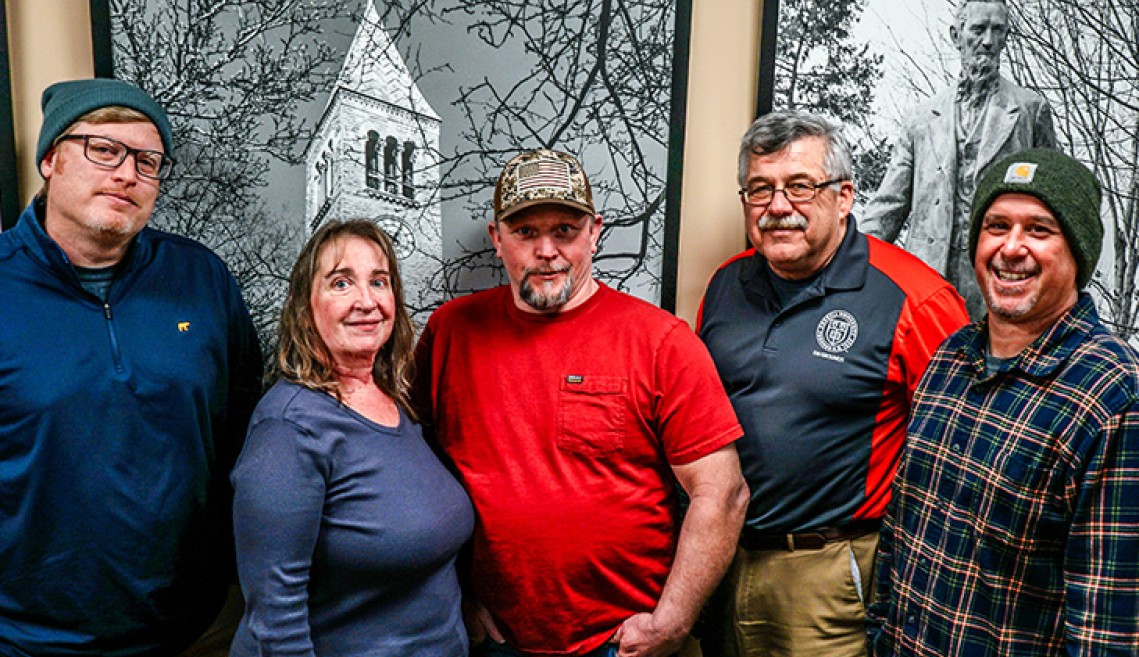
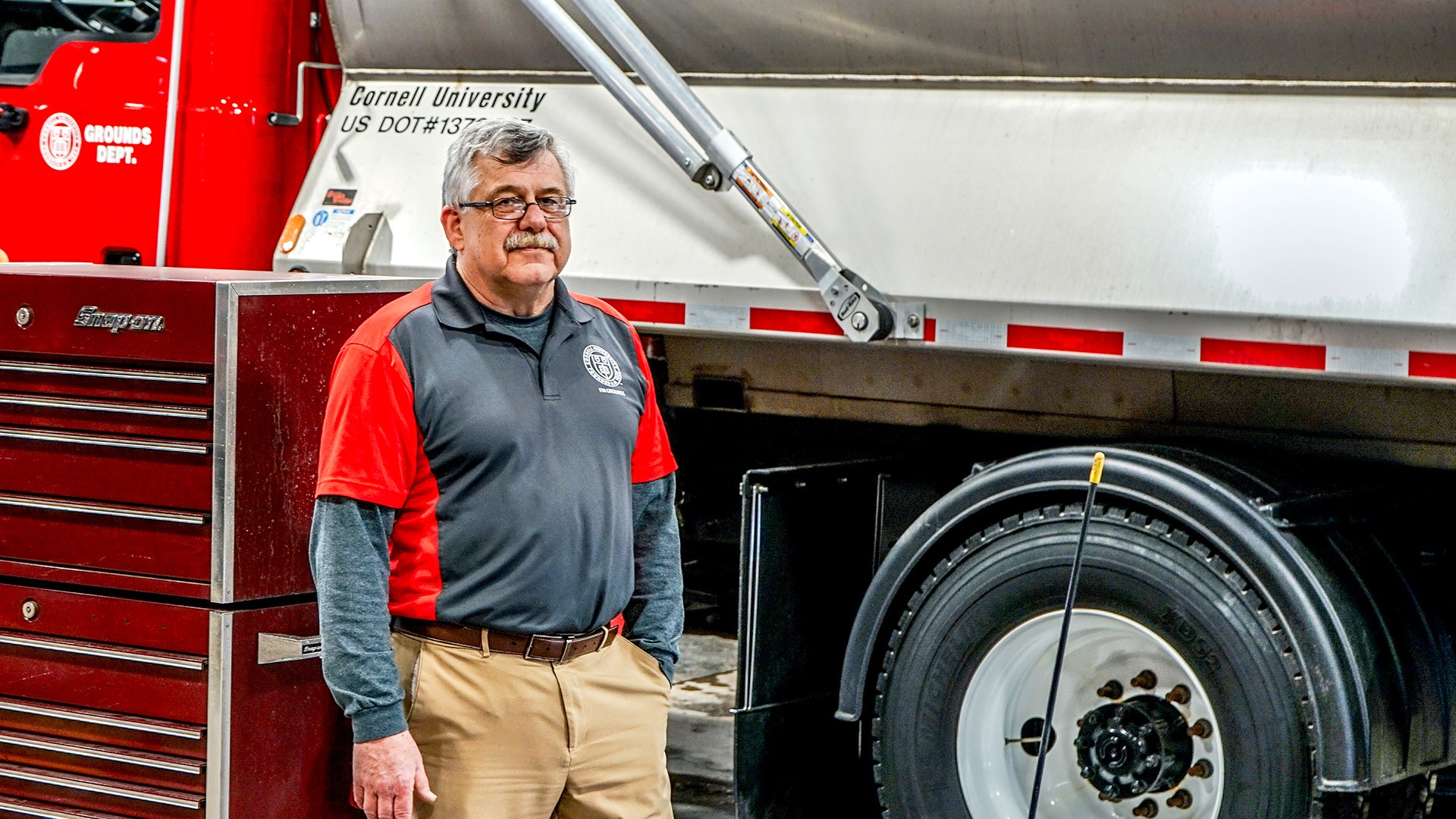
“Mother Nature has given Cornell a beautiful canvas to enhance,” said Dan Schied, director of grounds for the university’s Facilities and Campus Services.

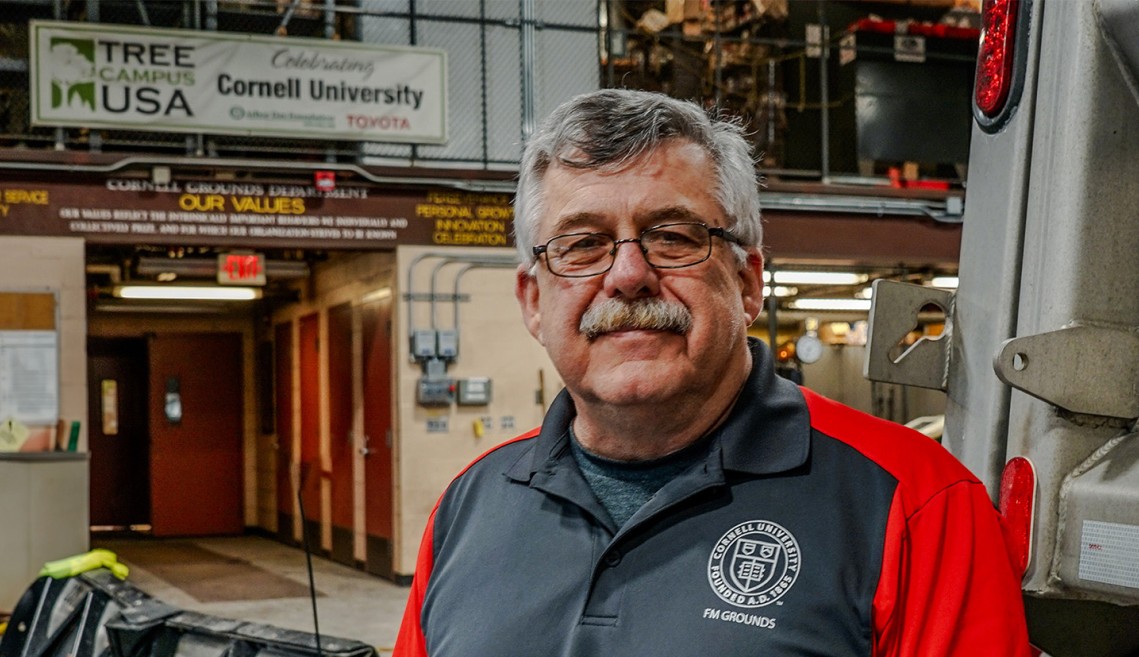
For the benefit of thousands of students, staff and faculty across campus, Schied has cared for this one-of-a-kind landscape, creating what he calls a “groomed, not manicured” environment. In spring 2026, Schied will retire, leaving behind a legacy of sustainability and a distinguished career in professional grounds management.

Schied has been a steady force of leadership in every season. During the growing season, his team manages landscapes flower beds and borders, mowing operations and construction projects. In winter, they take on plowing, de-icing and maintenance tasks.

With his drive to work with campus administrators to improve efficiency, collaborator with researchers to bring innovation to the field and engage with students, Schied was exactly the landscape leader Cornell needed. “For me, it’s to continue doing the best practice in what you’re working on while simultaneously looking for what’s the next practice,” he said
After earning a degree in ornamental horticulture from Alfred State University, Schied managed a private-sector nursery and custom landscape design business. When he became a father, he transitioned to the University of Rochester, where he spent 22 years as manager of horticulture and grounds.

When Schied arrived at Cornell, he recalled a conversation with his supervisor that shaped his next steps. “My boss said to me, ‘You’re at an educational institution. What do you think you might like to do for additional training?’ So I put together a lot of credits I had accrued and earned a business degree through Empire State University.”

Running a department at Cornell is a lot like running a business, he said. “The campus is full of stakeholders, and they are our customers.”

Enhancing campus life — on and off campus

Schied continued to master his craft and teach others to innovate. Over the years, he has followed industry best practices and helped write new ones. Schied is a regular speaker at statewide conferences and contributes to Building Management magazine and the Professional Grounds Management Society, discussing change in the industry and guiding others to adopt sustainable approaches. He completed the Professional Grounds Management Society’s Certified Grounds Manager program.

His leadership expanded when he recognized that educational institutions are more than workplaces for those in the natural world, they are places for partnership. “Everything we do is not rocket science, but what we do is based in science,” he said.

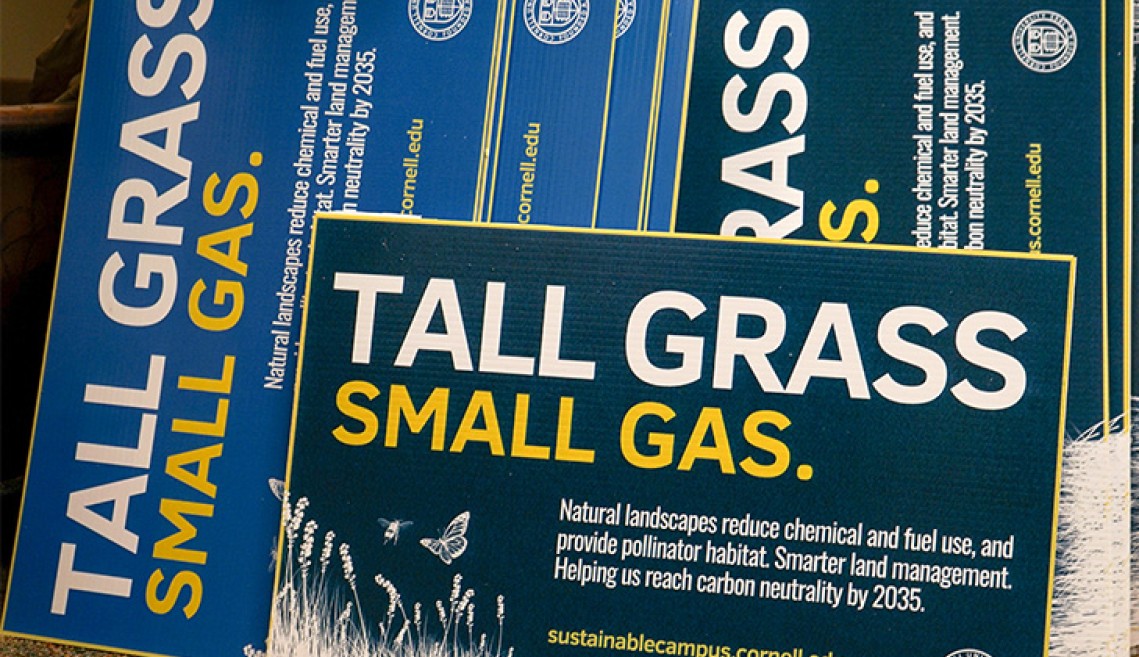
In 2008, during a time of university financial challenges, the concept of “tall grass, small gas” began at Cornell. Originally developed by Cornell’s Turfgrass Extension Team and campus staff, Schied continued and expanded the program to 40 acres across campus, including Libe Slope, the corner of Feeney and Tower roads and areas near Barton Hall.

“There are significant carbon reductions because we’re not mowing and not emitting carbon,” he said, noting the added benefits for pollinator habitat and stormwater management.

When he took over the project, he joked, “We put the signs out because I was new to campus, and I didn’t want people to think I didn’t know what I was doing.” Schied explained that whenever you implement sustainable practices, you need to educate people. His team developed a series of now-iconic signs across campus.

Putting research into practice

Working at a research institution, Schied often asked, “How do you take research and make it operational and scalable for a practical field like grounds management?”

He saw this firsthand when he approached the Cornell University Sustainable Design class to design a solar trailer for lawn equipment. “They did all the research, and then I told them if they designed the solar trailer, I’d pay them to build it the next semester. And not only did they take on that challenge — they went and got funding.” The trailer now serves as a model for integrating renewable energy into ground operations, demonstrating how student-led innovation can translate into real-world applications on campus.

Schied has been a steady voice for his three managers and seven crews, across pivotal moments and environmental enhancement projects. But he notes, “any successes the department has enjoyed are in large part due to the dedication of the grounds team,” he said. 

Over the years, the team has worked through the 2016 Winter Storm Stella that shut the campus down. Employees stayed in local hotels and FEMA funding later supplementing work hours. After an outbreak of emerald ash borer in infested trees, his team turned a tree-cutting effort into natural landscape stools. They also helped identify low-traffic areas for Cornell’s Bee Lab and continued the campus’s certification as a Tree Campus USA by the Arbor Day Foundation

Schied always looked for the next best thing — for Cornell’s people and green spaces — and forged a path for the landscape’s future beauty.

Keep Exploring

Vipan Kumar in a water hemp field

Field Note

Glyphosate – better known by the brand name Roundup – has been the go-to herbicide for commercial farmers in New York since it was introduced in the 1970s. However, several weed species have evolved resistance to the herbicide, and those weeds...
  • School of Integrative Plant Science
  • Soil and Crop Sciences Section
  • Agriculture
cornell campus

News

The Center for Racial Justice and Equitable Futures at Cornell University has named five faculty fellows from across three colleges and five departments to its inaugural cohort.